
🎄 Festive Rush - Deliveries might take a bit longer. We appreciate your patience.
Festive Period 2025
Cut-Off Times

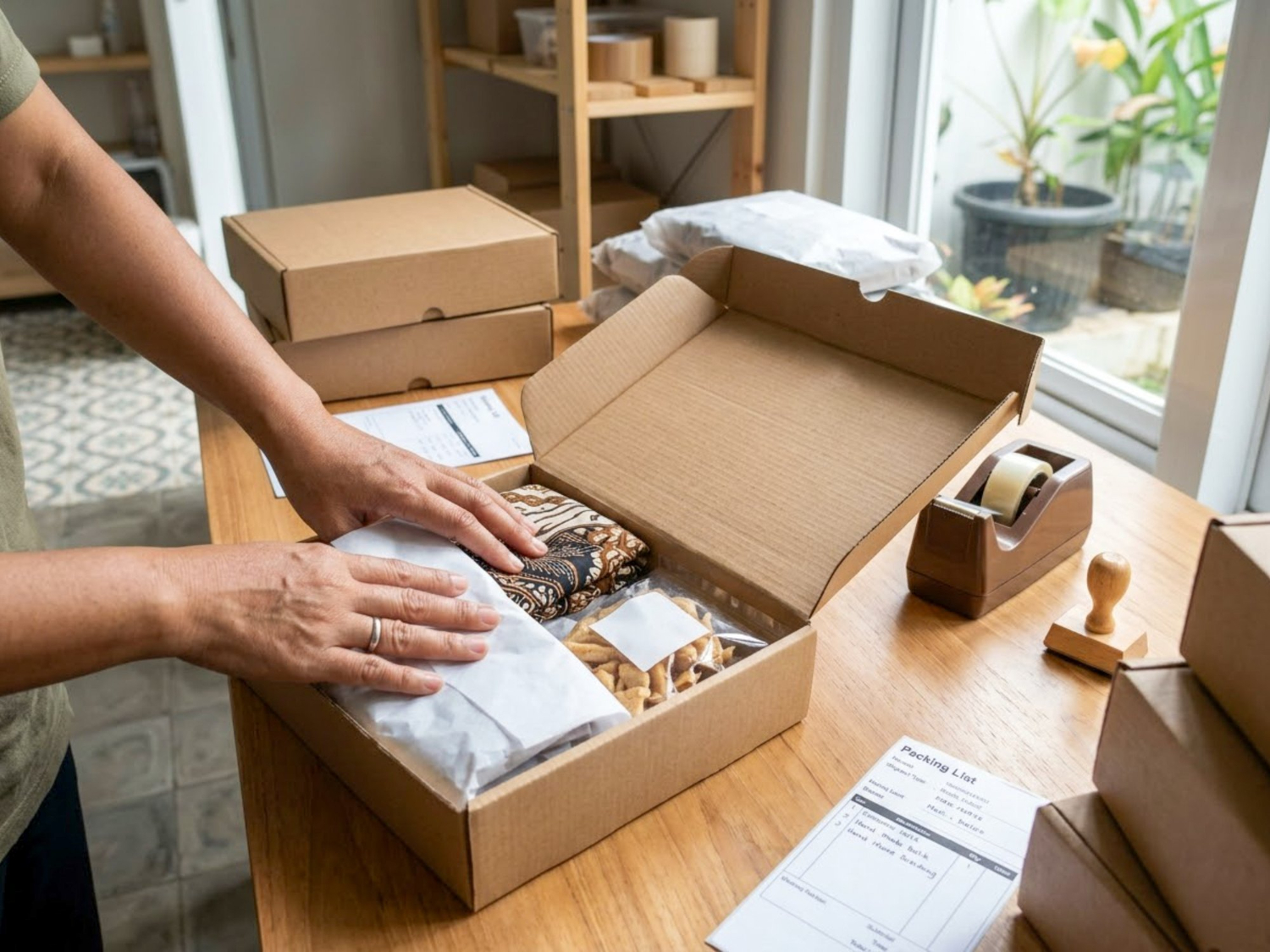
Australia Post delivered more than 2.1 billion items across Australia in 2025. Online sellers adding to that volume report mixed results when they compare mailer boxes vs. satchels. The cheaper pack on the shelf can cost more once postage and damaged-parcel refunds are counted.
Satchels are cheaper and work well for lightweight items like clothing, while rigid boxes protect fragile goods from crushing. This guide compares both formats so you can choose one for each product type and see how it changes your courier charge.
Send satchel and mailer box parcels to customers across Australia with Couriers & Freight.
Get a Quote NowCouriers & Freight provides e-commerce delivery for Australian online sellers.
Mailer boxes are rigid, folding corrugated cardboard containers. Satchels are flexible bags, made from materials such as plastic or compostable alternatives. Both formats change courier charges and breakage rates. They also change packing time.
Product fragility and parcel dimensions are key factors when choosing packaging. Mailer boxes offer more structure for fragile goods, but their dimensions can increase cubic weight and shipping charges. Satchels reduce packaging bulk for soft, lightweight items, which can help limit parcel volume.
Australia Post’s prepaid satchels are priced by satchel size, so cubic weight does not affect their postage. Cubic weight is parcel volume converted into a weight using the carrier’s specified conversion factor. It matters only when sellers use their own packaging. Australia Post measures the parcel’s outer dimensions.
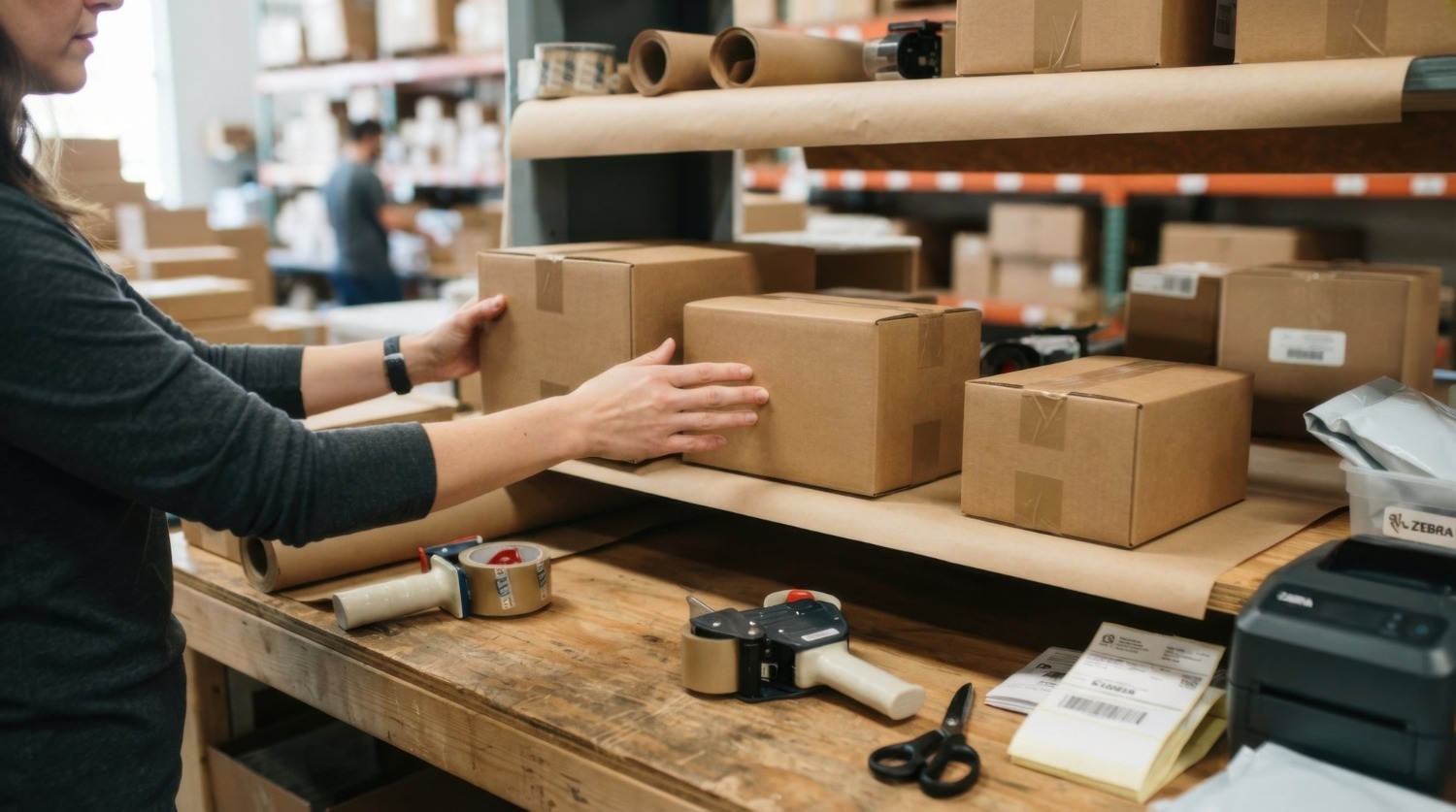
Padded satchels provide light cushioning for small accessories, while bubble mailers offer some impact protection for jewellery and small electronics. Neither provides the crush resistance of a properly packed rigid box. Sellers can reduce damage by securing products inside the packaging and filling any empty space.
Packaging prices and postage charges are separate unless the product includes prepaid postage. The Australia Post prepaid satchel range lists five sizes with postage included for eligible domestic parcels weighing 5 kg or less. Other packaging can incur separate postage charges.
Price check: October 2026. Prepaid satchel prices include postage, while mailing box prices cover packaging only.
Using the same conversion factor, the satchel’s cubic weight is 0.375 kg. Both cubic weights are below the candle’s 1 kg actual weight, so actual weight sets the chargeable weight for both parcels.
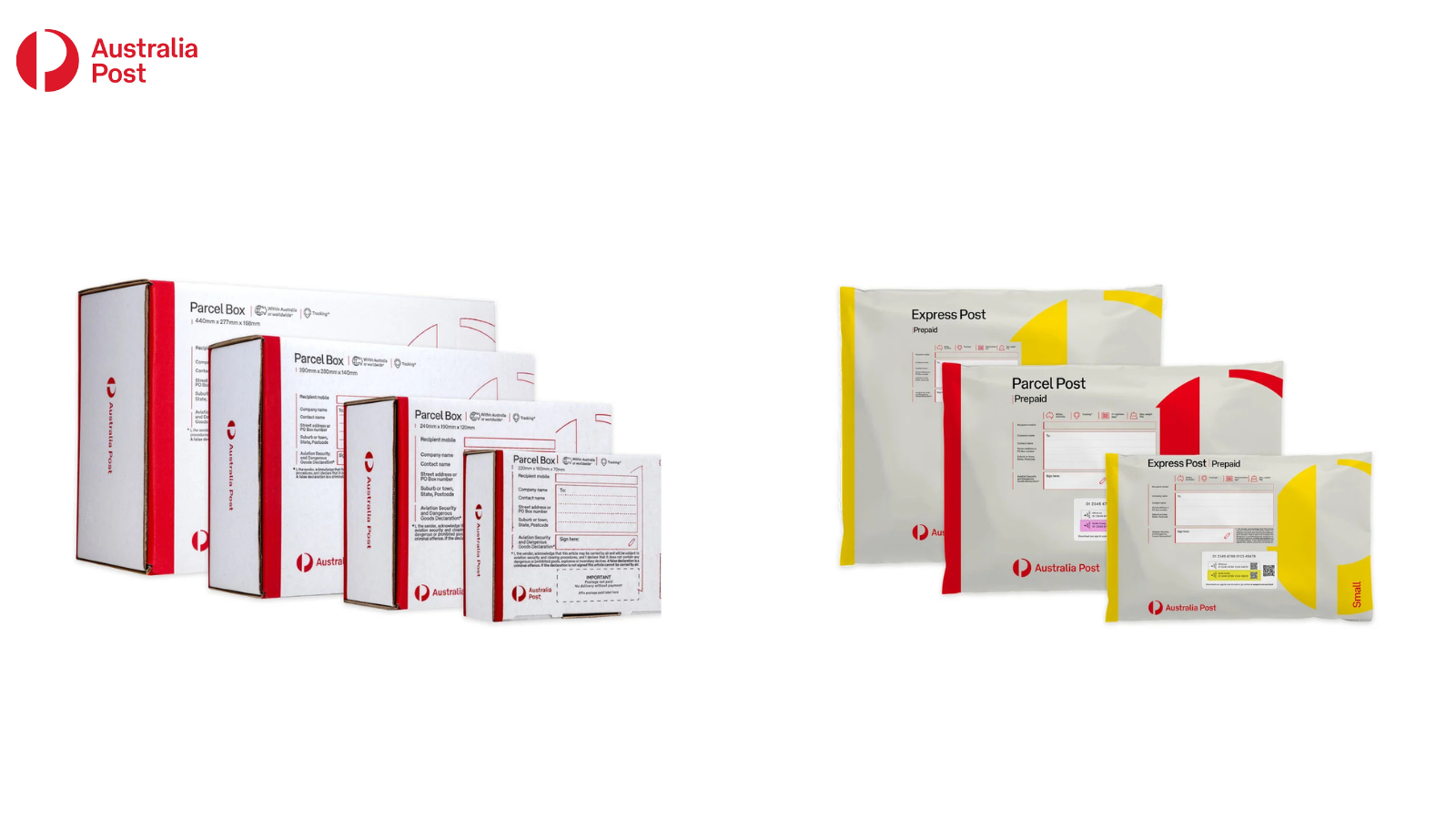
Photo by: Australia Post
The candle’s actual weight is 1 kg in either format. Under the assumptions used in this example, actual weight determines the chargeable weight for both parcels.
These calculations illustrate how packaging dimensions affect cubic weight. They are not quoted Australia Post delivery prices. Other carriers apply their own cubic-weight rules.
Both formats are available in compostable and recycled-content versions. Consider sustainable packaging options before making environmental claims.
Once you have chosen between mailer boxes and satchels, check carrier rates using your parcel’s final dimensions and actual weight. Each carrier applies its own cubic weight rules, so the packed dimensions of a box or a satchel can change which carrier is cheapest.
For example, a Perth skincare business sending one order to Sydney prices the same products in a mailer box and in a satchel, then compares carriers on each parcel’s measurements.
Couriers & Freight provides ecommerce delivery for Australian online sellers. It reduces freight costs through carrier network aggregation. Couriers & Freight operates a carrier network that includes Australia Post.
Book your parcel with a carrier in that network through Couriers & Freight.
Send satchel and mailer box parcels to customers across Australia with Couriers & Freight.
Get a Quote Now


MHP

No Surcharge*

$16.50
$14
$15.50
$0
$15.50
$14.75
$0
$0
$0
$0
MHP Large Item
No Surcharge*
$16.50
$75
$62
$62
$60.10
$14.75
$0
$0
$0
$0
Residential Pickup
No Surcharge*
$6
$0
$9
--
$9
$10.60
$0
$0
$0
$38.50
Reidential pick up 30-99kgs
No Surcharge*
$63
$0
$9
$0
$9
$74.15
$20
Won't carry
Won't carry
$38.50
Residential pick up 100kgs+
No Surcharge*
$198
$0
$9
$0
$9
$158.87
$50
Won't carry
Won't carry
$38.50
Residential Delivery up to 29kgs
No Surcharge*
$6
$0
$9
--
$9.00
$10.60
$0
$0
$0
$38.50
Residential Delivery up 30-99kgs
No Surcharge*
$63
$0
$9
$0
$9
$74.15
$20
Won't carry
Won't carry
$38.50
Residential Delivery 100kgs+
No Surcharge*
$198
$0
$9
--
$9
$158.57
$50
Won't carry
Won't carry
$38.50
Tail Lift Pick up 50-99kgs Sydney / Melbourne
No Surcharge*
$45
$50-$250
$88
$88
$88
$44.07
$120
Won't carry
Won't carry
$61.50
Tail Lift Pick up 100-299kgs Sydney / Melbourne
No Surcharge*
$85
$50-$250
$88
$88
$88
$44.07
$120
Won't carry
Won't carry
$61.50
Tail Lift Pick up 300-499kgs Sydney / Melbourne
No Surcharge*
$120
$50-$250
$88
$88
$88
$44.07
$120
Won't carry
Won't carry
$61.50
Tail Lift Pick up 500kgs + Sydney / Melbourne
No Surcharge*
$250
$50-$250
$88
$88
$88
$44.07
$120
Won't carry
Won't carry
$61.50
Tail Lift Delivery 50-99kgs Sydney / Melbourne
No Surcharge*
$45
$50-$250
$88
$88
$88
$44.07
$120
Won't carry
Won't carry
$61.50
Tail Lift Delivery 100-299kgs Sydney / Melbourne
No Surcharge*
$85
$50-$250
$88
$88
$88
$44.07
$120
Won't carry
Won't carry
$61.50
Tail Lift Delivery300-499kgs Sydney / Melbourne
No Surcharge*
$120
$50-$250
$88
$88
$88
$44.07
$120
Won't carry
Won't carry
$61.50
Tail Lift Delivery 500kgs + Sydney / Melbourne
No Surcharge*
$250
$50-$250
$88
$88
$88
$44.07
$120
Won't carry
Won't carry
$61.50
Dead weight over 32KGS carton freight
No Surcharge*
$16.50
$75
$70
$70
$70
$14.75
$0
Won't carry
Won't carry
$0
Oversize Surcharge 1.20 - 1.54
No Surcharge*
--
$0
$0
$0
$0
$5.40
$10
$15
Won't carry
$0
Oversize Surcharge 1.55 - 1.85
No Surcharge*
$17
$20
$0
$0
$0
$11.93
$10
$15
Won't carry
$0
Oversize Surcharge 1.86 - 2.20
No Surcharge*
$37
$40
$0
$0
$0
$11.93
$10
Won't carry
Won't carry
$0
Pallet Surcharge
No Surcharge*
--
$0
$0
$0
$0
$0
$0
Won't carry
Won't carry
$0
Hand Unload Fee Carton
No Surcharge*
--
$0
$70
$70
$70
$47
$0
Won't carry
Won't carry
$61.50
Western Australia Regional Surcharge
No Surcharge*
%10
$0
$0
$0
$0
$0
$0
$0
$0
$0
*Surcharges may apply to areas/deimensions not listed
**Prices correct of 16th September 2024

Click to start shipping in less than 60 seconds