
🎄 Festive Rush - Deliveries might take a bit longer. We appreciate your patience.
Festive Period 2025
Cut-Off Times


Freight classification shapes how Australian carriers price, load, and accept palletised and Less-than-Truckload (LTL) shipments, yet many shippers get it wrong. Forum discussions among logistics professionals point to a consistent pattern that when shippers nominate a lower class than the freight warrants, carriers re-rate the shipment and apply penalties. These misclassifications frequently lead to invoice disputes, delivery delays, or rejected consignments at the depot.
Getting classification right from the start matters. This guide covers how freight classification works in Australia, what drives it, and how to apply it accurately, whether you're quoting a single pallet or managing regular LTL freight through a platform like Couriers & Freight.
Compare carrier rates for palletised and LTL freight across Australia with Couriers & Freight.
Get a Quote NowFreight classification determines how Australian carriers price and handle palletised and LTL shipments. Understanding it correctly reduces the risk of reclassification charges, invoice disputes, and carrier rejection.
Here is what you need to know before booking your next shipment:
For a practical starting point, compare carriers and get a freight quote at Couriers & Freight.
Freight classification is the framework Australian carriers use to price and manage freight based on how it behaves within their transport networks. Rather than a simple reference code, it reflects operational factors such as space consumption, handling effort, and risk during transit.
In Australia, carrier rate cards, service schedules, and booking terms govern classification practices. Cubic volume, density, stackability, and handling requirements are the key pricing drivers, particularly where freight occupies disproportionate trailer space relative to its weight.
While systems like the US National Motor Freight Classification (NMFTA) influence general terminology, Australian carriers do not apply those schedules directly. Local classification relies on cubic weight calculations and physical handling characteristics, ensuring pricing reflects real transport constraints rather than product value alone.
Density is the primary factor Australian carriers use to determine freight class, because it shows how efficiently a shipment uses trailer space. Carriers calculate it by dividing a shipment's weight by its total cubic volume, using the dimensions provided at booking. Low-density freight occupies more space per kilogram, so carriers assign it a higher freight class.
A pallet of flat-packed furniture, lightweight insulation, or empty plastic containers may weigh relatively little but consume significant floor and cubic space. Compact building materials or boxed retail stock tend to sit in lower freight classes because they load efficiently. Small measurement errors at booking can move a shipment into a higher pricing tier, making accurate dimensions essential.
Freight class is not determined by density alone. Carriers also assess handling requirements, liability exposure, and stowability to decide whether freight can move safely alongside other consignments.
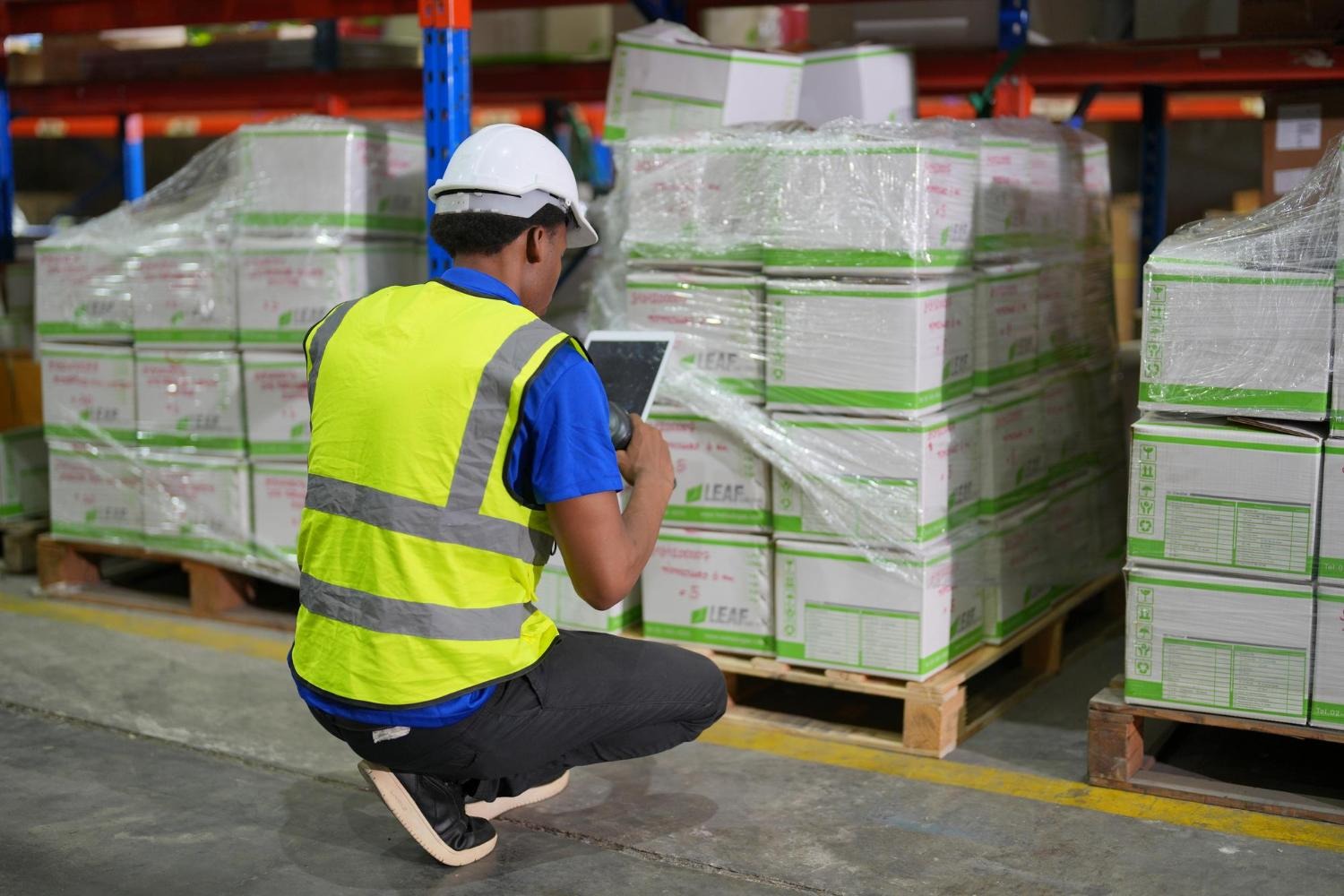
Fragile, awkwardly shaped, or non-stackable freight requires extra labour and limits how trailers can be loaded, pushing the shipment into a higher class. High-value goods or items prone to damage increase carrier liability exposure, which affects both pricing and acceptance. Freight that does not meet standard stacking or securing requirements may attract surcharges or be rejected if the handling needs were not declared at booking.
Freight classification codes and charts are LTL pricing reference tools used across Australian road freight networks. They help carriers and shippers estimate how a consignment will be rated before it enters a shared trailer environment, where space efficiency and handling compatibility matter as much as weight.
This chart groups freight into class ranges based on density, packaging method, stackability, and handling effort. Dense, uniformly palletised freight generally falls into lower classes. Bulky, irregular, or fragile goods are priced higher. These ranges are indicative guides, not guaranteed pricing. Carriers confirm the final class after verifying dimensions, packaging, and handling requirements at the booking or depot level.
Couriers & Freight supports accurate classification by prompting shippers to enter precise dimensions, weights, and pallet details at booking, so cubic weight and density are calculated correctly before a shipment moves.
The platform makes carrier comparisons clearer, so businesses can see whether cost differences are driven by freight class, handling requirements, or network suitability for bulky or irregular goods.
Apply accurate freight classification and compare suitable carriers when shipping with Couriers & Freight.
Compare carrier rates for palletised and LTL freight across Australia with Couriers & Freight.
Get a Quote Now


MHP

No Surcharge*

$16.50
$14
$15.50
$0
$15.50
$14.75
$0
$0
$0
$0
MHP Large Item
No Surcharge*
$16.50
$75
$62
$62
$60.10
$14.75
$0
$0
$0
$0
Residential Pickup
No Surcharge*
$6
$0
$9
--
$9
$10.60
$0
$0
$0
$38.50
Reidential pick up 30-99kgs
No Surcharge*
$63
$0
$9
$0
$9
$74.15
$20
Won't carry
Won't carry
$38.50
Residential pick up 100kgs+
No Surcharge*
$198
$0
$9
$0
$9
$158.87
$50
Won't carry
Won't carry
$38.50
Residential Delivery up to 29kgs
No Surcharge*
$6
$0
$9
--
$9.00
$10.60
$0
$0
$0
$38.50
Residential Delivery up 30-99kgs
No Surcharge*
$63
$0
$9
$0
$9
$74.15
$20
Won't carry
Won't carry
$38.50
Residential Delivery 100kgs+
No Surcharge*
$198
$0
$9
--
$9
$158.57
$50
Won't carry
Won't carry
$38.50
Tail Lift Pick up 50-99kgs Sydney / Melbourne
No Surcharge*
$45
$50-$250
$88
$88
$88
$44.07
$120
Won't carry
Won't carry
$61.50
Tail Lift Pick up 100-299kgs Sydney / Melbourne
No Surcharge*
$85
$50-$250
$88
$88
$88
$44.07
$120
Won't carry
Won't carry
$61.50
Tail Lift Pick up 300-499kgs Sydney / Melbourne
No Surcharge*
$120
$50-$250
$88
$88
$88
$44.07
$120
Won't carry
Won't carry
$61.50
Tail Lift Pick up 500kgs + Sydney / Melbourne
No Surcharge*
$250
$50-$250
$88
$88
$88
$44.07
$120
Won't carry
Won't carry
$61.50
Tail Lift Delivery 50-99kgs Sydney / Melbourne
No Surcharge*
$45
$50-$250
$88
$88
$88
$44.07
$120
Won't carry
Won't carry
$61.50
Tail Lift Delivery 100-299kgs Sydney / Melbourne
No Surcharge*
$85
$50-$250
$88
$88
$88
$44.07
$120
Won't carry
Won't carry
$61.50
Tail Lift Delivery300-499kgs Sydney / Melbourne
No Surcharge*
$120
$50-$250
$88
$88
$88
$44.07
$120
Won't carry
Won't carry
$61.50
Tail Lift Delivery 500kgs + Sydney / Melbourne
No Surcharge*
$250
$50-$250
$88
$88
$88
$44.07
$120
Won't carry
Won't carry
$61.50
Dead weight over 32KGS carton freight
No Surcharge*
$16.50
$75
$70
$70
$70
$14.75
$0
Won't carry
Won't carry
$0
Oversize Surcharge 1.20 - 1.54
No Surcharge*
--
$0
$0
$0
$0
$5.40
$10
$15
Won't carry
$0
Oversize Surcharge 1.55 - 1.85
No Surcharge*
$17
$20
$0
$0
$0
$11.93
$10
$15
Won't carry
$0
Oversize Surcharge 1.86 - 2.20
No Surcharge*
$37
$40
$0
$0
$0
$11.93
$10
Won't carry
Won't carry
$0
Pallet Surcharge
No Surcharge*
--
$0
$0
$0
$0
$0
$0
Won't carry
Won't carry
$0
Hand Unload Fee Carton
No Surcharge*
--
$0
$70
$70
$70
$47
$0
Won't carry
Won't carry
$61.50
Western Australia Regional Surcharge
No Surcharge*
%10
$0
$0
$0
$0
$0
$0
$0
$0
$0
*Surcharges may apply to areas/deimensions not listed
**Prices correct of 16th September 2024

Click to start shipping in less than 60 seconds