
🎄 Festive Rush - Deliveries might take a bit longer. We appreciate your patience.
Festive Period 2025
Cut-Off Times

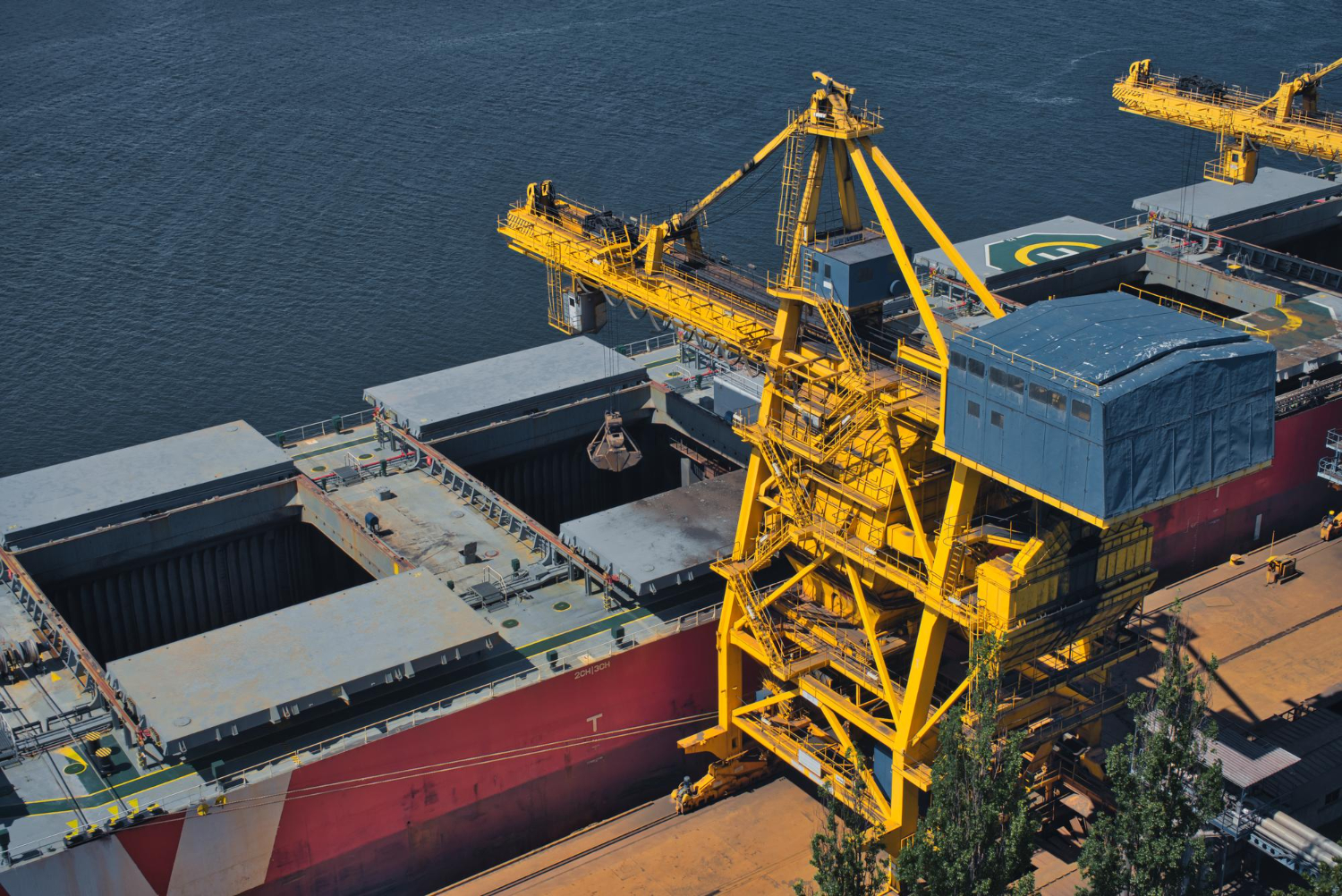
Australian import reporting changed on 21 May 2026 when the Australian Border Force (ABF) introduced a new split line reporting option for qualifying break-bulk consignments under Australian Customs Notice 2026/15. The change affects importers handling large machinery and industrial cargo where a single shipment contains components with different conditions or compliance outcomes.
The notice allows importers and Licensed Customs Brokers (LCBs) to report a single good across multiple lines on a Full Import Declaration (FID) when specified conditions are met.
This article explains the eligibility thresholds, outlines how the new reporting approach works, and sets out the compliance requirements importers and brokers must satisfy before using it.
Book full container load sea freight for break-bulk machinery shipments through Couriers & Freight's carrier network.
Get a Quote NowCouriers & Freight books full container load sea freight for break-bulk shipments that qualify under this threshold.
Under standard import declaration rules, machinery imported in unassembled or disassembled form is generally reported on a single FID line. This is a direct consequence of Rule 2(a) of Schedule 2 of the Customs Tariff Act 1995, which requires that any reference in a heading to an article include that article when presented unassembled or disassembled. Because the whole consignment falls under one tariff subheading, one declaration line covers it.
This approach keeps customs reporting consistent by applying one tariff classification outcome to the complete consignment. ACN 2026/15 does not replace this requirement. Instead, it introduces a limited exception for larger break-bulk consignments where separate reporting lines are needed to accurately represent different cargo conditions.
For most imports, existing Australian customs reporting requirements continue to apply.
The ABF will accept split line reporting when three conditions are all satisfied.
These conditions determine whether the alternative Australian customs reporting approach is available. The weight and volume tests are alternatives.
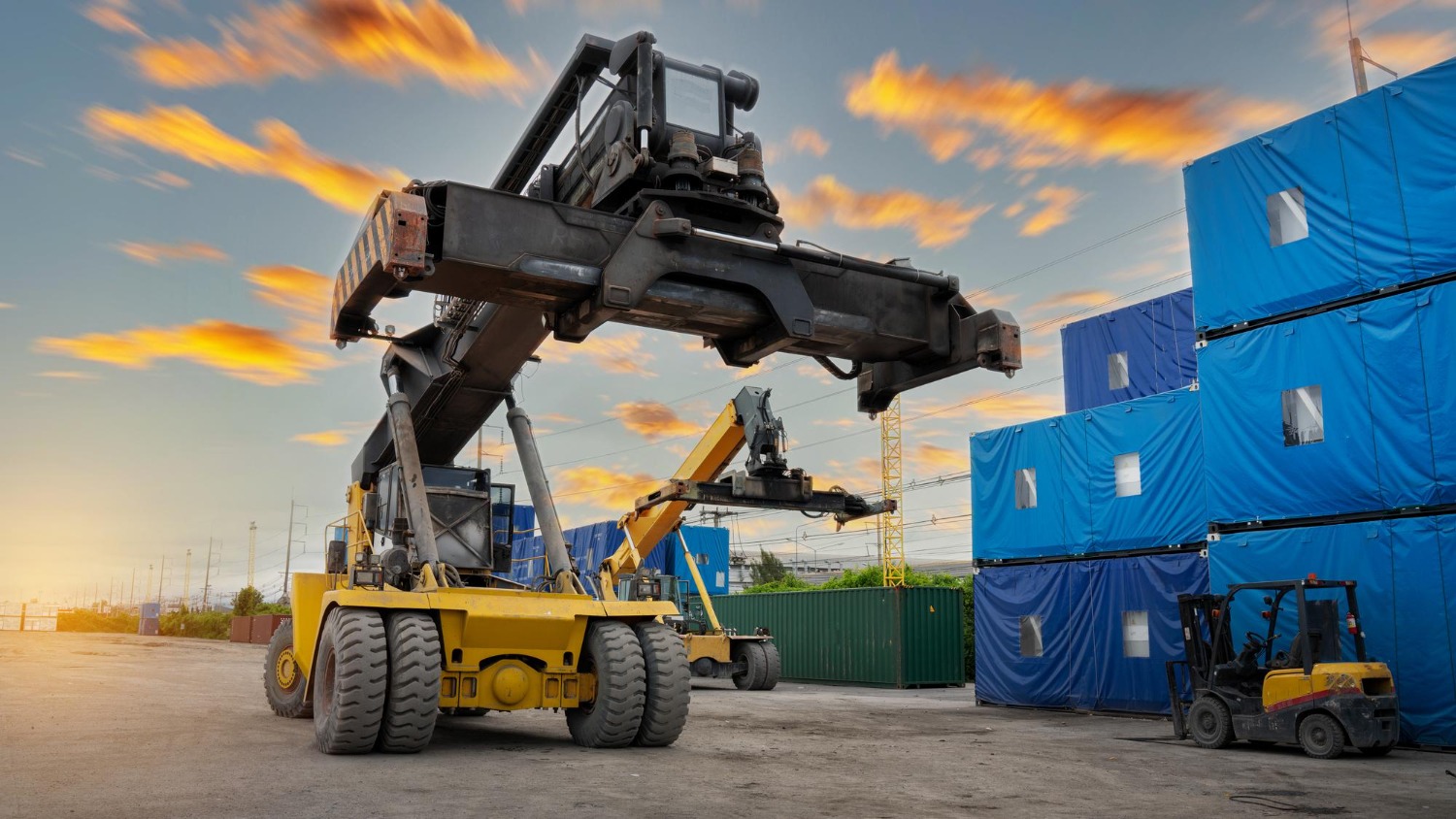
A consignment that exceeds 20 tonnes qualifies regardless of its volume, and a consignment that exceeds 20 CBM qualifies regardless of its weight. Critically, both thresholds apply to the consignment as a whole arriving on one vessel. They do not aggregate across separate shipments or separate sailings.
Satisfying either threshold establishes that the consignment is eligible for split line treatment. It does not itself determine how individual components are allocated to each line; that allocation is governed by the compliance rules covered below. Importers using this Australian customs reporting method must confirm that the consignment satisfies the eligibility conditions.
Under the previous single-line reporting approach, a mixed-condition consignment inherited the strictest Community Protection Question (CPQ) outcome of any single component. If a disassembled machine included one refurbished part, the CPQ response for that part (for example, confirming that goods are used, secondhand, or commercially remanufactured) applied to the entire consignment.
This meant new components without the same biosecurity concerns could be included in inspection and treatment processes triggered by other parts of the shipment, increasing clearance delays and adding handling costs.
ACN 2026/15 addresses this directly. It allows a mixed-condition consignment to be reported across separate lines, each with its own CPQ response. Only the lines covering components that genuinely trigger a biosecurity or permit outcome are directed for inspection or treatment.
The change is particularly relevant for machinery and industrial equipment imports, where consignments often contain a mix of new, refurbished, repaired, or remanufactured components.
Australia imported an average of $1.7 billion of agricultural machinery annually between 2019-20 and 2021-22, demonstrating that machinery imports remain a significant category of cargo subject to customs and biosecurity requirements.
A component's position on the packing list or the way it happens to be crated does not determine which line it belongs to. The split must be grounded in a real difference in the condition or tariff classification of the goods themselves.
If the importer or broker cannot articulate that difference in terms of the goods, the split line approach is not available.
The purpose of splitting a consignment into separate lines is to allow CPQ responses to apply differently to distinct parts of the cargo. If the CPQ responses across lines were all identical, there would be no compliance basis for the split.
The ABF uses CPQ answers to assess risk and determine what actions are required before clearance from customs control; responses must accurately describe each portion of the consignment covered by that line. This is a key requirement of the Australian Customs reporting framework established under ACN 2026/15.
The Customs Act 1901 requires importers and brokers to retain supporting commercial documentation. For split line reporting, that means retaining the evidence that supports how the consignment was divided.
This includes:
This is a recordkeeping obligation, not just a reporting one. An importer who cannot produce that documentation on request has not satisfied the compliance approach set out in ACN 2026/15.
ACN 2026/15 is most relevant to importers of oversized or unassembled machinery that arrives as break-bulk cargo on a single vessel. These businesses are among the importers most likely to be affected by recent Australian customs reporting changes.
It may also apply to businesses importing industrial equipment that combines new, used, repaired, refurbished, or remanufactured components within the same consignment. Customs brokers lodging Full Import Declarations (FID) on behalf of these importers should also review the reporting conditions closely.
The 20-tonne and 20-cubic-metre thresholds apply to the individual consignment arriving on one vessel. Importers whose cargo forms part of a larger break-bulk movement should ensure commercial documentation clearly identifies the goods covered by their declaration and supports any split-line reporting approach used.
Review these requirements before lodging an FID to determine whether the alternative reporting option is available.
Importers moving oversized machinery or industrial equipment that meets the ACN 2026/15 criteria can arrange FCL sea freight through Couriers & Freight's carrier network, with support available for freight planning and customs requirements.
Importers who still need to arrange customs clearance and declaration lodgement for the same shipment can use Couriers & Freight's customs clearance service instead.
Get an FCL sea freight quote for your next machinery shipment.
Book full container load sea freight for break-bulk machinery shipments through Couriers & Freight's carrier network.
Get a Quote Now


MHP

No Surcharge*

$16.50
$14
$15.50
$0
$15.50
$14.75
$0
$0
$0
$0
MHP Large Item
No Surcharge*
$16.50
$75
$62
$62
$60.10
$14.75
$0
$0
$0
$0
Residential Pickup
No Surcharge*
$6
$0
$9
--
$9
$10.60
$0
$0
$0
$38.50
Reidential pick up 30-99kgs
No Surcharge*
$63
$0
$9
$0
$9
$74.15
$20
Won't carry
Won't carry
$38.50
Residential pick up 100kgs+
No Surcharge*
$198
$0
$9
$0
$9
$158.87
$50
Won't carry
Won't carry
$38.50
Residential Delivery up to 29kgs
No Surcharge*
$6
$0
$9
--
$9.00
$10.60
$0
$0
$0
$38.50
Residential Delivery up 30-99kgs
No Surcharge*
$63
$0
$9
$0
$9
$74.15
$20
Won't carry
Won't carry
$38.50
Residential Delivery 100kgs+
No Surcharge*
$198
$0
$9
--
$9
$158.57
$50
Won't carry
Won't carry
$38.50
Tail Lift Pick up 50-99kgs Sydney / Melbourne
No Surcharge*
$45
$50-$250
$88
$88
$88
$44.07
$120
Won't carry
Won't carry
$61.50
Tail Lift Pick up 100-299kgs Sydney / Melbourne
No Surcharge*
$85
$50-$250
$88
$88
$88
$44.07
$120
Won't carry
Won't carry
$61.50
Tail Lift Pick up 300-499kgs Sydney / Melbourne
No Surcharge*
$120
$50-$250
$88
$88
$88
$44.07
$120
Won't carry
Won't carry
$61.50
Tail Lift Pick up 500kgs + Sydney / Melbourne
No Surcharge*
$250
$50-$250
$88
$88
$88
$44.07
$120
Won't carry
Won't carry
$61.50
Tail Lift Delivery 50-99kgs Sydney / Melbourne
No Surcharge*
$45
$50-$250
$88
$88
$88
$44.07
$120
Won't carry
Won't carry
$61.50
Tail Lift Delivery 100-299kgs Sydney / Melbourne
No Surcharge*
$85
$50-$250
$88
$88
$88
$44.07
$120
Won't carry
Won't carry
$61.50
Tail Lift Delivery300-499kgs Sydney / Melbourne
No Surcharge*
$120
$50-$250
$88
$88
$88
$44.07
$120
Won't carry
Won't carry
$61.50
Tail Lift Delivery 500kgs + Sydney / Melbourne
No Surcharge*
$250
$50-$250
$88
$88
$88
$44.07
$120
Won't carry
Won't carry
$61.50
Dead weight over 32KGS carton freight
No Surcharge*
$16.50
$75
$70
$70
$70
$14.75
$0
Won't carry
Won't carry
$0
Oversize Surcharge 1.20 - 1.54
No Surcharge*
--
$0
$0
$0
$0
$5.40
$10
$15
Won't carry
$0
Oversize Surcharge 1.55 - 1.85
No Surcharge*
$17
$20
$0
$0
$0
$11.93
$10
$15
Won't carry
$0
Oversize Surcharge 1.86 - 2.20
No Surcharge*
$37
$40
$0
$0
$0
$11.93
$10
Won't carry
Won't carry
$0
Pallet Surcharge
No Surcharge*
--
$0
$0
$0
$0
$0
$0
Won't carry
Won't carry
$0
Hand Unload Fee Carton
No Surcharge*
--
$0
$70
$70
$70
$47
$0
Won't carry
Won't carry
$61.50
Western Australia Regional Surcharge
No Surcharge*
%10
$0
$0
$0
$0
$0
$0
$0
$0
$0
*Surcharges may apply to areas/deimensions not listed
**Prices correct of 16th September 2024

Click to start shipping in less than 60 seconds