
🎄 Festive Rush - Deliveries might take a bit longer. We appreciate your patience.
Festive Period 2025
Cut-Off Times

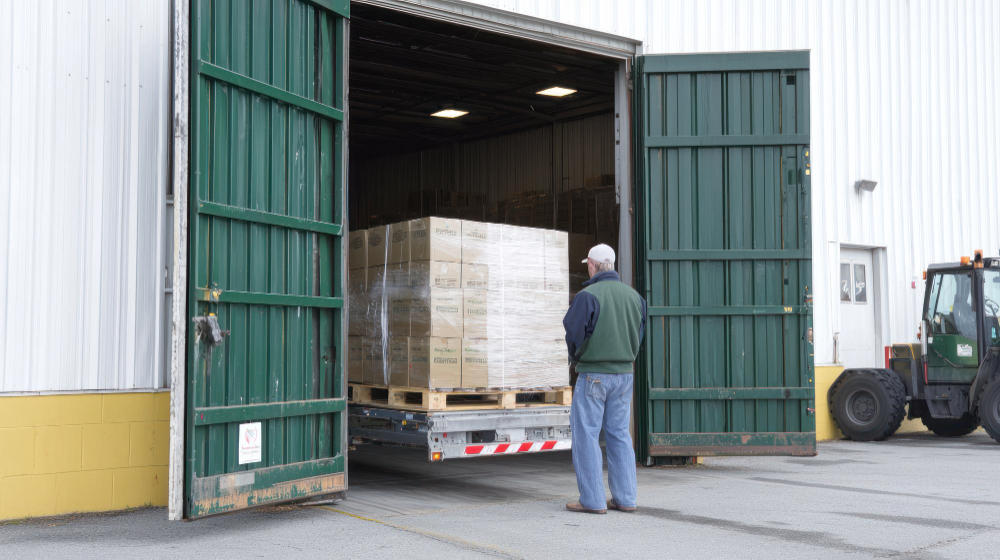
Australia's two-way goods trade with China reached $309 billion in 2024, and direct Alibaba sourcing now forms a significant part of that activity for Australian SMEs. Purchasing through Alibaba is only part of the process. Freight coordination, customs clearance, and GST compliance are where most delays and cost overruns occur, particularly when supplier shipping quotes exclude Australian port handling, duties, and final delivery.
This guide covers freight options, landed costs, documentation requirements, timelines, and the practical steps to organise shipping from Alibaba to Australia.
Book FCL, LCL, or air freight from China and arrange customs clearance and delivery to your Australian warehouse with Couriers & Freight.
Get a Quote NowAfter production confirmation, many Australian buyers discover that shipping from Alibaba to Australia requires several steps outside the Alibaba platform. Suppliers manufacture and pack goods, but freight booking, export handling, customs compliance, and delivery coordination still require separate planning.
Importers who fail to organise these stages early often encounter storage charges, clearance delays, or unexpected destination costs once cargo arrives in Australia.
Incoterms determine which party controls freight arrangements and assumes transport risk.
Australian importers frequently select FOB because it provides pricing transparency and freight control.
Once production finishes, the shipping process typically follows this sequence:
Importers planning to ship from Alibaba to Australia often underestimate the total landed cost because freight accounts for only one part of the overall import expense. Accurate budgeting requires understanding how international transport, destination handling, and compliance charges combine before goods reach an Australian warehouse.
International freight pricing depends on measurable shipment characteristics:
Carriers calculate air freight using either volumetric weight or actual weight, whichever produces the higher charge. LCL pricing includes consolidation and deconsolidation handling, which increases the cost per cubic metre. FCL shipping spreads transport costs across larger cargo volumes, reducing unit freight costs as shipment size approaches container capacity.
Australian destination charges apply after cargo arrives:
Supplier-arranged shipping quotes usually cover origin transport only. Importers remain responsible for Australian port handling, clearance, and delivery costs, which explains why initial supplier pricing rarely reflects the final landed total.
Lower freight pricing reflects specific operational trade-offs rather than simple savings:
While global container shipping rates have stabilised across 2024 to 2025 following earlier market volatility, fuel costs, vessel capacity, and port congestion continue to influence China-Australia shipping costs.
Choosing the correct freight mode plays a direct role in cost control, delivery timing, and inventory planning when organising shipping from Alibaba to Australia. Importers normally select between air freight, LCL sea freight, or FCL container shipping depending on shipment size, urgency, and stock turnover requirements.
Transit time ranges below reflect typical schedules published by major shipping lines and international freight platforms operating between China and Australian ports.
Air freight is suitable for high-value, lightweight, or time-sensitive cargo where speed outweighs freight cost. Importers commonly use air freight for product launches, urgent stock replenishment, or seasonal inventory.
Transit time from export hubs such as Shanghai, Shenzhen, or Guangzhou to Sydney or Melbourne is approximately between 5 and 10 days, including airline handling and customs processing based on airline schedules servicing Australia-bound cargo routes.
*Transit times reflect averages published by international carriers and freight platforms operating China to Australia trade lanes.
LCL shipping combines cargo from multiple importers into one shared container. This method works best for shipments between approximately 2 and 15 cubic metres, where cargo volume does not justify a full container.
Consolidation and deconsolidation increase handling stages, which can slightly extend transit reliability compared with dedicated container shipping.
FCL shipping allocates an entire container to a single importer. Businesses importing consistent volumes often find FCL delivers a lower per-unit freight cost once shipments approach container capacity. Importers shipping to ports such as Sydney, Melbourne, or Brisbane typically transition to FCL as order volumes grow and handling risk becomes a priority consideration.
When deciding between air, LCL, or FCL, importers can compare transit times, shipment costs, and booking options through Couriers & Freight while arranging compliant freight movements from China to Australia.
Australian businesses arranging shipping from Alibaba to Australia must meet defined tax and compliance obligations before goods can clear the border. Under current Australian Taxation Office (ATO) and Australian Border Force import rules, GST and customs requirements apply to most commercial shipments entering Australia, regardless of whether freight was organised by the supplier or importer.
Alibaba suppliers may charge GST on low-value platform transactions, but bulk commercial imports follow Australian import taxation rules instead. The Australian Border Force collects GST at import based on the taxable value of the shipment, which includes goods value, international freight, insurance, and applicable duty.
According to the ATO, import GST is generally 10% of the taxable importation value, and registered businesses can usually claim this amount through their Business Activity Statement when goods support business activity.
Import GST applies at the border rather than during purchase, which explains why many first-time importers encounter additional charges upon arrival.
Australian Border Force import declarations require accurate supporting documents before cargo release. Core documentation includes:
The Australian Border Force confirms that import declarations must be lodged to clear goods from customs control, particularly for consignments valued above $1,000.
Incorrect or incomplete documentation commonly delays clearance and may result in storage or inspection charges at Australian ports or airports.
Importers who follow a structured plan when managing shipping from Alibaba to Australia reduce delays, avoid cost surprises, and maintain control over delivery timelines.
Use the steps below to move from production completion to final warehouse delivery.
Confirm whether the shipment ships under EXW, FOB, or CIF before goods leave the factory. This decision determines who books freight, manages export clearance, and carries risk at each stage.
Record accurate carton dimensions, total cubic metres, and gross weight. Confirm the correct product classification to prevent customs delays or incorrect duty assessment.
Select the freight mode based on shipment size, urgency, and budget. Use air for urgent goods, LCL for smaller volumes, and FCL when cargo volume justifies a full container.

Provide pickup location, cargo dimensions, weight, and delivery postcode to obtain accurate pricing. Platforms such as Couriers & Freight allow you to compare air and sea freight rates in one place.
Engage a licensed customs broker to lodge import declarations and confirm duty and GST obligations before arrival.
Book transport from the terminal to your warehouse or 3PL facility to avoid storage charges.
Monitor shipment milestones and confirm delivery scheduling so your warehouse can receive and check stock promptly.
Once your goods are ready to ship, the next step involves securing freight, completing customs clearance, and coordinating delivery into Australia without unexpected charges. Many importers encounter issues at this stage when freight booking, documentation, and local delivery are spread across multiple providers.
Couriers & Freight allows Australian businesses to book FCL container shipping, LCL shared container freight, or air freight from one dashboard, coordinating customs clearance and shipment tracking in the same place. This reduces the handover risk that causes most arrival delays.
If your supplier has confirmed production timelines, book freight as soon as production is confirmed. Get a quote now to compare freight options and organise delivery from China to your Australian warehouse.
Book FCL, LCL, or air freight from China and arrange customs clearance and delivery to your Australian warehouse with Couriers & Freight.
Get a Quote Now


MHP

No Surcharge*

$16.50
$14
$15.50
$0
$15.50
$14.75
$0
$0
$0
$0
MHP Large Item
No Surcharge*
$16.50
$75
$62
$62
$60.10
$14.75
$0
$0
$0
$0
Residential Pickup
No Surcharge*
$6
$0
$9
--
$9
$10.60
$0
$0
$0
$38.50
Reidential pick up 30-99kgs
No Surcharge*
$63
$0
$9
$0
$9
$74.15
$20
Won't carry
Won't carry
$38.50
Residential pick up 100kgs+
No Surcharge*
$198
$0
$9
$0
$9
$158.87
$50
Won't carry
Won't carry
$38.50
Residential Delivery up to 29kgs
No Surcharge*
$6
$0
$9
--
$9.00
$10.60
$0
$0
$0
$38.50
Residential Delivery up 30-99kgs
No Surcharge*
$63
$0
$9
$0
$9
$74.15
$20
Won't carry
Won't carry
$38.50
Residential Delivery 100kgs+
No Surcharge*
$198
$0
$9
--
$9
$158.57
$50
Won't carry
Won't carry
$38.50
Tail Lift Pick up 50-99kgs Sydney / Melbourne
No Surcharge*
$45
$50-$250
$88
$88
$88
$44.07
$120
Won't carry
Won't carry
$61.50
Tail Lift Pick up 100-299kgs Sydney / Melbourne
No Surcharge*
$85
$50-$250
$88
$88
$88
$44.07
$120
Won't carry
Won't carry
$61.50
Tail Lift Pick up 300-499kgs Sydney / Melbourne
No Surcharge*
$120
$50-$250
$88
$88
$88
$44.07
$120
Won't carry
Won't carry
$61.50
Tail Lift Pick up 500kgs + Sydney / Melbourne
No Surcharge*
$250
$50-$250
$88
$88
$88
$44.07
$120
Won't carry
Won't carry
$61.50
Tail Lift Delivery 50-99kgs Sydney / Melbourne
No Surcharge*
$45
$50-$250
$88
$88
$88
$44.07
$120
Won't carry
Won't carry
$61.50
Tail Lift Delivery 100-299kgs Sydney / Melbourne
No Surcharge*
$85
$50-$250
$88
$88
$88
$44.07
$120
Won't carry
Won't carry
$61.50
Tail Lift Delivery300-499kgs Sydney / Melbourne
No Surcharge*
$120
$50-$250
$88
$88
$88
$44.07
$120
Won't carry
Won't carry
$61.50
Tail Lift Delivery 500kgs + Sydney / Melbourne
No Surcharge*
$250
$50-$250
$88
$88
$88
$44.07
$120
Won't carry
Won't carry
$61.50
Dead weight over 32KGS carton freight
No Surcharge*
$16.50
$75
$70
$70
$70
$14.75
$0
Won't carry
Won't carry
$0
Oversize Surcharge 1.20 - 1.54
No Surcharge*
--
$0
$0
$0
$0
$5.40
$10
$15
Won't carry
$0
Oversize Surcharge 1.55 - 1.85
No Surcharge*
$17
$20
$0
$0
$0
$11.93
$10
$15
Won't carry
$0
Oversize Surcharge 1.86 - 2.20
No Surcharge*
$37
$40
$0
$0
$0
$11.93
$10
Won't carry
Won't carry
$0
Pallet Surcharge
No Surcharge*
--
$0
$0
$0
$0
$0
$0
Won't carry
Won't carry
$0
Hand Unload Fee Carton
No Surcharge*
--
$0
$70
$70
$70
$47
$0
Won't carry
Won't carry
$61.50
Western Australia Regional Surcharge
No Surcharge*
%10
$0
$0
$0
$0
$0
$0
$0
$0
$0
*Surcharges may apply to areas/deimensions not listed
**Prices correct of 16th September 2024

Click to start shipping in less than 60 seconds