
🎄 Festive Rush - Deliveries might take a bit longer. We appreciate your patience.
Festive Period 2025
Cut-Off Times

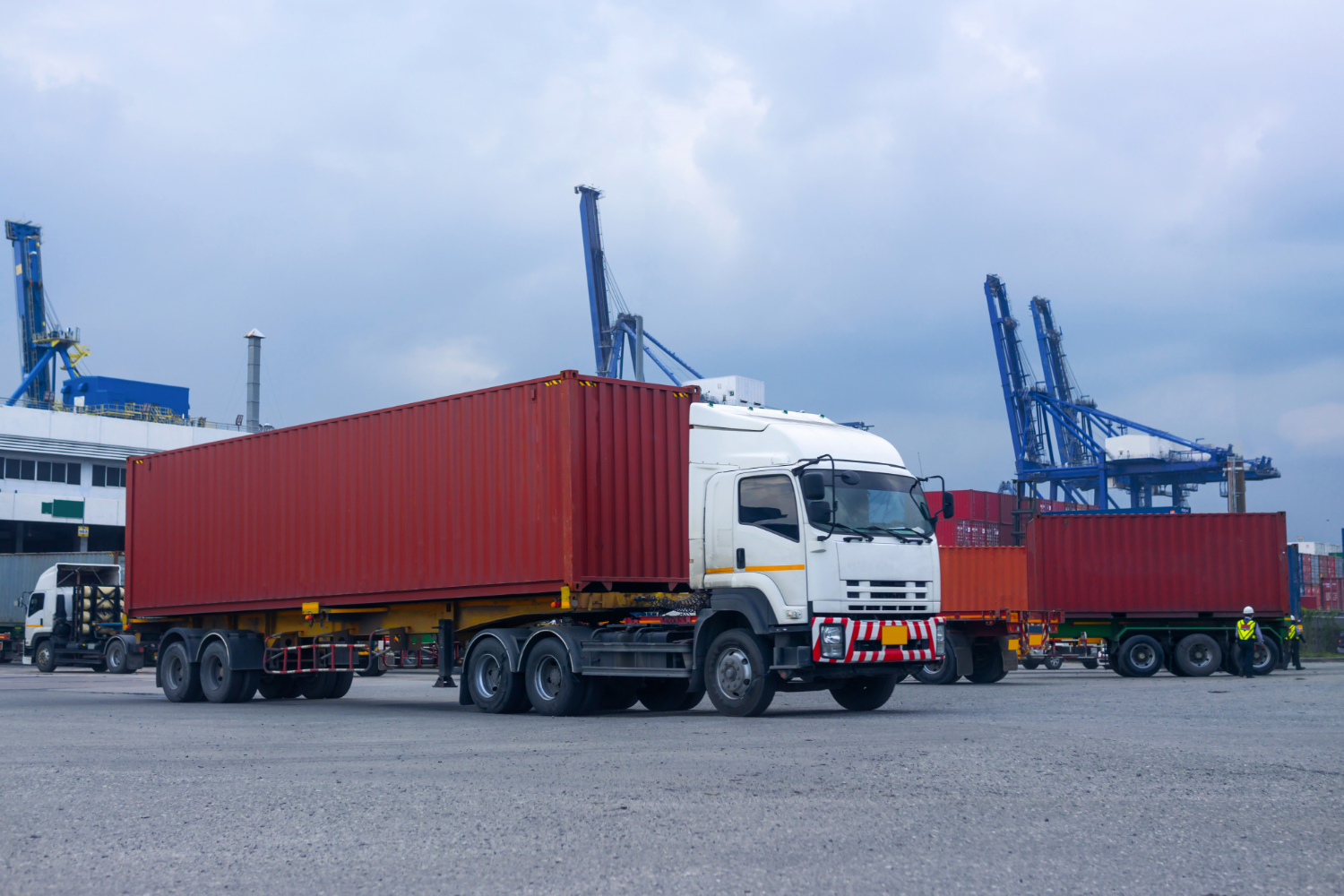
Linehaul transportation carries a significant share of Australia’s domestic freight task, which the Bureau of Infrastructure and Transport Research Economics (BITRE) estimates reached 786 billion tonne-kilometres in 2024–25. For freight managers, logistics coordinators, and operations teams that ship products between states frequently, understanding exactly where linehaul sits in that network directly affects transport costs, delivery reliability, and carrier selection.
Interstate freight issues more often stem from service mismatches than carrier failure, such as using courier services for pallet volumes or choosing a mode without considering cost and transit time trade-offs.
This article explains what linehaul transportation is, how it functions within the Australian freight system, which modes it uses, and the conditions under which it delivers the most operational value.
Compare road and rail linehaul services between interstate hubs and book through Couriers & Freight.
Get a Quote NowCompare linehaul-capable road and rail services at Couriers & Freight.
Linehaul transportation is the depot-to-depot movement of consolidated freight between an origin terminal and a destination terminal over a long-distance interstate corridor. A manufacturer in Sydney loads pallets at their warehouse, a local carrier collects them and brings them to the Sydney freight depot, and a linehaul vehicle then carries those pallets overnight to the Melbourne terminal, covering approximately 900 kilometres in a single shift. From the Melbourne terminal, a local delivery fleet disperses the freight to individual receivers. The Sydney-to-Melbourne depot-to-depot leg is the linehaul portion of that shipment.
Linehaul is the middle leg of a three-part freight chain. The first leg is first-mile collection, where a local vehicle picks up freight from the sender and delivers it to the origin hub. The third leg is last-mile delivery, where a local vehicle carries freight from the destination hub to the receiver. Linehaul sits between these two legs and is sometimes referred to as the "middle mile," though that term describes its position in the chain rather than its primary definition.
Linehaul excludes both pickup from the sender and final delivery to the receiver. Businesses that expect a linehaul rate to include door-to-door service are selecting the wrong service tier.
Linehaul mode selection in Australia depends on freight volume, delivery speed requirements, and route length.
Road linehaul uses semi-trailers, B-Doubles, B-Triples, and road trains, with vehicle type determined by load volume and the road access categories applicable to each route. A standard B-Double carries approximately 32 to 34 standard Australian pallets when single stacking, while a semi-trailer fits around 20 to 22 pallets on the same basis.
Most metro-to-metro road linehaul runs overnight on fixed departure schedules, with freight arriving at the destination hub before morning delivery runs begin. Review road freight services for scheduled interstate road linehaul options.
Rail is the most volume-efficient mode for long interstate corridors, particularly on routes such as Perth to Sydney or Melbourne to Darwin, where distances reduce the cost competitiveness of road. Domestic interstate non-bulk rail freight grew from 4.7 billion to 24.0 billion tonne-kilometres between 1971-72 and 2019-20, at an average annual rate of 3.3%, confirming sustained commercial demand on long interstate corridors.
Rail suits non-urgent freight where per-unit cost matters more than transit speed. Review rail freight services for interstate rail linehaul options.
Air is the fastest linehaul option, used for high-value or time-critical freight where road and rail transit times cannot meet the delivery requirement. Domestic air freight accounts for less than 0.1% of all domestic freight and mainly carries high-value, low-density goods such as mail, small parcels, and perishables. Air freight carries a significant cost premium and is not suited to standard palletised freight. Review air freight services for time-critical linehaul options.
Consolidating freight into bulk loads on a shared linehaul network reduces the per-pallet or per-kilogram rate compared to dispatching individual consignments. When a carrier fills a B-Double with 32 to 34 pallets heading to the same destination hub, the fixed operating costs of that vehicle spread across every pallet on board. A business sending those same pallets individually through a courier service pays a higher per-unit rate because each consignment absorbs a greater share of the trip cost.
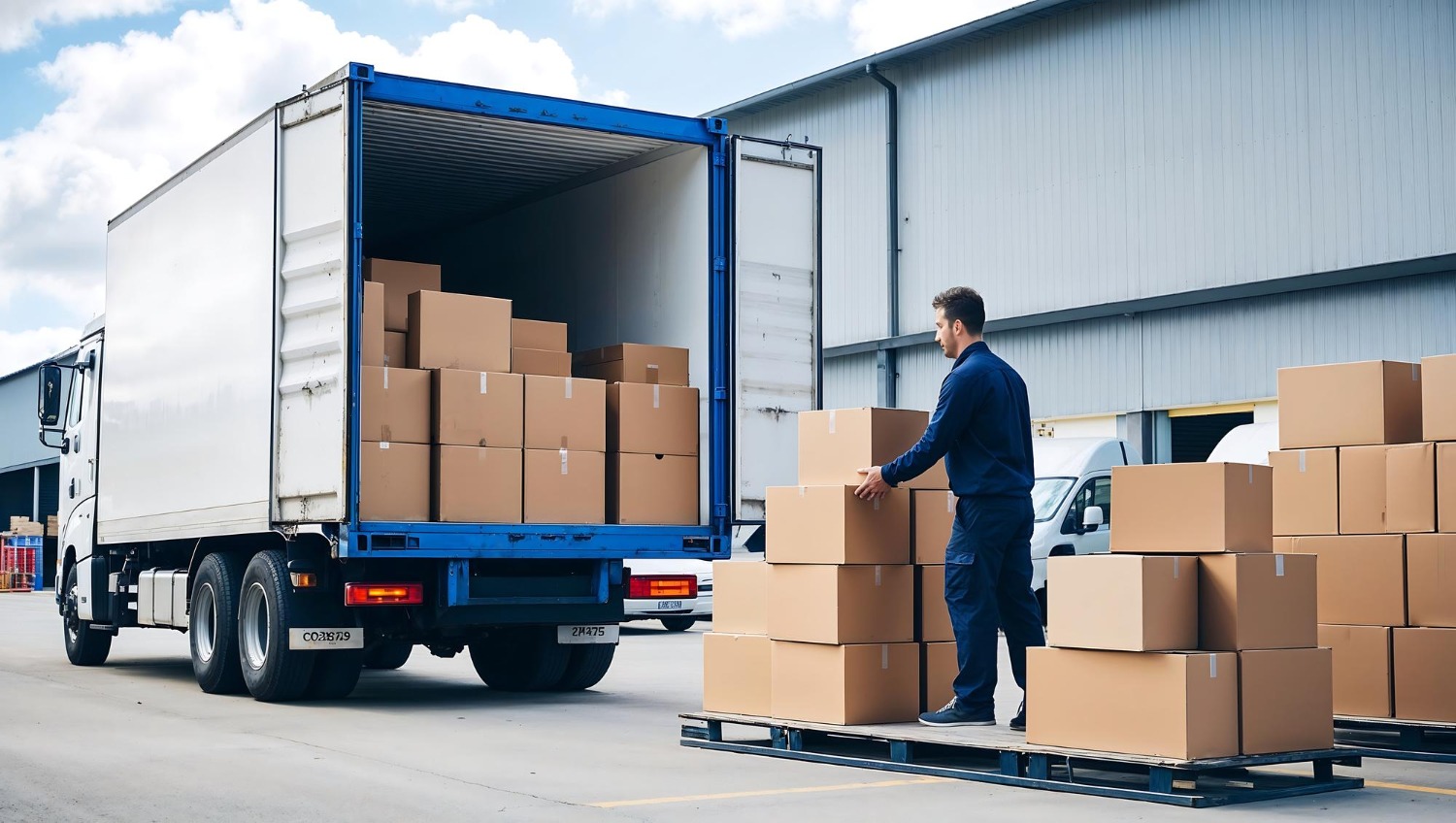
Fixed departure schedules allow freight managers to build fixed delivery windows into supply chain planning. Most metro-to-metro linehaul services depart in the evening and arrive at the destination hub in the early hours, with freight sorted and loaded onto local delivery vehicles before morning dispatch.
For a freight manager coordinating inbound stock at a distribution centre, that schedule consistency means dock staffing, warehouse labour, and inventory systems can operate on a predictable schedule.
Linehaul networks handle single pallets through to full trailer loads on the same infrastructure, which means businesses do not need to restructure their carrier arrangements as freight volumes increase. A semi-trailer carries approximately 20 to 22 standard pallets when single stacking, while a B-Double carries 32 to 34.
A business currently moving five pallets per week to Melbourne can increase that volume to a full B-Double load using the same network and booking process.
Bulk hub-to-hub movement reduces the number of times freight transfers between vehicles or depots during transit. A direct overnight linehaul service from Sydney to Melbourne moves freight from the origin depot to the destination terminal in a single run, whereas a multi-leg courier-based service covering the same distance may transfer freight between two or three sorting facilities.
Each transfer introduces an opportunity for mishandling, delay, or damage. Fewer touchpoints are particularly relevant for fragile goods, high-value product, and compliance-sensitive freight such as food-grade items, pharmaceutical products, or goods subject to temperature controls or handling requirements under Australian chain of responsibility legislation.
Linehaul suitability is a question of freight volume and route structure. It is not the right service tier for every shipment, and the decision comes down to the regularity of your freight movements, the size of your loads, and your destination network. Businesses moving infrequent, small parcels between states on an ad hoc basis are better served by courier or express freight services.
Linehaul is the appropriate service tier when your business:
Couriers & Freight connects shippers to road and rail linehaul carriers across Australia's major interstate corridors through a single booking platform. Rather than contacting individual carriers and managing separate accounts, freight managers and logistics coordinators compare scheduled road and rail linehaul services, select the right carrier for their route and volume, and confirm the booking.
The booking process works in four steps: enter your freight details, compare available carrier services and rates, select the preferred option, and track the consignment from pickup through to the delivery hub from the same dashboard. For businesses moving full trailer loads, the platform also covers Full Truck Load (FTL) services, where a dedicated vehicle carries the load without sharing trailer space with other consignments.
Compare road and rail linehaul services at Couriers & Freight.
Compare road and rail linehaul services between interstate hubs and book through Couriers & Freight.
Get a Quote Now


MHP

No Surcharge*

$16.50
$14
$15.50
$0
$15.50
$14.75
$0
$0
$0
$0
MHP Large Item
No Surcharge*
$16.50
$75
$62
$62
$60.10
$14.75
$0
$0
$0
$0
Residential Pickup
No Surcharge*
$6
$0
$9
--
$9
$10.60
$0
$0
$0
$38.50
Reidential pick up 30-99kgs
No Surcharge*
$63
$0
$9
$0
$9
$74.15
$20
Won't carry
Won't carry
$38.50
Residential pick up 100kgs+
No Surcharge*
$198
$0
$9
$0
$9
$158.87
$50
Won't carry
Won't carry
$38.50
Residential Delivery up to 29kgs
No Surcharge*
$6
$0
$9
--
$9.00
$10.60
$0
$0
$0
$38.50
Residential Delivery up 30-99kgs
No Surcharge*
$63
$0
$9
$0
$9
$74.15
$20
Won't carry
Won't carry
$38.50
Residential Delivery 100kgs+
No Surcharge*
$198
$0
$9
--
$9
$158.57
$50
Won't carry
Won't carry
$38.50
Tail Lift Pick up 50-99kgs Sydney / Melbourne
No Surcharge*
$45
$50-$250
$88
$88
$88
$44.07
$120
Won't carry
Won't carry
$61.50
Tail Lift Pick up 100-299kgs Sydney / Melbourne
No Surcharge*
$85
$50-$250
$88
$88
$88
$44.07
$120
Won't carry
Won't carry
$61.50
Tail Lift Pick up 300-499kgs Sydney / Melbourne
No Surcharge*
$120
$50-$250
$88
$88
$88
$44.07
$120
Won't carry
Won't carry
$61.50
Tail Lift Pick up 500kgs + Sydney / Melbourne
No Surcharge*
$250
$50-$250
$88
$88
$88
$44.07
$120
Won't carry
Won't carry
$61.50
Tail Lift Delivery 50-99kgs Sydney / Melbourne
No Surcharge*
$45
$50-$250
$88
$88
$88
$44.07
$120
Won't carry
Won't carry
$61.50
Tail Lift Delivery 100-299kgs Sydney / Melbourne
No Surcharge*
$85
$50-$250
$88
$88
$88
$44.07
$120
Won't carry
Won't carry
$61.50
Tail Lift Delivery300-499kgs Sydney / Melbourne
No Surcharge*
$120
$50-$250
$88
$88
$88
$44.07
$120
Won't carry
Won't carry
$61.50
Tail Lift Delivery 500kgs + Sydney / Melbourne
No Surcharge*
$250
$50-$250
$88
$88
$88
$44.07
$120
Won't carry
Won't carry
$61.50
Dead weight over 32KGS carton freight
No Surcharge*
$16.50
$75
$70
$70
$70
$14.75
$0
Won't carry
Won't carry
$0
Oversize Surcharge 1.20 - 1.54
No Surcharge*
--
$0
$0
$0
$0
$5.40
$10
$15
Won't carry
$0
Oversize Surcharge 1.55 - 1.85
No Surcharge*
$17
$20
$0
$0
$0
$11.93
$10
$15
Won't carry
$0
Oversize Surcharge 1.86 - 2.20
No Surcharge*
$37
$40
$0
$0
$0
$11.93
$10
Won't carry
Won't carry
$0
Pallet Surcharge
No Surcharge*
--
$0
$0
$0
$0
$0
$0
Won't carry
Won't carry
$0
Hand Unload Fee Carton
No Surcharge*
--
$0
$70
$70
$70
$47
$0
Won't carry
Won't carry
$61.50
Western Australia Regional Surcharge
No Surcharge*
%10
$0
$0
$0
$0
$0
$0
$0
$0
$0
*Surcharges may apply to areas/deimensions not listed
**Prices correct of 16th September 2024

Click to start shipping in less than 60 seconds