
🎄 Festive Rush - Deliveries might take a bit longer. We appreciate your patience.
Festive Period 2025
Cut-Off Times


In 2023–24, Australia’s rail freight network moved around 448 billion tonne-kilometres, reinforcing rail’s role in moving goods across long domestic corridors. For businesses shipping a full container from Perth to Sydney, the challenge is less about access and more about managing costs, schedules, and multiple inter-terminal handovers across the east–west corridor.
This guide explains how rail freight from Perth to Sydney works in practice, including container requirements, transit time considerations, and preparation steps, so you can plan a more predictable and cost-effective container move.
Move a full shipping container by rail between Perth and Sydney using Couriers & Freight.
Get a Quote NowKey operational considerations include:
For businesses comparing rail options or coordinating interstate container moves, Couriers & Freight provides a single platform to view schedules, compare carriers, and manage bookings from pickup through to delivery.
Rail freight is commonly used for moving full containers across long distances, particularly when shipments are heavy, palletised, or need predictable transit windows for inventory planning. On the Perth–Sydney corridor, rail reduces reliance on continuous long-haul trucking by shifting most of the journey to scheduled linehaul, with handling concentrated at rail terminals rather than multiple road stops.
Industry data reflects this role at a national level. The Rail Freight Transport industry in Australia is forecast to generate approximately $8.0 billion in revenue in 2025–26, highlighting rail’s ongoing importance for long-distance domestic freight movements. By tonne-kilometres, rail continues to account for a significant share of Australia’s long-haul freight task, particularly on transcontinental routes.
For businesses shipping containers between Perth and Sydney, rail aligns well with the need for scale and consistency. It is commonly paired with road transport for pickup and final-mile delivery, creating an intermodal approach that balances cost control with practical delivery access.
Arrange pickup from your site or port and prepare the container for loading. Secure all pallets, confirm forklift or crane access, and check tare and gross weights before collection. Clearly label the container and apply any required dangerous goods placards. Prepare the required consignment documentation for handover and confirm whether dangerous goods declarations are needed based on the cargo.
Deliver the sealed container to the nominated Perth rail terminal within the carrier’s cut-off window. Late delivery can result in storage or rehandling charges. Confirm that the terminal has the required handling equipment and that booking references and release paperwork match the carrier’s manifest.
The carrier moves the container along the east–west rail corridor. Transit times depend on whether the service runs as a block train or an intermodal service with scheduled handovers. Prepare the receiver for the expected arrival window and ensure insurance documentation covers any interstate interchanges.
At the Sydney terminal, operators offload and scan the container before holding it for collection or onward delivery. Check terminal handling instructions in advance, confirm whether a gate appointment is required, and ensure the receiving warehouse has suitable lifting equipment and staff available.
Arrange final-mile drayage or on-site unpacking ahead of arrival. Confirm delivery appointments with the NSW distribution centre and agree on proof-of-delivery requirements, such as signed dockets or photo confirmation.
When shipping containers from Perth to Sydney by rail, selecting the correct container type is critical for terminal handling, load stability, and compliance with corridor requirements
Best suited to smaller consignments or heavy, compact cargo such as machinery parts or dense palletised goods. Their shorter length makes them easier to handle at rail terminals and during final-mile delivery.
Commonly used for larger shipments and full container loads. They maximise space for multiple pallets or bulk inventory and are widely supported across the Perth–Sydney rail network.
Used for oversized or irregular freight that cannot be containerised, including machinery and structural components. Loads must be carefully secured and evenly positioned to prevent movement during rail transit.
Provide additional internal height for tall or stacked goods where volume is the primary constraint rather than weight.
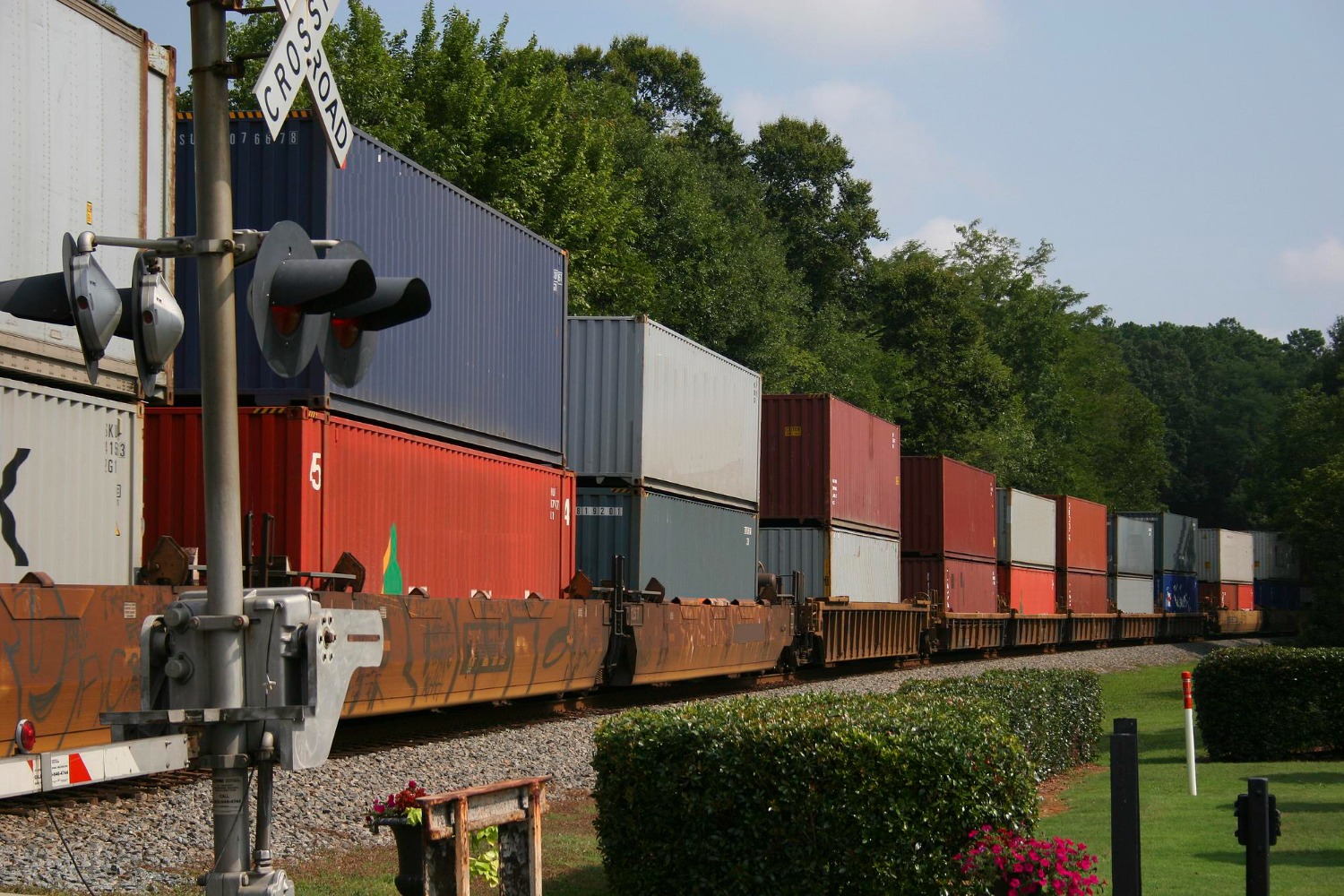
For container shipments moving from Perth to Sydney by rail, terminal-to-terminal transit times are typically within 3–5 business days under normal operating conditions. Actual timing depends on the carrier’s schedule, terminal processing capacity, and the availability of intermodal transfers, so transit windows should always be confirmed at the time of booking. Rail freight rates are quote-based and can differ significantly between carriers and service options.
Freight demand, network capacity, and fuel costs also influence pricing over time. For this reason, two carriers may quote different rates for the same container movement depending on availability and scheduling.
Before a container is accepted at a rail terminal, it must be packed, secured, and documented to meet rail handling and safety requirements.
Coordinating a container movement from Perth to Sydney often means comparing multiple rail carriers, each with different schedules, cut-off times, and delivery options. Couriers & Freight makes these differences visible at the time of booking and allows businesses to compare availability and transit windows.
For shipments that need preparation before rail staging, Couriers & Freight can arrange palletising, container pickup from a warehouse or depot, and transfers into Perth rail terminals. This is particularly useful when containers are staged at yards or need to meet specific cut-off times at terminals such as Forrestfield or Fremantle.
Once the container is moving east, bookings and tracking are managed in one place, making it easier for Sydney distribution centres to plan receiving and final-mile delivery.
Book your Perth-Sydney rail freight with Couriers & Freight today.
Move a full shipping container by rail between Perth and Sydney using Couriers & Freight.
Get a Quote Now


MHP

No Surcharge*

$16.50
$14
$15.50
$0
$15.50
$14.75
$0
$0
$0
$0
MHP Large Item
No Surcharge*
$16.50
$75
$62
$62
$60.10
$14.75
$0
$0
$0
$0
Residential Pickup
No Surcharge*
$6
$0
$9
--
$9
$10.60
$0
$0
$0
$38.50
Reidential pick up 30-99kgs
No Surcharge*
$63
$0
$9
$0
$9
$74.15
$20
Won't carry
Won't carry
$38.50
Residential pick up 100kgs+
No Surcharge*
$198
$0
$9
$0
$9
$158.87
$50
Won't carry
Won't carry
$38.50
Residential Delivery up to 29kgs
No Surcharge*
$6
$0
$9
--
$9.00
$10.60
$0
$0
$0
$38.50
Residential Delivery up 30-99kgs
No Surcharge*
$63
$0
$9
$0
$9
$74.15
$20
Won't carry
Won't carry
$38.50
Residential Delivery 100kgs+
No Surcharge*
$198
$0
$9
--
$9
$158.57
$50
Won't carry
Won't carry
$38.50
Tail Lift Pick up 50-99kgs Sydney / Melbourne
No Surcharge*
$45
$50-$250
$88
$88
$88
$44.07
$120
Won't carry
Won't carry
$61.50
Tail Lift Pick up 100-299kgs Sydney / Melbourne
No Surcharge*
$85
$50-$250
$88
$88
$88
$44.07
$120
Won't carry
Won't carry
$61.50
Tail Lift Pick up 300-499kgs Sydney / Melbourne
No Surcharge*
$120
$50-$250
$88
$88
$88
$44.07
$120
Won't carry
Won't carry
$61.50
Tail Lift Pick up 500kgs + Sydney / Melbourne
No Surcharge*
$250
$50-$250
$88
$88
$88
$44.07
$120
Won't carry
Won't carry
$61.50
Tail Lift Delivery 50-99kgs Sydney / Melbourne
No Surcharge*
$45
$50-$250
$88
$88
$88
$44.07
$120
Won't carry
Won't carry
$61.50
Tail Lift Delivery 100-299kgs Sydney / Melbourne
No Surcharge*
$85
$50-$250
$88
$88
$88
$44.07
$120
Won't carry
Won't carry
$61.50
Tail Lift Delivery300-499kgs Sydney / Melbourne
No Surcharge*
$120
$50-$250
$88
$88
$88
$44.07
$120
Won't carry
Won't carry
$61.50
Tail Lift Delivery 500kgs + Sydney / Melbourne
No Surcharge*
$250
$50-$250
$88
$88
$88
$44.07
$120
Won't carry
Won't carry
$61.50
Dead weight over 32KGS carton freight
No Surcharge*
$16.50
$75
$70
$70
$70
$14.75
$0
Won't carry
Won't carry
$0
Oversize Surcharge 1.20 - 1.54
No Surcharge*
--
$0
$0
$0
$0
$5.40
$10
$15
Won't carry
$0
Oversize Surcharge 1.55 - 1.85
No Surcharge*
$17
$20
$0
$0
$0
$11.93
$10
$15
Won't carry
$0
Oversize Surcharge 1.86 - 2.20
No Surcharge*
$37
$40
$0
$0
$0
$11.93
$10
Won't carry
Won't carry
$0
Pallet Surcharge
No Surcharge*
--
$0
$0
$0
$0
$0
$0
Won't carry
Won't carry
$0
Hand Unload Fee Carton
No Surcharge*
--
$0
$70
$70
$70
$47
$0
Won't carry
Won't carry
$61.50
Western Australia Regional Surcharge
No Surcharge*
%10
$0
$0
$0
$0
$0
$0
$0
$0
$0
*Surcharges may apply to areas/deimensions not listed
**Prices correct of 16th September 2024

Click to start shipping in less than 60 seconds