
🎄 Festive Rush - Deliveries might take a bit longer. We appreciate your patience.
Festive Period 2025
Cut-Off Times

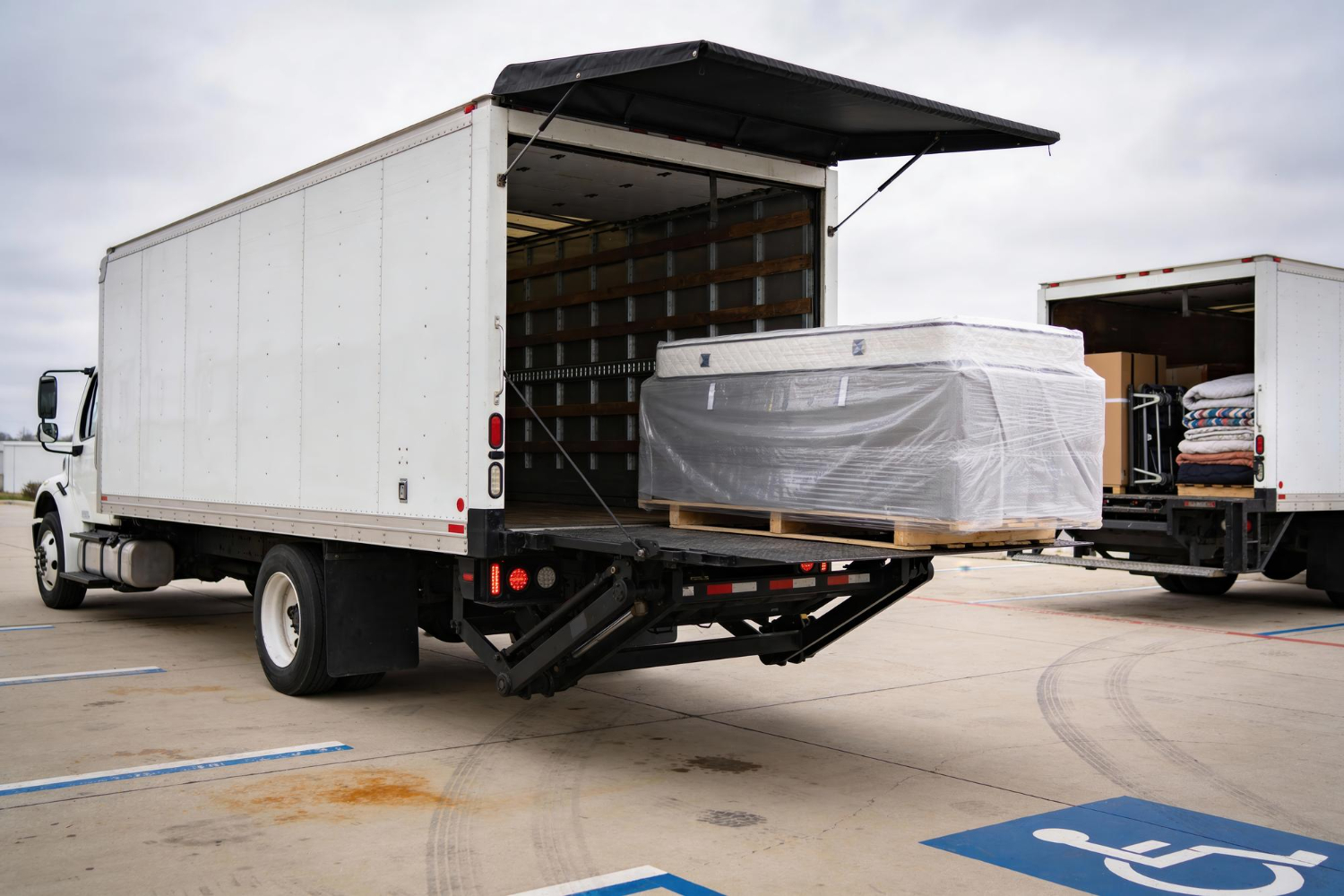
Tail lift delivery is required when a site has no forklift, loading dock or unloading ramp available to receive freight. Safe Work Australia classifies lifting, lowering and carrying heavy loads as hazardous manual tasks where site conditions prevent safe handling, making the delivery method a compliance obligation under Australian WHS law.
Booking standard road freight to a site without unloading equipment can result in failed deliveries, redelivery charges, and avoidable delays. The site conditions, freight characteristics and WHS triggers that determine when a tail lift vehicle is required are set out below.
Book domestic road freight with a tail lift vehicle through Couriers & Freight's carrier network across Australia.
Get a Quote NowIf any of the following conditions apply, a tail-lift delivery is usually required:
If these conditions apply to your delivery, obtain a tail lift freight quote through Couriers & Freight before booking.
A tail lift delivery is generally required when the delivery site cannot unload freight using its own equipment, when the freight cannot be safely lowered manually, or when WHS obligations require mechanical assistance.
Pro Tip: Before booking, freight receivers should assess the delivery location, the freight itself, and any unloading requirements that may affect driver safety.
The most common reason for requiring a tail lift vehicle is the absence of unloading infrastructure at the delivery location. Standard freight vehicles are designed to unload at sites equipped with a loading dock, forklift or unloading ramp. Where these facilities are unavailable, mechanical assistance is required to move freight safely from vehicle height to ground level.
Sites that commonly require a tail lift delivery include:
Before booking, confirm the following:
For example, an e-commerce retailer delivering a pallet of outdoor furniture to a private residence will almost always require a tail lift delivery because the customer is unlikely to have unloading equipment. The same applies to a shopfront receiving bulk stock through a front entrance rather than a dedicated loading bay.
Safe Work Australia's Model Code of Practice for Hazardous Manual Tasks recommends eliminating or minimising risks associated with lifting and lowering heavy loads through suitable control measures, including mechanical aids where appropriate.
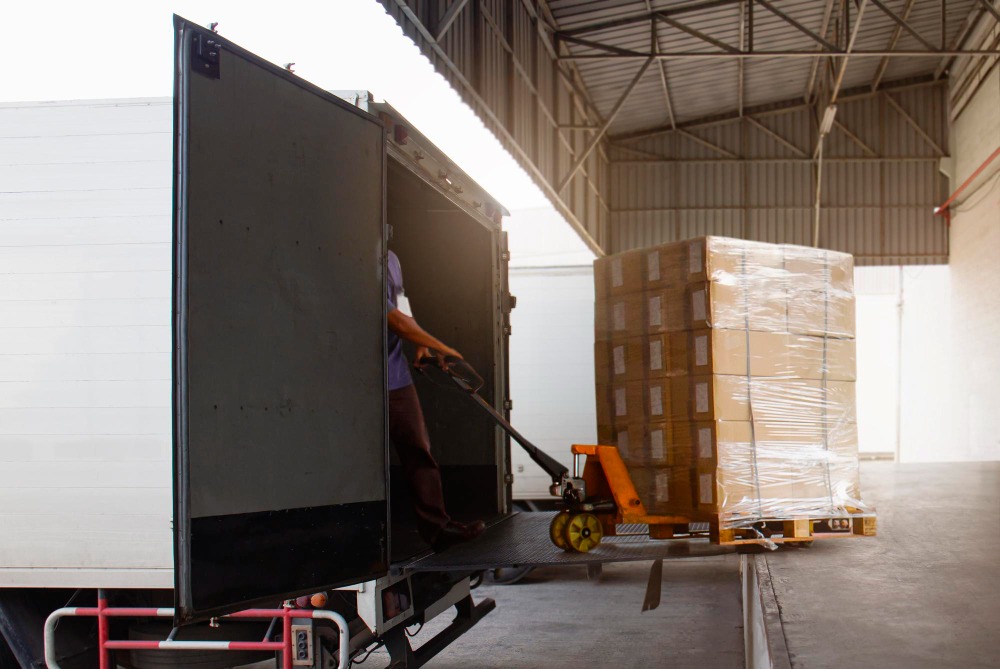
The characteristics of the freight can also determine whether a tail lift delivery is necessary. Australian WHS guidance does not prescribe a single legal lifting limit.
Instead, businesses must assess the risks associated with hazardous manual tasks and use appropriate controls where high-force lifting is involved.
Freight commonly requiring mechanical lowering includes:
In many cases, the challenge is not the weight of an individual item but the way the freight is packaged and presented for delivery. A pallet of stock, cartons secured to a skid, or a large commercial appliance may be impossible to unload safely without hydraulic assistance.
Examples include:
These consignments are often too heavy, bulky or fragile to unload safely without a tail lift delivery.
Australian Work Health and Safety (WHS) obligations extend beyond warehouses and freight depots. Under the Heavy Vehicle National Law, every party in the Chain of Responsibility must make sure, so far as reasonably practicable, the safety of transport activities they influence or control.
The National Heavy Vehicle Regulator (NHVR) also states that loading and unloading activities fall within Chain of Responsibility obligations and must be managed safely.
In practice, where a site cannot unload freight safely using its own equipment, mechanical unloading assistance is often required to meet safety obligations.
For many residential and small commercial deliveries, a tail lift vehicle is the most practical way to meet those requirements while reducing risks to drivers and receivers.
Tail lift vehicles have operational limits that should be confirmed before booking.
If your delivery site has no forklift, loading dock or unloading ramp, and your freight cannot be safely unloaded by hand, book a domestic road freight service with a tail lift vehicle.
Couriers & Freight gives Australian businesses access to multiple road freight carriers through a single quote. Tail lift freight is bookable directly through the platform, with carriers covering metropolitan, regional and interstate routes across Queensland, Victoria, New South Wales and other states.
Compare carrier rates, confirm the vehicle configuration that suits your site requirements, and book through domestic road freight services.
Get a tail lift freight quote and book the appropriate vehicle for your delivery.
Yes. Carriers apply a surcharge when a tail-lift vehicle is required because the equipment adds to operational costs and handling time. The surcharge amount varies by carrier and route. Comparing quotes from multiple carriers through a single platform is the most direct way to find the current rate for your specific delivery.
Standard tail lift vehicles used in Australian road freight commonly handle loads between 500 kg and 1,000 kg, depending on the vehicle type and carrier. Confirm the weight capacity with your carrier before booking, particularly for dense palletised goods or heavy commercial equipment.
Generally not. Tail lifts and pallet jacks require a firm, level, paved surface such as concrete or sealed asphalt. Soft ground, gravel, grass and steep or uneven driveways prevent safe operation. If the unloading area does not meet these surface requirements, the delivery may not proceed.
Book domestic road freight with a tail lift vehicle through Couriers & Freight's carrier network across Australia.
Get a Quote Now


MHP

No Surcharge*

$16.50
$14
$15.50
$0
$15.50
$14.75
$0
$0
$0
$0
MHP Large Item
No Surcharge*
$16.50
$75
$62
$62
$60.10
$14.75
$0
$0
$0
$0
Residential Pickup
No Surcharge*
$6
$0
$9
--
$9
$10.60
$0
$0
$0
$38.50
Reidential pick up 30-99kgs
No Surcharge*
$63
$0
$9
$0
$9
$74.15
$20
Won't carry
Won't carry
$38.50
Residential pick up 100kgs+
No Surcharge*
$198
$0
$9
$0
$9
$158.87
$50
Won't carry
Won't carry
$38.50
Residential Delivery up to 29kgs
No Surcharge*
$6
$0
$9
--
$9.00
$10.60
$0
$0
$0
$38.50
Residential Delivery up 30-99kgs
No Surcharge*
$63
$0
$9
$0
$9
$74.15
$20
Won't carry
Won't carry
$38.50
Residential Delivery 100kgs+
No Surcharge*
$198
$0
$9
--
$9
$158.57
$50
Won't carry
Won't carry
$38.50
Tail Lift Pick up 50-99kgs Sydney / Melbourne
No Surcharge*
$45
$50-$250
$88
$88
$88
$44.07
$120
Won't carry
Won't carry
$61.50
Tail Lift Pick up 100-299kgs Sydney / Melbourne
No Surcharge*
$85
$50-$250
$88
$88
$88
$44.07
$120
Won't carry
Won't carry
$61.50
Tail Lift Pick up 300-499kgs Sydney / Melbourne
No Surcharge*
$120
$50-$250
$88
$88
$88
$44.07
$120
Won't carry
Won't carry
$61.50
Tail Lift Pick up 500kgs + Sydney / Melbourne
No Surcharge*
$250
$50-$250
$88
$88
$88
$44.07
$120
Won't carry
Won't carry
$61.50
Tail Lift Delivery 50-99kgs Sydney / Melbourne
No Surcharge*
$45
$50-$250
$88
$88
$88
$44.07
$120
Won't carry
Won't carry
$61.50
Tail Lift Delivery 100-299kgs Sydney / Melbourne
No Surcharge*
$85
$50-$250
$88
$88
$88
$44.07
$120
Won't carry
Won't carry
$61.50
Tail Lift Delivery300-499kgs Sydney / Melbourne
No Surcharge*
$120
$50-$250
$88
$88
$88
$44.07
$120
Won't carry
Won't carry
$61.50
Tail Lift Delivery 500kgs + Sydney / Melbourne
No Surcharge*
$250
$50-$250
$88
$88
$88
$44.07
$120
Won't carry
Won't carry
$61.50
Dead weight over 32KGS carton freight
No Surcharge*
$16.50
$75
$70
$70
$70
$14.75
$0
Won't carry
Won't carry
$0
Oversize Surcharge 1.20 - 1.54
No Surcharge*
--
$0
$0
$0
$0
$5.40
$10
$15
Won't carry
$0
Oversize Surcharge 1.55 - 1.85
No Surcharge*
$17
$20
$0
$0
$0
$11.93
$10
$15
Won't carry
$0
Oversize Surcharge 1.86 - 2.20
No Surcharge*
$37
$40
$0
$0
$0
$11.93
$10
Won't carry
Won't carry
$0
Pallet Surcharge
No Surcharge*
--
$0
$0
$0
$0
$0
$0
Won't carry
Won't carry
$0
Hand Unload Fee Carton
No Surcharge*
--
$0
$70
$70
$70
$47
$0
Won't carry
Won't carry
$61.50
Western Australia Regional Surcharge
No Surcharge*
%10
$0
$0
$0
$0
$0
$0
$0
$0
$0
*Surcharges may apply to areas/deimensions not listed
**Prices correct of 16th September 2024

Click to start shipping in less than 60 seconds