
🎄 Festive Rush - Deliveries might take a bit longer. We appreciate your patience.
Festive Period 2025
Cut-Off Times

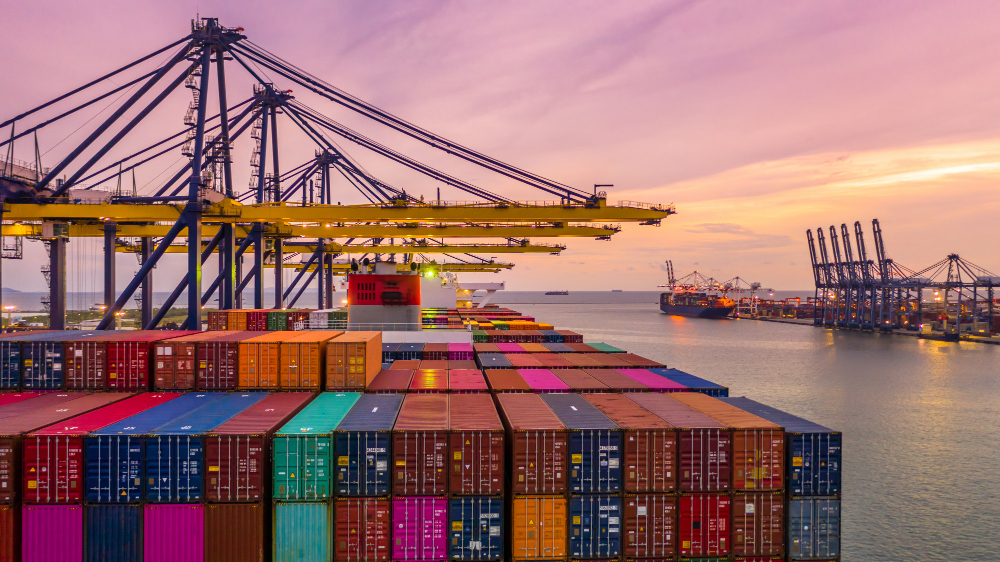
The Australia-EU free trade agreement will allow 97.8% of Australian goods exports to enter the European Union duty-free when it enters into force, increasing to 98% within seven years.
For exporters, this agreement will give improved access to one of the world's largest trading markets, supporting exporters across agriculture, manufacturing, resources, and other key industries.
This guide explains which goods the agreement covers and when tariff changes take effect. It also covers the practical steps Australian businesses should take now to prepare their freight and export arrangements before preferential rates apply.
Get a sea freight quote for shipments to Europe ahead of the new tariff changes.
Get a Quote NowBefore looking at the detail, here are the key facts Australian businesses should know about the Australia-EU free trade agreement:
If you need a broader overview before planning shipments, read our guide to exporting from Australia to Europe.
Several categories of Australian exports will receive immediate tariff elimination under the Australia-EU free trade agreement when it enters into force.
This includes:
Exporters will also benefit from the expansion of Australia's duty-free access for red meat exports. Beef quota access will reach 35,000 tonnes carcase weight equivalent per year, including 30,600 tonnes of new market access.
According to the Australian Government, this represents almost an eight-fold increase over Australia's previous guaranteed access. Sheep meat quota access will reach 30,851 tonnes per year, including 25,000 tonnes of new access, representing more than a five-fold increase on Australia's existing WTO quota. These volumes are phased in over seven to ten years following entry into force.
The Australia-EU free trade agreement removes EU tariffs on Australian critical minerals, including lithium, manganese and aluminium. Once ratified and implemented, exporters of these products will be able to supply eligible goods to the European market duty-free, reducing import costs for European buyers and improving market access for Australian producers.
European exporters gain new access to the Australian market under the agreement. Australia's standard 5% import tariff will be removed on a range of European goods, including motor vehicles, machinery, chemicals, electronics and textiles, according to the European Commission.
The agreement separately introduces a new Luxury Car Tax threshold of $120,000 for zero-emission vehicles, up from the current $91,387 fuel-efficient threshold, benefiting European EV manufacturers.
The Australia-EU trade agreement does not lift every restriction. Australian wine producers may keep using the name "Prosecco" domestically, but the term cannot be applied to wine exported to the EU under the agreement. A 10-year phase-out applies to exports once the updated Wine Agreement takes effect.
This matters for any wine or beverage exporter because it affects labelling decisions for goods destined for EU markets and may require product renaming before export.
The agreement also does not establish general free movement or blanket working rights for EU nationals in Australia. It includes narrower, defined mobility provisions, such as time-limited pathways for researchers, intra-corporate transferees, and graduate trainees.
Broader visa and immigration questions continue to be governed separately.
The agreement recognises more than 165 European food geographical indications and more than 1,600 protected wine and spirit names in Australia. This means Australian producers cannot use protected names on products sold in Australia unless those goods originate from the recognised European region.
Examples include Parmigiano Reggiano and Kransky.
Businesses producing food, wine or beverages should review product names before supplying the Australian or European market. The complete list of protected geographical indications is available through the Department of Foreign Affairs and Trade.
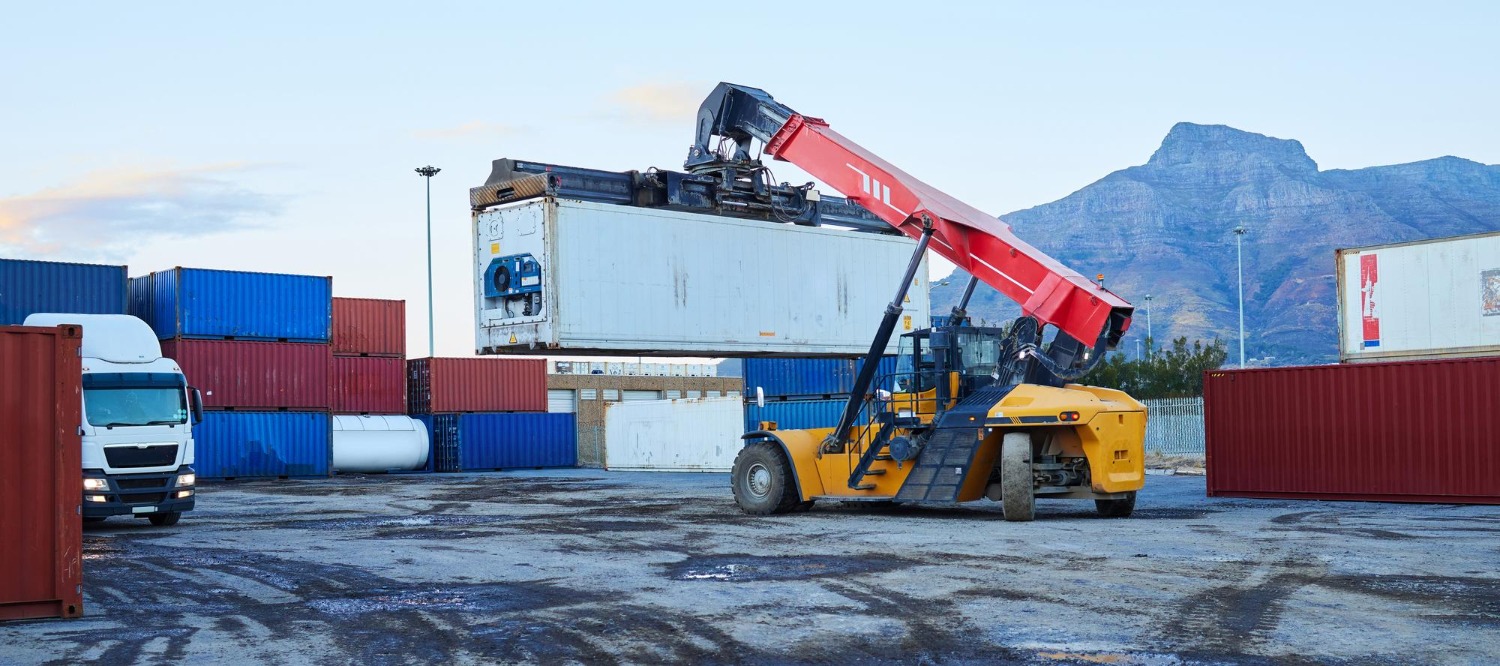
The Australia-EU free trade agreement has been concluded but is not yet in force. Before businesses can access preferential tariff rates, both Australia and the European Union must complete their respective ratification processes.
The process includes:
DFAT expects the full ratification and implementation process to take up to a year after signature, although timing depends on both parties completing their domestic procedures.
Businesses planning exports to Europe should review carrier capacity, documentation requirements and freight schedules now so they can benefit from preferential tariffs as soon as they become available.
As the Australia-EU free trade agreement progresses towards implementation, businesses should assess whether their current freight arrangements are ready to support increased trade with Europe.
Lower tariffs can reduce landed costs, but businesses also need competitive freight solutions that match their shipment volumes, delivery schedules and supply chain requirements.
Sea freight is commonly used for bulk agricultural products, manufactured goods and mineral exports where lower transport costs are the priority. Air freight is better suited to smaller or time-sensitive shipments where faster transit times are more important than freight costs. The most suitable option depends on the type of goods being shipped and business requirements.
Couriers & Freight gives Australian businesses access to sea freight rates from multiple carriers for shipments to Europe. Comparing carrier options before the agreement takes effect reduces the risk of delays once export volumes increase.
Request an Ocean Shipping to the EU quote to lock in a carrier ahead of the tariff changes.
Get a sea freight quote for shipments to Europe ahead of the new tariff changes.
Get a Quote NowNo. The agreement does not create general working rights for EU nationals in Australia. It includes limited mobility arrangements for specific business activities and professional categories.
No. The agreement does not establish free movement between Australia and the European Union. Immigration and residency remain subject to each country's domestic laws.
Yes. The agreement includes limited business mobility provisions for eligible professionals and service suppliers. It does not create new general visa pathways.
A higher Luxury Car Tax threshold of $120,000 will apply to eligible zero-emission vehicles, while the standard Luxury Car Tax remains in place for other vehicles.
The agreement has been concluded but is not yet in force and must complete Australia's and the European Union's ratification processes before preferential tariff rates apply.


MHP

No Surcharge*

$16.50
$14
$15.50
$0
$15.50
$14.75
$0
$0
$0
$0
MHP Large Item
No Surcharge*
$16.50
$75
$62
$62
$60.10
$14.75
$0
$0
$0
$0
Residential Pickup
No Surcharge*
$6
$0
$9
--
$9
$10.60
$0
$0
$0
$38.50
Reidential pick up 30-99kgs
No Surcharge*
$63
$0
$9
$0
$9
$74.15
$20
Won't carry
Won't carry
$38.50
Residential pick up 100kgs+
No Surcharge*
$198
$0
$9
$0
$9
$158.87
$50
Won't carry
Won't carry
$38.50
Residential Delivery up to 29kgs
No Surcharge*
$6
$0
$9
--
$9.00
$10.60
$0
$0
$0
$38.50
Residential Delivery up 30-99kgs
No Surcharge*
$63
$0
$9
$0
$9
$74.15
$20
Won't carry
Won't carry
$38.50
Residential Delivery 100kgs+
No Surcharge*
$198
$0
$9
--
$9
$158.57
$50
Won't carry
Won't carry
$38.50
Tail Lift Pick up 50-99kgs Sydney / Melbourne
No Surcharge*
$45
$50-$250
$88
$88
$88
$44.07
$120
Won't carry
Won't carry
$61.50
Tail Lift Pick up 100-299kgs Sydney / Melbourne
No Surcharge*
$85
$50-$250
$88
$88
$88
$44.07
$120
Won't carry
Won't carry
$61.50
Tail Lift Pick up 300-499kgs Sydney / Melbourne
No Surcharge*
$120
$50-$250
$88
$88
$88
$44.07
$120
Won't carry
Won't carry
$61.50
Tail Lift Pick up 500kgs + Sydney / Melbourne
No Surcharge*
$250
$50-$250
$88
$88
$88
$44.07
$120
Won't carry
Won't carry
$61.50
Tail Lift Delivery 50-99kgs Sydney / Melbourne
No Surcharge*
$45
$50-$250
$88
$88
$88
$44.07
$120
Won't carry
Won't carry
$61.50
Tail Lift Delivery 100-299kgs Sydney / Melbourne
No Surcharge*
$85
$50-$250
$88
$88
$88
$44.07
$120
Won't carry
Won't carry
$61.50
Tail Lift Delivery300-499kgs Sydney / Melbourne
No Surcharge*
$120
$50-$250
$88
$88
$88
$44.07
$120
Won't carry
Won't carry
$61.50
Tail Lift Delivery 500kgs + Sydney / Melbourne
No Surcharge*
$250
$50-$250
$88
$88
$88
$44.07
$120
Won't carry
Won't carry
$61.50
Dead weight over 32KGS carton freight
No Surcharge*
$16.50
$75
$70
$70
$70
$14.75
$0
Won't carry
Won't carry
$0
Oversize Surcharge 1.20 - 1.54
No Surcharge*
--
$0
$0
$0
$0
$5.40
$10
$15
Won't carry
$0
Oversize Surcharge 1.55 - 1.85
No Surcharge*
$17
$20
$0
$0
$0
$11.93
$10
$15
Won't carry
$0
Oversize Surcharge 1.86 - 2.20
No Surcharge*
$37
$40
$0
$0
$0
$11.93
$10
Won't carry
Won't carry
$0
Pallet Surcharge
No Surcharge*
--
$0
$0
$0
$0
$0
$0
Won't carry
Won't carry
$0
Hand Unload Fee Carton
No Surcharge*
--
$0
$70
$70
$70
$47
$0
Won't carry
Won't carry
$61.50
Western Australia Regional Surcharge
No Surcharge*
%10
$0
$0
$0
$0
$0
$0
$0
$0
$0
*Surcharges may apply to areas/deimensions not listed
**Prices correct of 16th September 2024

Click to start shipping in less than 60 seconds