
🎄 Festive Rush - Deliveries might take a bit longer. We appreciate your patience.
Festive Period 2025
Cut-Off Times


The Netherlands is one of Australia’s largest export markets within the European Union and a primary logistics gateway into continental Europe. For businesses shipping freight into Europe, it's also the most important entry point. Customs checks are thorough, documentation standards are strict, and shipments that arrive unprepared rarely clear without delays.
Shipments entering the Netherlands clear through the European Union (EU) Customs Union, which means documentation standards are strict, VAT obligations apply from the first euro of declared value, and parcels that arrive with incomplete invoices or vague product descriptions face delays at Schiphol or Rotterdam before reaching the final address.
This guide covers what you need to know before you ship, including service options by shipment size, what Dutch and EU customs actually require, realistic transit benchmarks, and how to avoid the documentation gaps that cause most delays.
Compare parcel, air freight, and sea freight rates for your shipment to the Netherlands and book online with Couriers & Freight.
Get a Quote NowCouriers & Freight provides a single platform to compare these options, book services, and manage international shipments from Australia to the Netherlands.
Businesses and individuals ship a wide range of goods from Australia to the Netherlands, from small commercial parcels to large freight consignments. What you are shipping affects how it is packed, which service is used, and what information is required for customs.
Identifying the shipment type early helps avoid size limits, handling issues, and clearance delays.
Australian businesses commonly ship clothing, footwear, accessories, homewares, and small consumer items to the Netherlands. These goods usually move as international parcels and must meet the carrier's size and weight limits. Each item should be clearly described on the invoice and packed to withstand multiple handling points.
Accurate item descriptions and values help prevent customs holds and unexpected charges on arrival. Businesses that regularly send parcels from Australia to the Netherlands should also confirm packaging meets the carrier's cubic weight and protection requirements.
Business documents, contracts, product samples, and low-volume orders are often time-sensitive. These shipments need clear sender and receiver details, a declared value, and tracking from pickup to delivery. Even when the contents have low commercial value, paperwork must still be complete to pass through Dutch customs without delay.
Spare parts, tools, and equipment components are often heavy or irregular in shape. These shipments may exceed standard parcel limits and require air or sea freight. Clear product descriptions, serial numbers where relevant, and accurate values are important for customs clearance. Proper packing protects parts from damage during long-distance transport.
Furniture and large household items take up space and often cannot move through parcel networks. These goods are usually shipped as consolidated freight or in dedicated containers. Measurements, weight, and packing method must be confirmed before booking. Planning ahead helps manage loading, transit time, and delivery access at the destination in the Netherlands.
When shipping from Australia to the Netherlands, the right service depends on how large the shipment is, how quickly it needs to arrive, and how it will be delivered at the destination. International shipping services are typically selected based on shipment weight, dimensions, delivery timeframe, and handling requirements. Couriers & Freight offers practical options tailored to different business needs.
Parcel delivery is used for documents, small packages, and low-volume online orders. Most carriers accept parcels up to around 30 kilograms, with pricing based on both weight and package size. These services usually include pickup, delivery to the final address in the Netherlands, and online tracking.
Parcel delivery works best when shipments are light, well-packed, and not time-critical beyond standard delivery windows. Courier services to the Netherlands are commonly used by e-Commerce businesses sending individual customer orders or replacement items.
Air freight is suitable for shipments that are too large or heavy for parcel networks or need to arrive sooner. Goods are transported through major airports and may be combined with other shipments to manage cost. Delivery times are shorter than sea freight but can vary based on flight schedules and customs processing. Air freight can be arranged from most Australian cities and delivered to business or residential addresses in the Netherlands.
Sea freight is used for large or bulky shipments that do not require fast delivery. Goods are shipped in shared containers for smaller volumes or in dedicated containers for full loads. Transit times are longer and usually measured in weeks rather than days. This option requires early planning, accurate measurements, and solid packing to protect goods during long transit and multiple handling stages.
Customs clearance in the Netherlands is administered by the Douane (Dutch Customs), operating within the EU Customs Union framework. This means the rules that apply to goods entering the Netherlands are consistent with broader EU import regulations. But enforcement is thorough, and incomplete or inaccurate paperwork is one of the most common reasons Australian shipments are delayed or held on arrival.
Every commercial shipment must include a commercial invoice that lists each item by description, quantity, unit value, and total declared value in a recognised currency. The invoice must also include the sender's and receiver's full details, the country of origin for each product, and the correct HS (Harmonised System) code for every item. Vague descriptions such as "goods" or "parts" are routinely flagged by the Douane and can trigger a full inspection or request for supporting documentation.
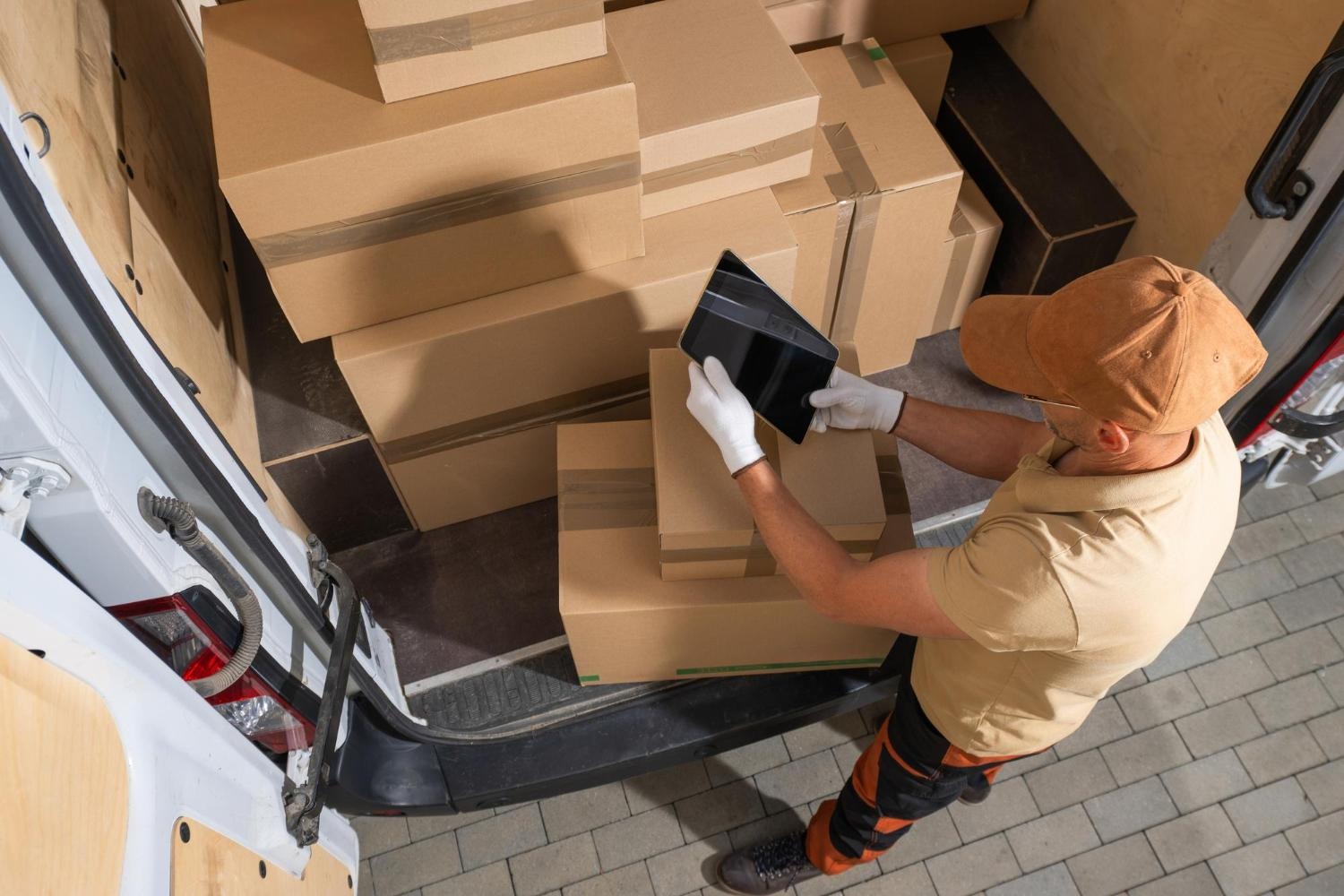
All goods entering the Netherlands are subject to import VAT at the standard Dutch rate of 21%, regardless of value. For Australian eCommerce sellers sending individual consumer orders valued under €150, the EU's Import One-Stop Shop (IOSS) scheme is relevant. It allows VAT to be collected and remitted at the point of sale, avoiding surprise charges for the end customer on delivery.
For shipments above €150, import duties apply in addition to VAT, calculated against the declared customs value using the applicable HS code rate. Declaring a lower value than the actual worth is treated as customs fraud under EU law and can result in shipment seizure, financial penalties, or permanent delivery refusal.
Most preventable delays share the same root causes: incomplete commercial invoices, missing or incorrect HS codes, declared values that don't match supporting documents, and poor packaging that triggers inspection. Shipments containing restricted goods, certain food products, plant materials, chemicals, or items subject to EU product safety regulations require additional documentation before they will clear.
Preparing and reviewing all paperwork before dispatch is the most reliable way to keep clearance times short once a shipment arrives in the Netherlands.
Delivery time from Australia to the Netherlands depends on three things: the service type you book, how quickly the shipment clears Dutch customs on arrival, and whether the final address is metro or regional. The table below provides estimated business-day transit ranges by service tier, based on standard routing between major Australian cities and the Netherlands.
Even well-prepared shipments can experience delays. The most common causes are customs inspections triggered by incomplete invoices, high shipment volumes during peak periods such as the lead-up to Christmas or Chinese New Year, and handover delays between international carriers and last-mile networks inside the Netherlands. Shipments to addresses outside Amsterdam, Rotterdam, and The Hague may add one to two business days, depending on the final-mile carrier.
Planning around these variables, rather than assuming best-case transit times, is the most reliable way to set accurate delivery expectations for customers or business partners in the Netherlands.
Shipping from Australia to the Netherlands involves multiple carriers, EU customs requirements, and final-mile handovers that vary by destination. Couriers & Freight brings these together in a single digital platform, so you can compare services, book shipments, and track progress without managing each carrier separately.
The platform gives you access to multiple international carriers servicing the Netherlands, with express, standard parcel, air freight, and sea freight options displayed side by side, filtered by delivery timeframe and shipment size.
Once you select a service, pickup can be scheduled from your Australian address, documentation is prepared as part of the booking process, and shipment progress can be monitored through to final delivery in the Netherlands.
Pickup is available across major cities and regional areas in Australia, for both one-off shipments and regular export volumes.
Compare international parcel, air freight, and sea freight options, schedule a pickup from anywhere in Australia, and manage your documentation through a single booking process. Pricing is based on your shipment size, weight, and delivery timeframe, so you know what you're paying before you confirm.
Get a quote to ship from Australia to the Netherlands.
Compare parcel, air freight, and sea freight rates for your shipment to the Netherlands and book online with Couriers & Freight.
Get a Quote Now


MHP

No Surcharge*

$16.50
$14
$15.50
$0
$15.50
$14.75
$0
$0
$0
$0
MHP Large Item
No Surcharge*
$16.50
$75
$62
$62
$60.10
$14.75
$0
$0
$0
$0
Residential Pickup
No Surcharge*
$6
$0
$9
--
$9
$10.60
$0
$0
$0
$38.50
Reidential pick up 30-99kgs
No Surcharge*
$63
$0
$9
$0
$9
$74.15
$20
Won't carry
Won't carry
$38.50
Residential pick up 100kgs+
No Surcharge*
$198
$0
$9
$0
$9
$158.87
$50
Won't carry
Won't carry
$38.50
Residential Delivery up to 29kgs
No Surcharge*
$6
$0
$9
--
$9.00
$10.60
$0
$0
$0
$38.50
Residential Delivery up 30-99kgs
No Surcharge*
$63
$0
$9
$0
$9
$74.15
$20
Won't carry
Won't carry
$38.50
Residential Delivery 100kgs+
No Surcharge*
$198
$0
$9
--
$9
$158.57
$50
Won't carry
Won't carry
$38.50
Tail Lift Pick up 50-99kgs Sydney / Melbourne
No Surcharge*
$45
$50-$250
$88
$88
$88
$44.07
$120
Won't carry
Won't carry
$61.50
Tail Lift Pick up 100-299kgs Sydney / Melbourne
No Surcharge*
$85
$50-$250
$88
$88
$88
$44.07
$120
Won't carry
Won't carry
$61.50
Tail Lift Pick up 300-499kgs Sydney / Melbourne
No Surcharge*
$120
$50-$250
$88
$88
$88
$44.07
$120
Won't carry
Won't carry
$61.50
Tail Lift Pick up 500kgs + Sydney / Melbourne
No Surcharge*
$250
$50-$250
$88
$88
$88
$44.07
$120
Won't carry
Won't carry
$61.50
Tail Lift Delivery 50-99kgs Sydney / Melbourne
No Surcharge*
$45
$50-$250
$88
$88
$88
$44.07
$120
Won't carry
Won't carry
$61.50
Tail Lift Delivery 100-299kgs Sydney / Melbourne
No Surcharge*
$85
$50-$250
$88
$88
$88
$44.07
$120
Won't carry
Won't carry
$61.50
Tail Lift Delivery300-499kgs Sydney / Melbourne
No Surcharge*
$120
$50-$250
$88
$88
$88
$44.07
$120
Won't carry
Won't carry
$61.50
Tail Lift Delivery 500kgs + Sydney / Melbourne
No Surcharge*
$250
$50-$250
$88
$88
$88
$44.07
$120
Won't carry
Won't carry
$61.50
Dead weight over 32KGS carton freight
No Surcharge*
$16.50
$75
$70
$70
$70
$14.75
$0
Won't carry
Won't carry
$0
Oversize Surcharge 1.20 - 1.54
No Surcharge*
--
$0
$0
$0
$0
$5.40
$10
$15
Won't carry
$0
Oversize Surcharge 1.55 - 1.85
No Surcharge*
$17
$20
$0
$0
$0
$11.93
$10
$15
Won't carry
$0
Oversize Surcharge 1.86 - 2.20
No Surcharge*
$37
$40
$0
$0
$0
$11.93
$10
Won't carry
Won't carry
$0
Pallet Surcharge
No Surcharge*
--
$0
$0
$0
$0
$0
$0
Won't carry
Won't carry
$0
Hand Unload Fee Carton
No Surcharge*
--
$0
$70
$70
$70
$47
$0
Won't carry
Won't carry
$61.50
Western Australia Regional Surcharge
No Surcharge*
%10
$0
$0
$0
$0
$0
$0
$0
$0
$0
*Surcharges may apply to areas/deimensions not listed
**Prices correct of 16th September 2024

Click to start shipping in less than 60 seconds