
🎄 Festive Rush - Deliveries might take a bit longer. We appreciate your patience.
Festive Period 2025
Cut-Off Times

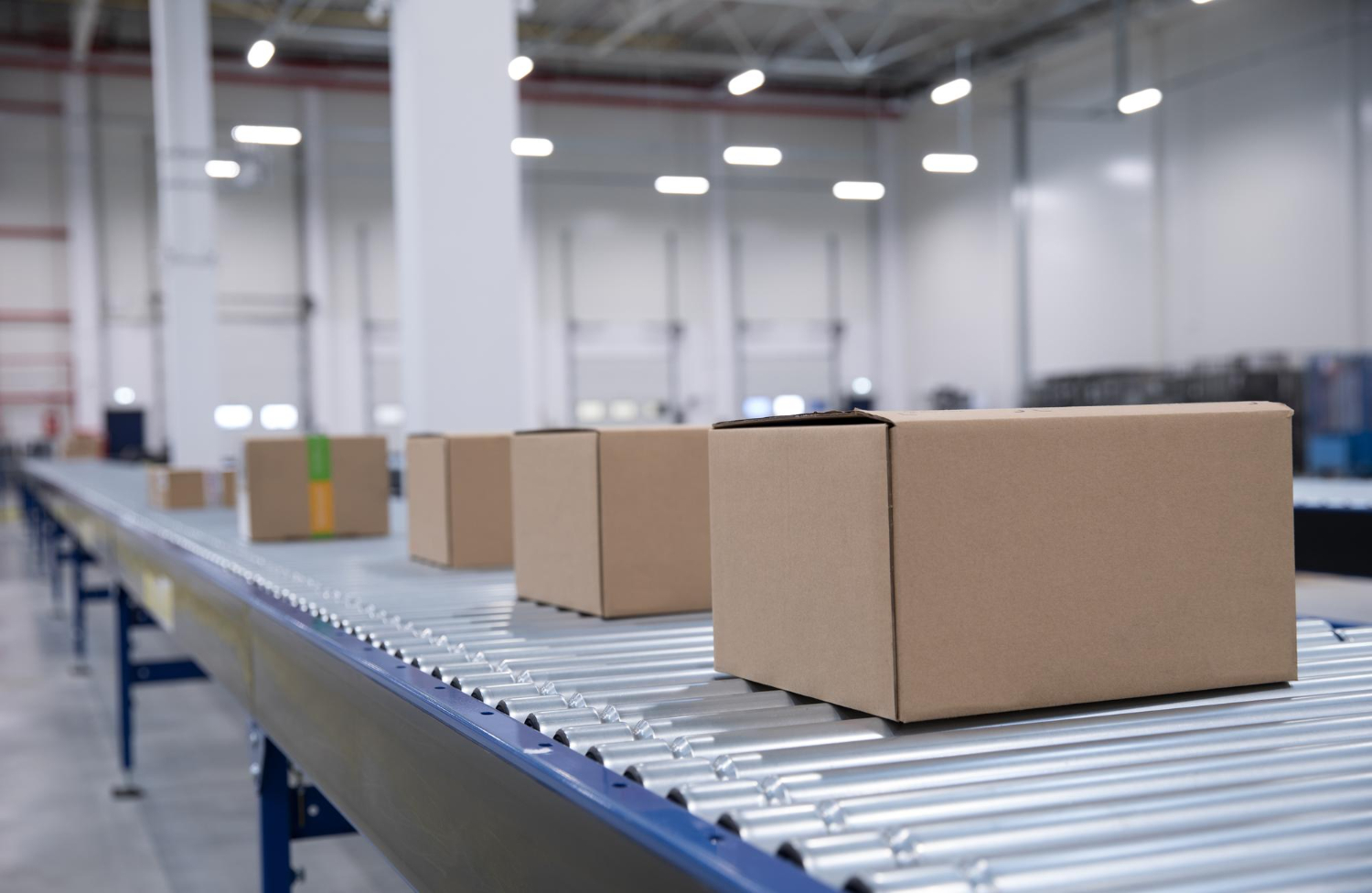
Many Amazon sellers struggle to understand their true FBA shipping costs, particularly as freight pressures rise. According to the Bureau of Infrastructure and Transport Research Economics (BITRE), Australia’s national freight task grew through 2023‑24, straining transport capacity and driving higher shipping prices.
In this environment, many sellers struggle to pin down the true cost of shipping to Amazon FBA warehouses in Australia. Prep requirements, labelling rules, and fluctuating carrier charges often lead to unexpected inbound expenses.
This article clarifies what sellers actually pay to ship inventory into Amazon FBA in Australia and why those costs vary so widely.
Compare carriers and book carton or pallet deliveries to Amazon fulfilment centres with Couriers & Freight.
Get a Quote NowCompare carrier options or book compliant inbound FBA shipments through Couriers & Freight to improve cost predictability and protect margins.
Amazon sellers regularly report that inbound FBA shipping costs depend heavily on how inventory is shipped rather than what is being shipped. In fact, sellers often underestimate freight costs when replenishing stock in small or frequent batches.
For example, a private label seller sending weekly replenishment stock of 10 to 15 cartons from Sydney to a Perth fulfilment centre may pay significantly higher per-unit shipping costs than a seller consolidating the same inventory into one pallet shipped monthly. Each small shipment requires separate pickup, handling, and delivery appointment bookings, which increases total inbound spend.
International shipments show similar patterns. Sellers importing palletised inventory from Chinese suppliers often report stable manufacturing volumes but fluctuating inbound costs due to changing container rates, port congestion, or customs clearance delays that extend storage and coordination expenses.
Common seller-reported cost patterns include:
Shipping individual cartons instead of pallets usually increases per‑unit handling and transport costs. Palletised loads consolidate many units, making linehaul transport more efficient and predictable.
Cartons require more handling, scanning, and movement throughout the journey, adding complexity, whereas pallets move as a single consolidated unit, ideal for larger inventory volumes.
Domestic freight tends to be more predictable in pricing. However, Australia’s domestic freight task reached a record high at 785.4 billion tonne‑kilometres, reflecting growing demand and increased pressure on transport capacity.
By contrast, international inbound freight (sea or air) is vulnerable to global disruptions, container shortages, port congestion and variable carrier surcharges. Seller experiences consistently reflect how international shipping conditions can change based on global supply chain pressures, port throughput, and transport capacity constraints.
Carriers price shipments based on either actual weight or volumetric weight, whichever is greater. Bulky but light items such as loose‑packed home goods can trigger high dimensional‑weight charges, increasing shipping costs.
This pricing model means that shipment size, packaging efficiency, and carton dimensions directly affect inbound freight efficiency. Sellers shipping bulky products often experience higher freight costs relative to product weight due to the space those items occupy in transport networks.
The farther the destination from the port or supplier, especially if it's a regional fulfilment centre, the higher the linehaul requirements.
Freight travelling longer distances requires more coordination, transit time, and route planning. Regional or lower-volume routes may involve additional transport handling or limited carrier availability, which can affect inbound freight efficiency and delivery scheduling flexibility.
Labelling, palletising, and ensuring compliance with fulfilment centre standards add labour or third-party service requirements.
Preparation accuracy directly affects how smoothly shipments move through fulfilment networks. Shipments requiring relabelling, repacking, or compliance corrections typically involve additional handling steps, increasing preparation effort and delaying inventory availability.
Using these insights can help sellers budget more realistically and avoid surprises. A platform like Couriers & Freight can simplify the process by allowing sellers to compare carrier pricing and manage both carton and pallet bookings, helping control inbound shipping costs under changing market conditions.
Goods are collected from the supplier’s warehouse and transported to a consolidation centre or port. This stage involves coordination, loading, and initial transport handling, which form the foundation of the inbound freight journey. Even simple pickup arrangements require scheduling, carrier allocation, and shipment processing.
If shipping internationally, containers go through port unloading, customs clearance, and terminal handling. Each of these steps introduces operational checkpoints where documentation, inspections, and handling coordination occur. These processes are essential for regulatory compliance and contribute to the overall inbound logistics workflow.
Once containers or pallets are released from port or a consolidation point, they move by interstate trucking or courier to the final delivery depot or fulfilment centre.
Transport coordination during this stage determines delivery timing, routing efficiency, and fulfilment centre readiness. Carrier scheduling, route selection, and consolidation all influence how smoothly inventory progresses through the inbound process.

Before final delivery, shipments may need labelling, palletising, packaging, or compliance-related preparations.
Preparation ensures that inventory meets fulfilment centre requirements and can be received without delays. Incomplete or incorrect preparation often requires additional handling before acceptance into the fulfilment network.
Most fulfilment centres require appointment-based delivery slots and submission of an advance shipping notification (ASN) before arrival.
Delivery coordination at this stage determines when inventory becomes available for fulfilment. Carrier timing, appointment availability, and preparation compliance all affect how efficiently shipments enter the fulfilment centre system.
Understanding these stages shows that inbound shipping involves multiple operational steps, each affecting freight coordination and shipment readiness. Sellers who track and optimise each stage can plan shipments more efficiently and increase inbound reliability.
Amazon sellers shipping stock into fulfilment centres often need to decide between cartons and pallet freight.
Couriers & Freight lets sellers compare compliant carrier options, choose the right shipment configuration, and book delivery based on volume and destination.
For interstate deliveries to fulfilment centres in Sydney, Melbourne or Brisbane, we coordinate carriers that can meet appointment requirements and provide tracking from pickup to delivery.
All bookings and shipment updates are managed in one dashboard, so sellers can monitor progress without juggling multiple providers.
Request a freight quote from Couriers & Freight for your next Amazon FBA shipment.
Compare carriers and book carton or pallet deliveries to Amazon fulfilment centres with Couriers & Freight.
Get a Quote Now


MHP

No Surcharge*

$16.50
$14
$15.50
$0
$15.50
$14.75
$0
$0
$0
$0
MHP Large Item
No Surcharge*
$16.50
$75
$62
$62
$60.10
$14.75
$0
$0
$0
$0
Residential Pickup
No Surcharge*
$6
$0
$9
--
$9
$10.60
$0
$0
$0
$38.50
Reidential pick up 30-99kgs
No Surcharge*
$63
$0
$9
$0
$9
$74.15
$20
Won't carry
Won't carry
$38.50
Residential pick up 100kgs+
No Surcharge*
$198
$0
$9
$0
$9
$158.87
$50
Won't carry
Won't carry
$38.50
Residential Delivery up to 29kgs
No Surcharge*
$6
$0
$9
--
$9.00
$10.60
$0
$0
$0
$38.50
Residential Delivery up 30-99kgs
No Surcharge*
$63
$0
$9
$0
$9
$74.15
$20
Won't carry
Won't carry
$38.50
Residential Delivery 100kgs+
No Surcharge*
$198
$0
$9
--
$9
$158.57
$50
Won't carry
Won't carry
$38.50
Tail Lift Pick up 50-99kgs Sydney / Melbourne
No Surcharge*
$45
$50-$250
$88
$88
$88
$44.07
$120
Won't carry
Won't carry
$61.50
Tail Lift Pick up 100-299kgs Sydney / Melbourne
No Surcharge*
$85
$50-$250
$88
$88
$88
$44.07
$120
Won't carry
Won't carry
$61.50
Tail Lift Pick up 300-499kgs Sydney / Melbourne
No Surcharge*
$120
$50-$250
$88
$88
$88
$44.07
$120
Won't carry
Won't carry
$61.50
Tail Lift Pick up 500kgs + Sydney / Melbourne
No Surcharge*
$250
$50-$250
$88
$88
$88
$44.07
$120
Won't carry
Won't carry
$61.50
Tail Lift Delivery 50-99kgs Sydney / Melbourne
No Surcharge*
$45
$50-$250
$88
$88
$88
$44.07
$120
Won't carry
Won't carry
$61.50
Tail Lift Delivery 100-299kgs Sydney / Melbourne
No Surcharge*
$85
$50-$250
$88
$88
$88
$44.07
$120
Won't carry
Won't carry
$61.50
Tail Lift Delivery300-499kgs Sydney / Melbourne
No Surcharge*
$120
$50-$250
$88
$88
$88
$44.07
$120
Won't carry
Won't carry
$61.50
Tail Lift Delivery 500kgs + Sydney / Melbourne
No Surcharge*
$250
$50-$250
$88
$88
$88
$44.07
$120
Won't carry
Won't carry
$61.50
Dead weight over 32KGS carton freight
No Surcharge*
$16.50
$75
$70
$70
$70
$14.75
$0
Won't carry
Won't carry
$0
Oversize Surcharge 1.20 - 1.54
No Surcharge*
--
$0
$0
$0
$0
$5.40
$10
$15
Won't carry
$0
Oversize Surcharge 1.55 - 1.85
No Surcharge*
$17
$20
$0
$0
$0
$11.93
$10
$15
Won't carry
$0
Oversize Surcharge 1.86 - 2.20
No Surcharge*
$37
$40
$0
$0
$0
$11.93
$10
Won't carry
Won't carry
$0
Pallet Surcharge
No Surcharge*
--
$0
$0
$0
$0
$0
$0
Won't carry
Won't carry
$0
Hand Unload Fee Carton
No Surcharge*
--
$0
$70
$70
$70
$47
$0
Won't carry
Won't carry
$61.50
Western Australia Regional Surcharge
No Surcharge*
%10
$0
$0
$0
$0
$0
$0
$0
$0
$0
*Surcharges may apply to areas/deimensions not listed
**Prices correct of 16th September 2024

Click to start shipping in less than 60 seconds