
🎄 Festive Rush - Deliveries might take a bit longer. We appreciate your patience.
Festive Period 2025
Cut-Off Times

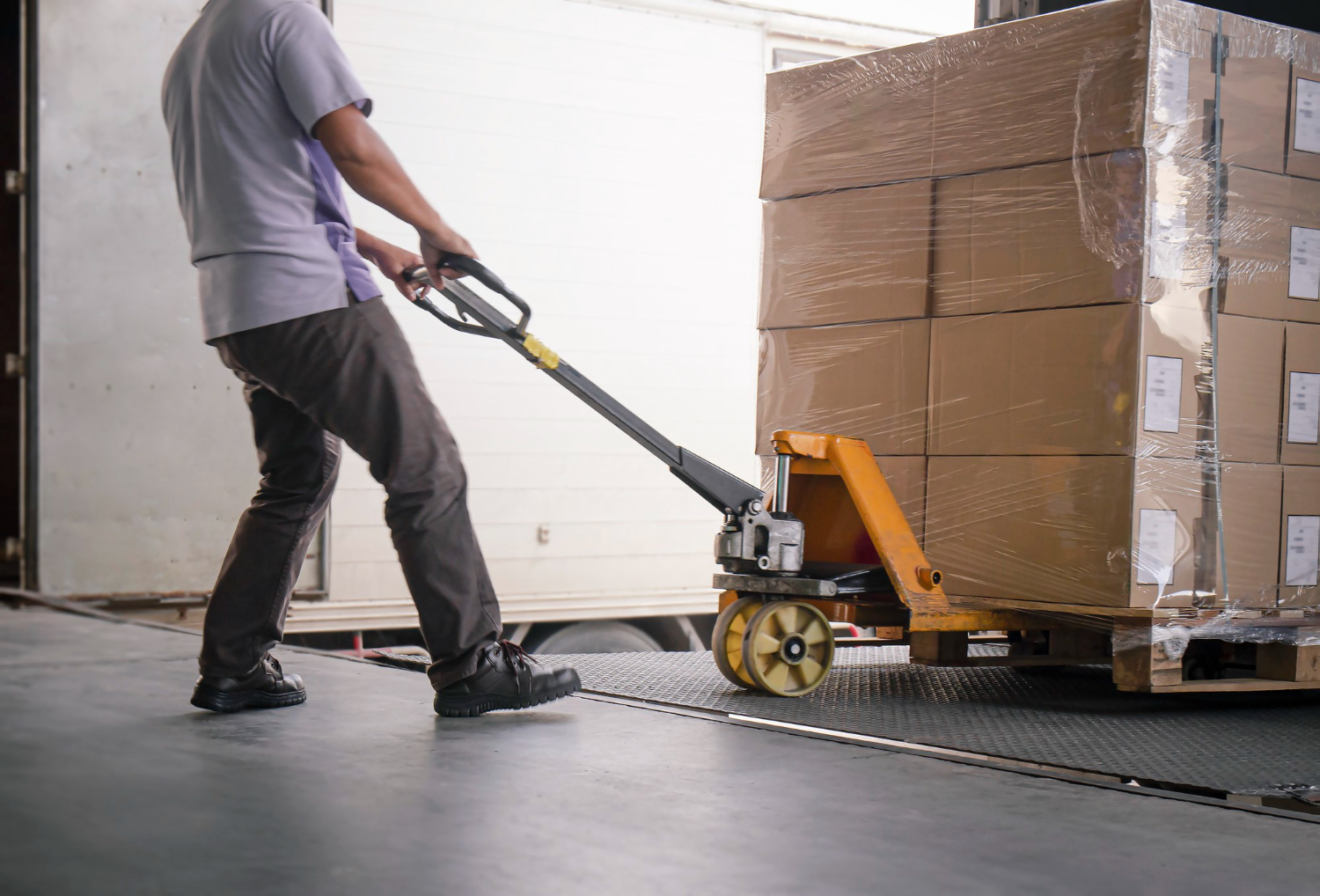
Amazon’s rules for loose carton shipments vs palletised loads in Australia have changed significantly. From 1 September 2025, self-delivered small parcels will no longer be accepted at any FBA fulfilment centre. All cartons must move through approved carriers or Amazon programs.
Australia’s e-commerce logistics sector was valued at $9.87 billion in 2024 and is projected to nearly double by 2033, yet many sellers are already experiencing rejected or delayed shipments as they adapt to Amazon’s updated inbound rules.
This article breaks down when cartons still work, when pallets offer a better path through Amazon’s inbound system, and how to choose the right approach for your next FBA delivery.
Move your bulk stock with full-truck delivery to Amazon fulfilment centres. Get compliant, carrier-ready pallet freight handled by Couriers & Freight.
Get a Quote NowHere’s a quick breakdown to help you choose between cartons and pallets under Amazon’s new rules.
For bulk inbound freight, consider booking full-truck delivery to Amazon fulfilment centres through Couriers & Freight.
Amazon has updated its inbound delivery rules for 2025, removing the option to self-deliver small parcels to any FBA fulfilment centre. Carton shipments must now move through approved carriers, Amazon SEND, or the Partnered Carrier Program. Otherwise, they are rejected on arrival. This shift affects how sellers plan loose carton shipments vs palletised loads, particularly for time-sensitive or high-volume stock.
Amazon introduced these changes to reduce manual handovers and improve receiving accuracy throughout its fulfilment network. With higher inbound volumes, warehouses need shipments that can be scanned, stored, and processed with fewer handling steps.
Across seller discussions online, a clear pattern has emerged: early rejections and delays often occurred when cartons were hand-delivered or when ASNs didn’t match the physical shipment. These real-world experiences highlight why following Amazon’s updated process is critical when deciding between loose carton shipments and palletised loads.
Loose cartons remain suitable for certain types of Amazon FBA inbound deliveries in Australia, particularly when shipment size is small and handling requirements are simple.

Palletised loads have become the preferred option for many Amazon FBA sellers in Australia, especially as inbound requirements become stricter and volumes increase. A single pallet consolidates dozens of units into one handling event, which aligns better with how fulfilment centres receive and process freight.
The cost difference between loose carton shipments and palletised loads comes down to how each format is handled during pickup, transit, and receiving. Each carton triggers multiple touchpoints, while a pallet consolidates the load into a single movement.
As shipment volume grows, the total cost of loose cartons escalates because each carton creates separate scans, labels, and handling charges. A pallet, by contrast, moves through carriers and fulfilment centres as one unit, which lowers the number of chargeable events and reduces the likelihood of handling issues.
Across seller discussions, a recurring pattern is that carton freight becomes unpredictable once shipments move beyond a small number of boxes, particularly when dimensional weight pricing or repeated restocks are involved.
This cost pattern becomes even clearer when deciding when to move from loose carton shipments to palletised loads, which the next section covers in detail.
The point at which loose carton shipments stop being practical varies by seller, but several operational triggers consistently indicate when palletising is the more reliable option.
Common thresholds that signal a shift to pallets:
Community feedback shows that once shipments exceed a moderate number of cartons, or when repeated restocks introduce more handling steps, pallet loads generally create fewer issues during check-in.
These thresholds help sellers assess when loose carton shipments vs palletised loads become operationally different, setting up the practical preparation steps covered in the next section.
Preparing shipments correctly is essential for smooth receiving at Amazon’s fulfilment centres. These checklists outline the key requirements for both loose carton shipments and palletised loads, based on Seller Central AU guidelines and common issues shared by sellers.
Accurate preparation lowers the risk of receiving errors and allows fulfilment centres to process shipments more quickly, regardless of whether they arrive as cartons or pallets.
Couriers & Freight provides practical support for sellers sending both loose cartons and palletised loads to Amazon fulfilment centres. The service focuses on preparing freight correctly, reducing rework, and ensuring shipments arrive with the right labels, paperwork and booking references.
For palletised freight, Couriers & Freight can build or rebuild pallets during container unpacking, apply the required labels, secure the load to Amazon’s specifications, and organise full-truck delivery to fulfilment centres with the correct dock-slot bookings. This is especially useful for bulk or mixed-SKU shipments that need consistent handling from warehouse to Amazon.
For carton-based shipments, the team can check carton dimensions and weights against Seller Central requirements, fix labelling issues, and coordinate approved carriers under the 2025 inbound rules. This helps avoid the delays sellers often encounter when ASNs or labels don’t match what Amazon expects.
Couriers & Freight also supports mixed inbound workflows, such as unpacking import containers, consolidating cartons onto pallets, or cross-docking goods between suppliers, so freight moves through the supply chain with fewer handovers.
If you’re sending pallets or bulk stock into Amazon’s fulfilment centres, Couriers & Freight can organise full-truck delivery and ensure your shipment arrives prepared and compliant.
Get an instant quote now to streamline your FBA inbound shipments.
Move your bulk stock with full-truck delivery to Amazon fulfilment centres. Get compliant, carrier-ready pallet freight handled by Couriers & Freight.
Get a Quote Now


MHP

No Surcharge*

$16.50
$14
$15.50
$0
$15.50
$14.75
$0
$0
$0
$0
MHP Large Item
No Surcharge*
$16.50
$75
$62
$62
$60.10
$14.75
$0
$0
$0
$0
Residential Pickup
No Surcharge*
$6
$0
$9
--
$9
$10.60
$0
$0
$0
$38.50
Reidential pick up 30-99kgs
No Surcharge*
$63
$0
$9
$0
$9
$74.15
$20
Won't carry
Won't carry
$38.50
Residential pick up 100kgs+
No Surcharge*
$198
$0
$9
$0
$9
$158.87
$50
Won't carry
Won't carry
$38.50
Residential Delivery up to 29kgs
No Surcharge*
$6
$0
$9
--
$9.00
$10.60
$0
$0
$0
$38.50
Residential Delivery up 30-99kgs
No Surcharge*
$63
$0
$9
$0
$9
$74.15
$20
Won't carry
Won't carry
$38.50
Residential Delivery 100kgs+
No Surcharge*
$198
$0
$9
--
$9
$158.57
$50
Won't carry
Won't carry
$38.50
Tail Lift Pick up 50-99kgs Sydney / Melbourne
No Surcharge*
$45
$50-$250
$88
$88
$88
$44.07
$120
Won't carry
Won't carry
$61.50
Tail Lift Pick up 100-299kgs Sydney / Melbourne
No Surcharge*
$85
$50-$250
$88
$88
$88
$44.07
$120
Won't carry
Won't carry
$61.50
Tail Lift Pick up 300-499kgs Sydney / Melbourne
No Surcharge*
$120
$50-$250
$88
$88
$88
$44.07
$120
Won't carry
Won't carry
$61.50
Tail Lift Pick up 500kgs + Sydney / Melbourne
No Surcharge*
$250
$50-$250
$88
$88
$88
$44.07
$120
Won't carry
Won't carry
$61.50
Tail Lift Delivery 50-99kgs Sydney / Melbourne
No Surcharge*
$45
$50-$250
$88
$88
$88
$44.07
$120
Won't carry
Won't carry
$61.50
Tail Lift Delivery 100-299kgs Sydney / Melbourne
No Surcharge*
$85
$50-$250
$88
$88
$88
$44.07
$120
Won't carry
Won't carry
$61.50
Tail Lift Delivery300-499kgs Sydney / Melbourne
No Surcharge*
$120
$50-$250
$88
$88
$88
$44.07
$120
Won't carry
Won't carry
$61.50
Tail Lift Delivery 500kgs + Sydney / Melbourne
No Surcharge*
$250
$50-$250
$88
$88
$88
$44.07
$120
Won't carry
Won't carry
$61.50
Dead weight over 32KGS carton freight
No Surcharge*
$16.50
$75
$70
$70
$70
$14.75
$0
Won't carry
Won't carry
$0
Oversize Surcharge 1.20 - 1.54
No Surcharge*
--
$0
$0
$0
$0
$5.40
$10
$15
Won't carry
$0
Oversize Surcharge 1.55 - 1.85
No Surcharge*
$17
$20
$0
$0
$0
$11.93
$10
$15
Won't carry
$0
Oversize Surcharge 1.86 - 2.20
No Surcharge*
$37
$40
$0
$0
$0
$11.93
$10
Won't carry
Won't carry
$0
Pallet Surcharge
No Surcharge*
--
$0
$0
$0
$0
$0
$0
Won't carry
Won't carry
$0
Hand Unload Fee Carton
No Surcharge*
--
$0
$70
$70
$70
$47
$0
Won't carry
Won't carry
$61.50
Western Australia Regional Surcharge
No Surcharge*
%10
$0
$0
$0
$0
$0
$0
$0
$0
$0
*Surcharges may apply to areas/deimensions not listed
**Prices correct of 16th September 2024

Click to start shipping in less than 60 seconds