
🎄 Festive Rush - Deliveries might take a bit longer. We appreciate your patience.
Festive Period 2025
Cut-Off Times


The FBA vs FBM decision has become more important as Amazon Australia continues to expand. According to Roy Morgan, Amazon Australia reached more than 9.3 million shoppers in the year to March 2025, adding approximately 500,000 shoppers year-on-year. As more sellers enter the marketplace, fulfilment costs, delivery performance, and inventory management have a direct impact on profitability.
This guide explains how FBA and FBM work for Australian sellers, how each model affects costs and freight requirements, and which option works for your products, margins, and logistics setup.
Arrange LCL sea freight, FCL sea freight, or air freight into Amazon's Australian fulfilment centres with Couriers & Freight.
Get a Quote NowCouriers & Freight arranges inbound sea freight and air freight for FBA replenishment, covered in our guide to inbound logistics for Amazon sellers in Australia.
When comparing FBA vs FBM, inbound freight costs are often overlooked during margin calculations. With Fulfilment by Amazon (FBA), sellers send inventory in bulk to Amazon's Australian fulfilment centres.
Amazon stores the stock, picks and packs orders, delivers products to customers, and manages returns and customer service. Products enrolled in FBA automatically qualify for Prime delivery benefits in Australia.
For Australian importers, the key logistics task occurs before inventory reaches Amazon's fulfilment network. Stock sourced from China or other Asian markets must be transported into Australia via LCL (less-than-container-load) sea freight, FCL (full-container-load) sea freight, air freight, or domestic road freight. Those inbound freight costs are not covered in Amazon's fee structure and must be included in product margin calculations.
Amazon's FBA fees cover order fulfilment and storage within its network. In October 2024, Amazon Australia introduced a $0.91 reduction in fulfilment fees for eligible products priced below $13.
However, sellers must also consider storage charges, inventory placement fees, and replenishment costs. Amazon bundles fulfilment and storage charges into its FBA fee structure. Many Australian 3PL providers charge separately for storage, pick-and-pack services, and carrier delivery. According to Jungle Scout's 2025 State of the Amazon Seller Report, fulfilment remains one of the largest operating expenses for marketplace sellers. This makes it important to compare FBA fees against local 3PL costs before selecting a fulfilment model.
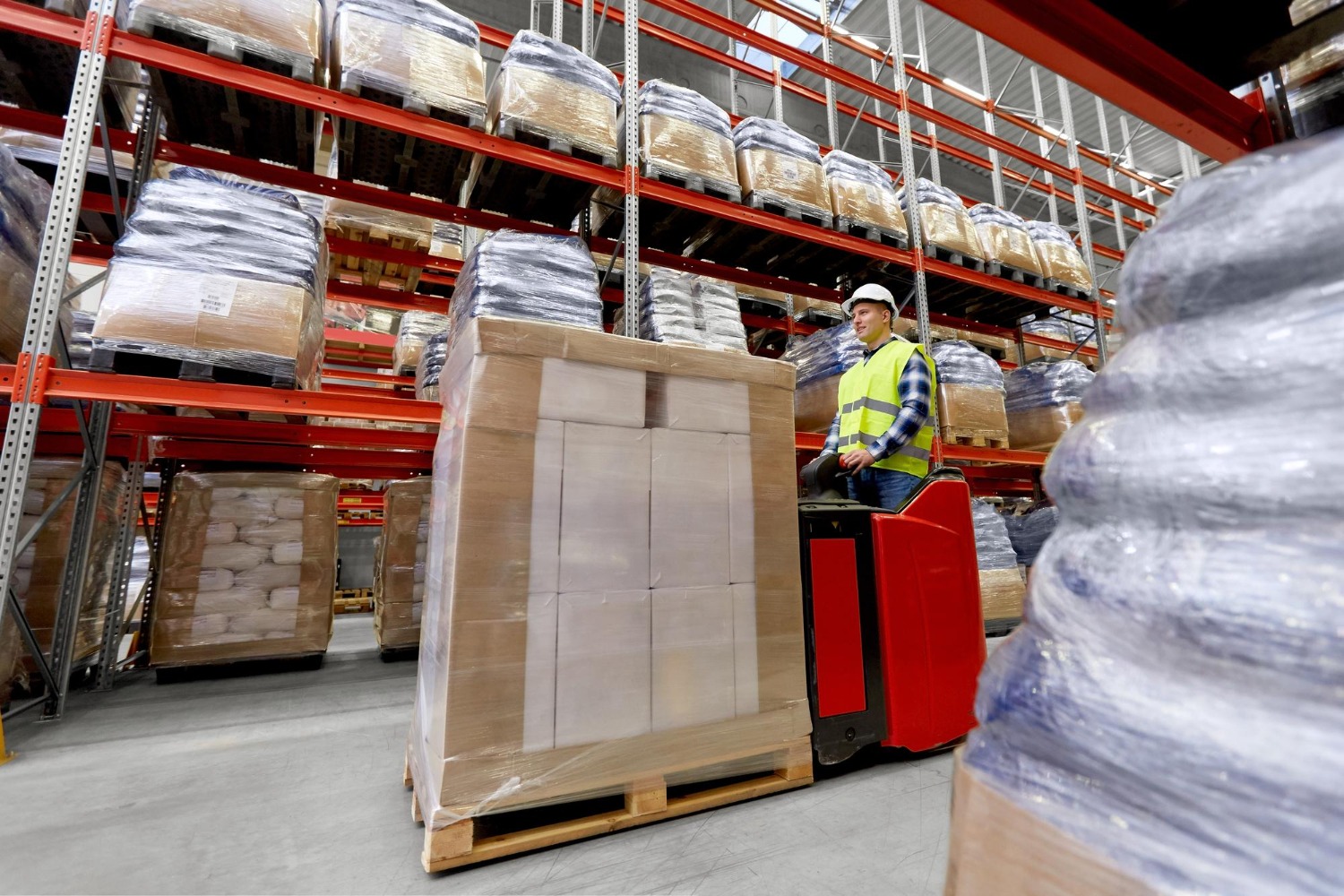
Fulfilled by Merchant (FBM) has the seller store inventory, pack orders, manage returns, and arrange delivery through their chosen carriers. Amazon processes the transaction but does not handle physical fulfilment. FBM listings cannot display the Prime badge, regardless of delivery performance.
FBM requires sellers to establish carrier relationships, negotiate domestic shipping rates, and maintain consistent delivery performance.
Amazon requires a Late Shipment Rate below 4% and a minimum On-Time Delivery Rate (OTDR) of 90% for seller-fulfilled orders. Sellers who fail to meet these thresholds may face listing restrictions or reduced Buy Box visibility.
Couriers & Freight's Pro Tip: For Australian sellers, carrier selection directly affects marketplace performance. Reliable metro and regional delivery coverage is essential because missed delivery commitments can affect account health, Buy Box competitiveness, and customer satisfaction.
Many sellers decide between FBA and FBM at the SKU level rather than applying one model across their entire catalogue.
For example, a homewares importer sourcing products from China may use FBA for lightweight decorative items such as candles, kitchen accessories, and picture frames. These products benefit from Prime eligibility and typically generate sufficient sales volume to justify Amazon's fulfilment fees.
Larger products such as furniture, storage units, or oversized décor items are often better with FBM because their cubic volume increases both FBA storage fees and inbound freight costs.
In this model, FBA inventory still requires regular inbound freight replenishment, while FBM products rely on dependable domestic carrier arrangements. The freight requirements differ, but both must operate efficiently to protect margins.
Choosing between FBA and FBM comes down to which freight requirement carries more weight for your margins. Couriers & Freight covers both sides, with domestic road freight and courier services for FBM order dispatch, and LCL sea freight, FCL sea freight, or air freight for FBA replenishment.
For FBA sellers, the priority is replenishing Amazon fulfilment centres efficiently to avoid stockouts and maintain sales momentum.
For FBM sellers, success depends on domestic carrier performance. Every order must be collected, transported, and delivered within the promised timeframe to maintain Amazon's delivery metrics and account standing.
Compare domestic courier rates for FBM order dispatch with Couriers & Freight.
Arrange LCL sea freight, FCL sea freight, or air freight into Amazon's Australian fulfilment centres with Couriers & Freight.
Get a Quote Now


MHP

No Surcharge*

$16.50
$14
$15.50
$0
$15.50
$14.75
$0
$0
$0
$0
MHP Large Item
No Surcharge*
$16.50
$75
$62
$62
$60.10
$14.75
$0
$0
$0
$0
Residential Pickup
No Surcharge*
$6
$0
$9
--
$9
$10.60
$0
$0
$0
$38.50
Reidential pick up 30-99kgs
No Surcharge*
$63
$0
$9
$0
$9
$74.15
$20
Won't carry
Won't carry
$38.50
Residential pick up 100kgs+
No Surcharge*
$198
$0
$9
$0
$9
$158.87
$50
Won't carry
Won't carry
$38.50
Residential Delivery up to 29kgs
No Surcharge*
$6
$0
$9
--
$9.00
$10.60
$0
$0
$0
$38.50
Residential Delivery up 30-99kgs
No Surcharge*
$63
$0
$9
$0
$9
$74.15
$20
Won't carry
Won't carry
$38.50
Residential Delivery 100kgs+
No Surcharge*
$198
$0
$9
--
$9
$158.57
$50
Won't carry
Won't carry
$38.50
Tail Lift Pick up 50-99kgs Sydney / Melbourne
No Surcharge*
$45
$50-$250
$88
$88
$88
$44.07
$120
Won't carry
Won't carry
$61.50
Tail Lift Pick up 100-299kgs Sydney / Melbourne
No Surcharge*
$85
$50-$250
$88
$88
$88
$44.07
$120
Won't carry
Won't carry
$61.50
Tail Lift Pick up 300-499kgs Sydney / Melbourne
No Surcharge*
$120
$50-$250
$88
$88
$88
$44.07
$120
Won't carry
Won't carry
$61.50
Tail Lift Pick up 500kgs + Sydney / Melbourne
No Surcharge*
$250
$50-$250
$88
$88
$88
$44.07
$120
Won't carry
Won't carry
$61.50
Tail Lift Delivery 50-99kgs Sydney / Melbourne
No Surcharge*
$45
$50-$250
$88
$88
$88
$44.07
$120
Won't carry
Won't carry
$61.50
Tail Lift Delivery 100-299kgs Sydney / Melbourne
No Surcharge*
$85
$50-$250
$88
$88
$88
$44.07
$120
Won't carry
Won't carry
$61.50
Tail Lift Delivery300-499kgs Sydney / Melbourne
No Surcharge*
$120
$50-$250
$88
$88
$88
$44.07
$120
Won't carry
Won't carry
$61.50
Tail Lift Delivery 500kgs + Sydney / Melbourne
No Surcharge*
$250
$50-$250
$88
$88
$88
$44.07
$120
Won't carry
Won't carry
$61.50
Dead weight over 32KGS carton freight
No Surcharge*
$16.50
$75
$70
$70
$70
$14.75
$0
Won't carry
Won't carry
$0
Oversize Surcharge 1.20 - 1.54
No Surcharge*
--
$0
$0
$0
$0
$5.40
$10
$15
Won't carry
$0
Oversize Surcharge 1.55 - 1.85
No Surcharge*
$17
$20
$0
$0
$0
$11.93
$10
$15
Won't carry
$0
Oversize Surcharge 1.86 - 2.20
No Surcharge*
$37
$40
$0
$0
$0
$11.93
$10
Won't carry
Won't carry
$0
Pallet Surcharge
No Surcharge*
--
$0
$0
$0
$0
$0
$0
Won't carry
Won't carry
$0
Hand Unload Fee Carton
No Surcharge*
--
$0
$70
$70
$70
$47
$0
Won't carry
Won't carry
$61.50
Western Australia Regional Surcharge
No Surcharge*
%10
$0
$0
$0
$0
$0
$0
$0
$0
$0
*Surcharges may apply to areas/deimensions not listed
**Prices correct of 16th September 2024

Click to start shipping in less than 60 seconds