
🎄 Festive Rush - Deliveries might take a bit longer. We appreciate your patience.
Festive Period 2025
Cut-Off Times

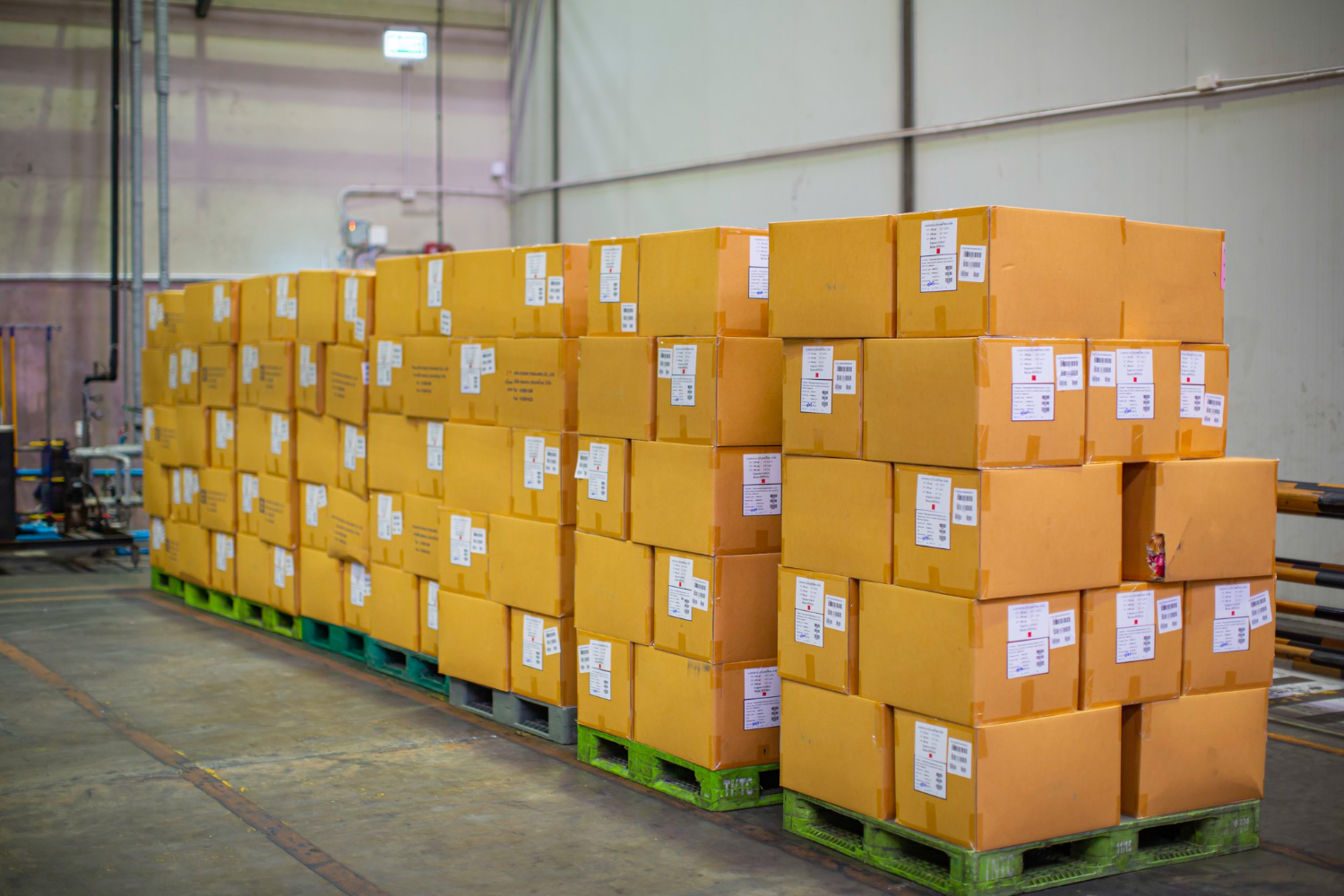
Identifying the best product to import from China is rarely straightforward for Australian beginners. Saturated marketplaces, supplier variability, and rising freight costs mean that products that look profitable online often fall short once quality issues or shipping delays appear. Sellers regularly share these frustrations in sourcing forums, particularly around unreliable samples and margins eroded by unexpected logistics costs.
Australia continues to import a significant volume of goods from China, reflecting strong and ongoing demand across multiple product categories. This guide breaks down 10 product categories commonly chosen by Australian importers and explains the practical factors, including freight efficiency, that influence whether an item remains profitable once it lands.
Book air or sea freight for your products from China to Australia with Couriers & Freight.
Get a Quote NowThe most profitable products to import from China tend to be lightweight, durable, and easy to ship, keeping freight costs predictable.
Once a product is shortlisted, estimating sea freight costs early helps confirm whether margins still hold after shipping, clearance, and delivery.
Before choosing the best product to import from China, assess feasibility using criteria grounded in real Australian import conditions. Profitability is driven by landed cost, not factory price. Freight, handling, and clearance costs often determine whether margins survive at scale.
Start with demand. Products with consistent search interest or stable e-commerce sales indicate ongoing buyer intent rather than short-lived trends. Competition matters just as much. Crowded categories leave little room to absorb freight increases or quality issues without cutting into margins.
Durability is a critical filter. Fragile items often require heavier packaging, suffer higher damage rates, and lead to returns. These issues regularly appear in sourcing forums, where new importers describe losses caused by breakage or inconsistent supplier quality rather than weak sales.
Minimum order quantities (MOQs) affect upfront cash flow and storage needs, especially for importers testing demand. Cubic weight also plays a major role in sea freight pricing. Compact products ship more efficiently, while bulky, low-weight items can inflate landed costs despite low unit prices.
Australian importers should also factor in customs and biosecurity controls. Certain materials or packaging types can trigger inspections, adding time and cost if requirements aren’t met.
In 2024, Chinese ports handled around 248.5 million TEUs, up approximately 7.7% year-on-year. Ongoing export demand places pressure on shipping capacity, making product selection and packaging efficiency even more important when margins are tight.

Compact fitness accessories remain strong performers as consumers continue hybrid workout routines at home. The global home fitness equipment market exceeded $18 billion in 2024, with accessories accounting for a large share due to low price points, repeat purchases, and minimal storage requirements.
Small accessories ship efficiently with low cubic weight and are ideal for LCL consolidation. Heavier or bulkier items (such as dumbbells) require careful carton planning to avoid inflated dimensional charges.
Energy-efficiency regulations and smart-home adoption continue to drive demand for LED and smart lighting products, particularly for residential upgrades and IoT-enabled use cases. The global LED lighting market is projected to reach $134.71 billion by 2030, with compact consumer lighting products accounting for a large share of online sales.
Glass components increase fragility, requiring stronger packaging for bulbs. At higher volumes, FCL shipments often reduce per-unit freight costs and lower breakage risk compared to repeated LCL handling.
Short replacement cycles and impulse buying underpin strong demand for phone accessories across e-commerce channels. The global mobile accessories market reached approximately $339.24 billion, with items such as cases, cables, and chargers driving high-volume repeat purchases alongside frequent device upgrades.
Extremely low cubic weight makes these products well-suited to LCL shipments and SKU diversification. Sorting SKUs accurately at origin reduces handling time, fulfilment errors, and downstream rework costs.

Everyday kitchen tools benefit from consistent household replacement and impulse purchasing behaviour, particularly through online marketplaces. The global kitchenware market exceeded $70 billion in 2024, with gadgets driving volume sales online.
Although lightweight, irregular shapes can inflate cubic weight. Consolidating similar SKUs into uniform cartons improves container utilisation and helps control freight costs.
Regulatory pressure and shifting consumer preferences continue to support demand for reusable and sustainable household products. The global sustainable products market surpassed $150 billion, with strong growth in everyday items designed to replace single-use alternatives.
These products are lightweight but often voluminous. Sea-freight consolidation helps manage landed costs, which is critical for low-margin SKUs competing on price.
Book air or sea freight for your products from China to Australia with Couriers & Freight.
Get a Quote NowEmotional purchasing and repeat buying patterns make pet accessories a resilient category for importers. The global pet products market exceeded $300 billion in 2024, with accessories forming a high-turnover segment across online retail.
Smaller accessories ship efficiently in cartons, while bulky items such as beds or large toys increase cubic weight. Mixed-SKU palletisation is commonly used for larger or more varied orders.
Social commerce and influencer-led discovery continue to support demand for at-home beauty tools. The global beauty devices market exceeded $60 billion, driven by consumer interest in DIY skincare and treatment devices.
Electronic components and fragile parts require protective packaging and may require additional compliance checks depending on power sources, batteries, or materials. Sea freight suits bulk orders, while air freight is often used for smaller test runs where speed matters more than cost.
Urban living and e-commerce fulfilment trends favour compact, modular furniture and storage products. The global home organisation market is projected to reach $50.8 billion by 2026, with demand strongest for space-saving designs.
High cubic volume makes freight optimisation essential. Flat-pack designs and careful pallet planning significantly improve per-unit freight economics.

Seasonal buying cycles and gifting behaviour support consistent demand for educational toys. The global educational toys market is expected to reach $126.02 billion by 2032, with online sales peaking during school terms and holidays.
Compact kits ship efficiently via LCL. Early booking is important during peak periods to avoid congestion-related delays and cost increases.
Home improvement and DIY activities continue to support demand for gardening tools. The global gardening tools market was valued at $93.2 billion in 2024, driven by sustained interest in home and outdoor projects.
Bulky items raise cubic weight, while smaller tools ship efficiently in cartons. Palletised freight works best for mixed tool sets ordered in volume.
Shipping products from China to Australia follows a defined sequence. Getting each step right reduces delays, controls landed costs, and helps preserve margins once goods arrive.
Start with manufacturers who can meet quality standards consistently. Check references, request samples, and confirm lead times early. Small trial orders help validate production quality before committing to volume.
Packaging protects goods during long sea transit and repeated handling. Fragile items need cushioning and strong outer cartons, while larger or bulkier goods often benefit from palletisation. Avoid over-packing, as excess volume increases cubic weight and freight costs.
Choose between LCL and FCL based on shipment size. LCL suits smaller volumes and product testing, while FCL lowers per-unit costs for larger orders. In early 2025, container throughput at major Chinese ports increased by over 7%, signalling continued pressure on shipping capacity during peak periods.
Accurate paperwork supports smoother customs clearance. Commercial invoices, packing lists, and bills of lading should match shipment details precisely. In Australia, incomplete documentation or non-compliant packaging can trigger biosecurity inspections and delays in delivery.
Plan transport from the port to the warehouse or fulfilment centre in advance. Factor in unloading, clearance, and domestic delivery, particularly for regional destinations. Booking freight ahead of peak season (September to January) helps avoid congestion and rate spikes.
Tools like Couriers & Freight allow importers to compare sea freight options, manage bookings, and coordinate delivery from port to final destination in one digital platform.
Importing from China often becomes more complex as volumes grow. New importers may underestimate cubic weight or choose consolidation methods that increase handling time, while experienced sellers face fluctuating sea freight rates, capacity constraints, and last-mile delivery challenges across Australia.
Couriers & Freight supports importers by providing practical tools to manage these variables:
For Australian importers evaluating one of these products, obtaining a sea freight quote early helps validate landed costs, delivery timelines, and overall profitability before committing to production.
Book air or sea freight for your products from China to Australia with Couriers & Freight.
Get a Quote Now


MHP

No Surcharge*

$16.50
$14
$15.50
$0
$15.50
$14.75
$0
$0
$0
$0
MHP Large Item
No Surcharge*
$16.50
$75
$62
$62
$60.10
$14.75
$0
$0
$0
$0
Residential Pickup
No Surcharge*
$6
$0
$9
--
$9
$10.60
$0
$0
$0
$38.50
Reidential pick up 30-99kgs
No Surcharge*
$63
$0
$9
$0
$9
$74.15
$20
Won't carry
Won't carry
$38.50
Residential pick up 100kgs+
No Surcharge*
$198
$0
$9
$0
$9
$158.87
$50
Won't carry
Won't carry
$38.50
Residential Delivery up to 29kgs
No Surcharge*
$6
$0
$9
--
$9.00
$10.60
$0
$0
$0
$38.50
Residential Delivery up 30-99kgs
No Surcharge*
$63
$0
$9
$0
$9
$74.15
$20
Won't carry
Won't carry
$38.50
Residential Delivery 100kgs+
No Surcharge*
$198
$0
$9
--
$9
$158.57
$50
Won't carry
Won't carry
$38.50
Tail Lift Pick up 50-99kgs Sydney / Melbourne
No Surcharge*
$45
$50-$250
$88
$88
$88
$44.07
$120
Won't carry
Won't carry
$61.50
Tail Lift Pick up 100-299kgs Sydney / Melbourne
No Surcharge*
$85
$50-$250
$88
$88
$88
$44.07
$120
Won't carry
Won't carry
$61.50
Tail Lift Pick up 300-499kgs Sydney / Melbourne
No Surcharge*
$120
$50-$250
$88
$88
$88
$44.07
$120
Won't carry
Won't carry
$61.50
Tail Lift Pick up 500kgs + Sydney / Melbourne
No Surcharge*
$250
$50-$250
$88
$88
$88
$44.07
$120
Won't carry
Won't carry
$61.50
Tail Lift Delivery 50-99kgs Sydney / Melbourne
No Surcharge*
$45
$50-$250
$88
$88
$88
$44.07
$120
Won't carry
Won't carry
$61.50
Tail Lift Delivery 100-299kgs Sydney / Melbourne
No Surcharge*
$85
$50-$250
$88
$88
$88
$44.07
$120
Won't carry
Won't carry
$61.50
Tail Lift Delivery300-499kgs Sydney / Melbourne
No Surcharge*
$120
$50-$250
$88
$88
$88
$44.07
$120
Won't carry
Won't carry
$61.50
Tail Lift Delivery 500kgs + Sydney / Melbourne
No Surcharge*
$250
$50-$250
$88
$88
$88
$44.07
$120
Won't carry
Won't carry
$61.50
Dead weight over 32KGS carton freight
No Surcharge*
$16.50
$75
$70
$70
$70
$14.75
$0
Won't carry
Won't carry
$0
Oversize Surcharge 1.20 - 1.54
No Surcharge*
--
$0
$0
$0
$0
$5.40
$10
$15
Won't carry
$0
Oversize Surcharge 1.55 - 1.85
No Surcharge*
$17
$20
$0
$0
$0
$11.93
$10
$15
Won't carry
$0
Oversize Surcharge 1.86 - 2.20
No Surcharge*
$37
$40
$0
$0
$0
$11.93
$10
Won't carry
Won't carry
$0
Pallet Surcharge
No Surcharge*
--
$0
$0
$0
$0
$0
$0
Won't carry
Won't carry
$0
Hand Unload Fee Carton
No Surcharge*
--
$0
$70
$70
$70
$47
$0
Won't carry
Won't carry
$61.50
Western Australia Regional Surcharge
No Surcharge*
%10
$0
$0
$0
$0
$0
$0
$0
$0
$0
*Surcharges may apply to areas/deimensions not listed
**Prices correct of 16th September 2024

Click to start shipping in less than 60 seconds