
🎄 Festive Rush - Deliveries might take a bit longer. We appreciate your patience.
Festive Period 2025
Cut-Off Times


Many sellers are asking the question “Amazon vs own website?” as rising marketplace fees, limited access to customer data, and reduced control over fulfilment and delivery are forcing businesses to rethink where and how they sell online. Amazon drives sales volume, but many sellers find it limits control over fulfilment, delivery, and customer relationships.
Seller discussions across e-commerce forums consistently highlight concerns about margin pressure from fees and the inability to fully control delivery and customer experience when relying entirely on marketplaces. At the same time, Amazon added nearly one million new sellers globally in 2024, showing continued demand for marketplace exposure despite these operational trade-offs.
This article examines the comparison between owning a personal business website and using Amazon in terms of costs, control, fulfilment responsibility, and delivery implications.
Get delivery quotes across multiple carriers for your Shopify, WooCommerce, or Amazon orders through Couriers & Freight.
Get a Quote NowQuick overview of selling on Amazon vs your own website:
Once fulfilment responsibility shifts to the seller, using a shipping management platform such as Couriers & Freight allows businesses to compare carriers, generate delivery quotes, and manage shipping across Australia from one dashboard.
Choosing between Amazon and your own website changes fees, control, fulfilment, and day-to-day operations. For Australian sellers, the main differences are:
Selling on Amazon provides faster market entry and reduces the internal workload associated with warehousing, shipping coordination, and returns handling.
Despite operational convenience, Amazon introduces constraints that affect margins, control, and fulfilment strategy, particularly for Australian sellers.

Running your own e-commerce website gives you direct control over key business decisions and customer experience. You decide product pricing without paying marketplace referral fees and manage how your brand is presented at every touchpoint. Selling through your own site also means you capture customer information that marketplaces don’t share, enabling you to understand buying behaviour and customise future interactions.
From a logistics perspective, owning the channel means you determine fulfilment arrangements, choose shipping partners, and set up delivery options that suit your product types and customer expectations. This setup increases flexibility in packaging choices, service levels offered (e.g., express or standard), and how you handle returns. These operational decisions are essential for defining your delivery experience rather than relying on a third party’s infrastructure.
Australian e-commerce remains strong. In 2024, 17.08 million Australians shopped online monthly, reflecting continued growth in direct-to-consumer retail channels.
Running your own site means handling fulfilment and delivery tasks that marketplaces usually manage. Key challenges include:
These delivery decisions directly affect shipping costs, delivery speed, customer satisfaction, and operational scalability as the business grows.
Increasingly, Australian sellers combine Amazon and their own websites to get the best of both worlds: the reach and demand of Amazon, along with greater margin control, branding, and fulfilment flexibility on their own platform.
When sellers move beyond Amazon-managed fulfilment, shipping becomes a core business function rather than a background process. Sellers must select carriers, define delivery speeds, and coordinate dispatch workflows internally or through shipping platforms.
This includes managing interstate deliveries, where transit times, pricing, and carrier availability vary significantly compared to local metro shipments. Bulky, heavy, or multi-item orders introduce additional complexity, as not all carriers offer consistent nationwide coverage or pricing.
Self-managed fulfilment requires sellers to compare carrier rates, generate accurate delivery quotes at checkout, track shipments, and coordinate returns.
At this stage, shipping management platforms help sellers centralise carrier access, compare delivery options, and manage fulfilment once logistics responsibility shifts away from Amazon’s fulfilment network.
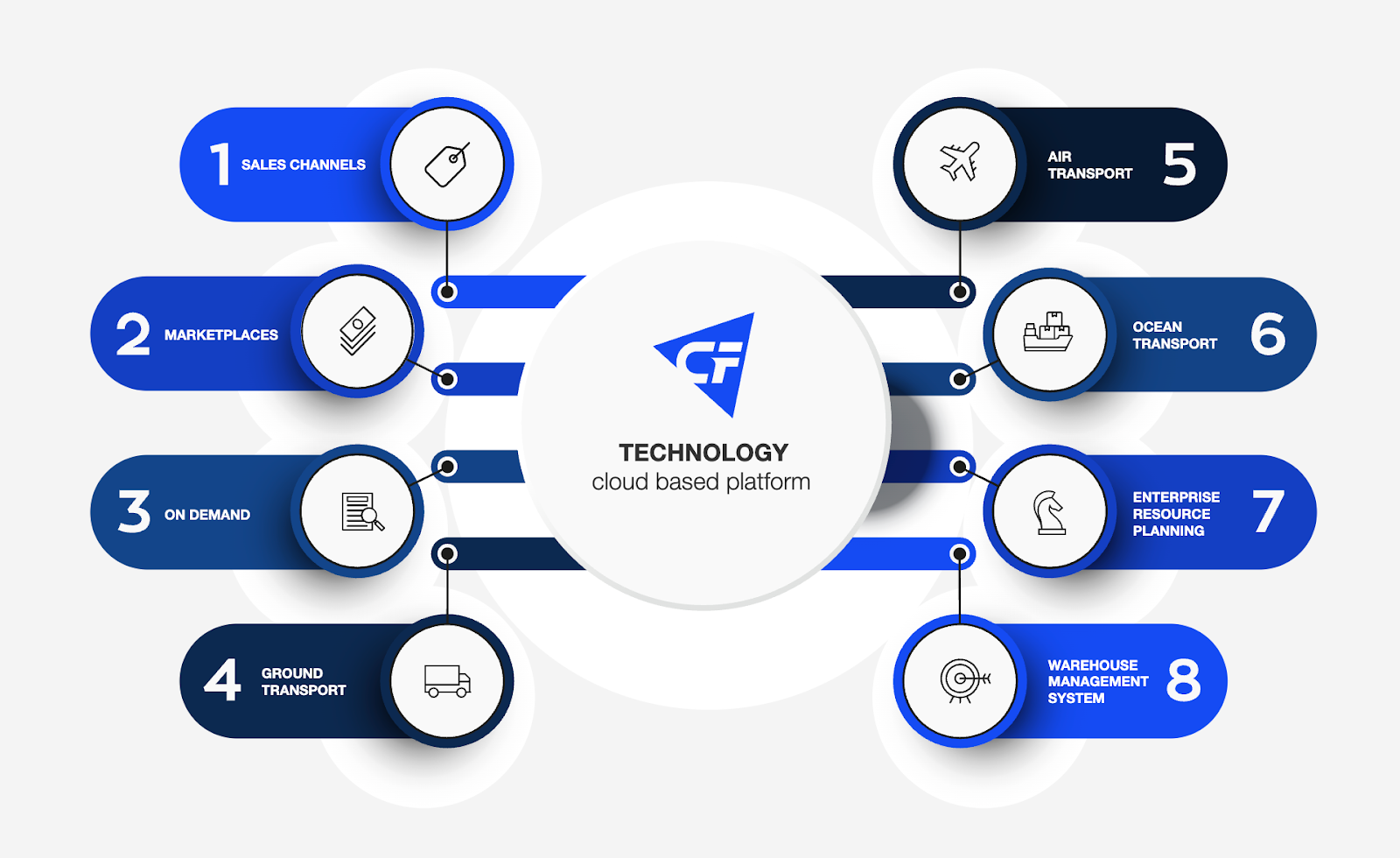
Couriers & Freight is used by businesses managing shipping for their own website, as well as sellers operating hybrid models across Amazon and platforms such as Shopify or WooCommerce.
As a multi-carrier shipping platform, Couriers & Freight provides access to multiple carriers through a single interface, allowing sellers to compare delivery services based on transit time, pricing, and shipment type. This is particularly relevant for businesses shipping bulky products, multi-item orders, or freight exceeding standard parcel limits.
Nationwide delivery coverage supports shipments to metropolitan, regional, and remote Australian locations through a single system.
Couriers & Freight also centralises shipment booking and tracking, allowing sellers to monitor deliveries without switching between carrier portals.
For sellers managing fulfilment beyond Amazon, Couriers & Freight provides a practical way to compare carriers, generate shipping quotes, and manage delivery operations as their business scales.
Get delivery quotes across multiple carriers for your Shopify, WooCommerce, or Amazon orders through Couriers & Freight.
Get a Quote Now


MHP

No Surcharge*

$16.50
$14
$15.50
$0
$15.50
$14.75
$0
$0
$0
$0
MHP Large Item
No Surcharge*
$16.50
$75
$62
$62
$60.10
$14.75
$0
$0
$0
$0
Residential Pickup
No Surcharge*
$6
$0
$9
--
$9
$10.60
$0
$0
$0
$38.50
Reidential pick up 30-99kgs
No Surcharge*
$63
$0
$9
$0
$9
$74.15
$20
Won't carry
Won't carry
$38.50
Residential pick up 100kgs+
No Surcharge*
$198
$0
$9
$0
$9
$158.87
$50
Won't carry
Won't carry
$38.50
Residential Delivery up to 29kgs
No Surcharge*
$6
$0
$9
--
$9.00
$10.60
$0
$0
$0
$38.50
Residential Delivery up 30-99kgs
No Surcharge*
$63
$0
$9
$0
$9
$74.15
$20
Won't carry
Won't carry
$38.50
Residential Delivery 100kgs+
No Surcharge*
$198
$0
$9
--
$9
$158.57
$50
Won't carry
Won't carry
$38.50
Tail Lift Pick up 50-99kgs Sydney / Melbourne
No Surcharge*
$45
$50-$250
$88
$88
$88
$44.07
$120
Won't carry
Won't carry
$61.50
Tail Lift Pick up 100-299kgs Sydney / Melbourne
No Surcharge*
$85
$50-$250
$88
$88
$88
$44.07
$120
Won't carry
Won't carry
$61.50
Tail Lift Pick up 300-499kgs Sydney / Melbourne
No Surcharge*
$120
$50-$250
$88
$88
$88
$44.07
$120
Won't carry
Won't carry
$61.50
Tail Lift Pick up 500kgs + Sydney / Melbourne
No Surcharge*
$250
$50-$250
$88
$88
$88
$44.07
$120
Won't carry
Won't carry
$61.50
Tail Lift Delivery 50-99kgs Sydney / Melbourne
No Surcharge*
$45
$50-$250
$88
$88
$88
$44.07
$120
Won't carry
Won't carry
$61.50
Tail Lift Delivery 100-299kgs Sydney / Melbourne
No Surcharge*
$85
$50-$250
$88
$88
$88
$44.07
$120
Won't carry
Won't carry
$61.50
Tail Lift Delivery300-499kgs Sydney / Melbourne
No Surcharge*
$120
$50-$250
$88
$88
$88
$44.07
$120
Won't carry
Won't carry
$61.50
Tail Lift Delivery 500kgs + Sydney / Melbourne
No Surcharge*
$250
$50-$250
$88
$88
$88
$44.07
$120
Won't carry
Won't carry
$61.50
Dead weight over 32KGS carton freight
No Surcharge*
$16.50
$75
$70
$70
$70
$14.75
$0
Won't carry
Won't carry
$0
Oversize Surcharge 1.20 - 1.54
No Surcharge*
--
$0
$0
$0
$0
$5.40
$10
$15
Won't carry
$0
Oversize Surcharge 1.55 - 1.85
No Surcharge*
$17
$20
$0
$0
$0
$11.93
$10
$15
Won't carry
$0
Oversize Surcharge 1.86 - 2.20
No Surcharge*
$37
$40
$0
$0
$0
$11.93
$10
Won't carry
Won't carry
$0
Pallet Surcharge
No Surcharge*
--
$0
$0
$0
$0
$0
$0
Won't carry
Won't carry
$0
Hand Unload Fee Carton
No Surcharge*
--
$0
$70
$70
$70
$47
$0
Won't carry
Won't carry
$61.50
Western Australia Regional Surcharge
No Surcharge*
%10
$0
$0
$0
$0
$0
$0
$0
$0
$0
*Surcharges may apply to areas/deimensions not listed
**Prices correct of 16th September 2024

Click to start shipping in less than 60 seconds