
🎄 Festive Rush - Deliveries might take a bit longer. We appreciate your patience.
Festive Period 2025
Cut-Off Times


Working with a Third Party Logistics (3PL) company for Amazon FBA stock replenishment becomes practical once storage fees and stockouts start to impact margins. Amazon Seller Central Australia confirms that sellers with low inventory levels relative to sales history face reduced search ranking and listing visibility, which can slow sales velocity during peak periods. Long-term storage fees apply to units held beyond 365 days, compounding costs for sellers without a local buffer.
A 3PL addresses this by holding stock domestically and replenishing Amazon’s network on a scheduled basis. This guide covers how to evaluate and select the right provider for Australian FBA operations.
Use Couriers & Freight to book road freight or pallet deliveries from your Australian 3PL warehouse into Amazon fulfilment centres in Sydney, Melbourne, Brisbane, or Perth.
Get a Quote NowWhen assessing a suitable 3PL partner, focus on operational capability rather than general service offerings:
For freight support alongside your 3PL setup, review the services available through Couriers & Freight.
A standard ecommerce 3PL focuses on picking, packing, and shipping orders to customers. FBA replenishment requires a different model. The 3PL stages inventory for inbound shipment into Amazon rather than fulfilling individual orders.
This distinction changes the operational requirements. The 3PL must follow Amazon's strict inbound standards, including labelling, carton configuration, and shipment booking. If the provider fails to meet these requirements, Amazon may reject shipments or delay check-in.
Amazon Seller Central documentation confirms that non-compliant inbound shipments can result in refused deliveries, additional preparation fees charged back to the seller, or inventory marked as stranded and unavailable for sale. Jungle Scout's 2024 report found that inventory and supply chain issues ranked among the top five operational challenges for FBA sellers, with delayed check-ins directly reducing ranking momentum for fast-moving SKUs.
Understanding how to properly assess a 3PL for FBA replenishment means filtering out providers that only handle outbound ecommerce fulfilment and selecting one aligned with Amazon's inbound workflow.
FBA prep involves specific, non-negotiable tasks. These include applying FNSKU barcodes, poly-bagging items with suffocation warnings, bubble-wrapping fragile goods, and labelling cartons according to Amazon's box content requirements.
Review the latest requirements directly on Amazon Seller Central Australia, as prep standards are updated periodically and non-compliance triggers fees or shipment refusals.
Ask each 3PL:
A 3PL that cannot answer these questions clearly introduces avoidable risk, delays, and additional costs.
Amazon operates fulfilment centres in Sydney, Melbourne, Brisbane, and Perth. A 3PL located near these cities reduces both freight cost and replenishment lead time.
If your 3PL is not located near these areas, expect higher line-haul costs and longer transit times. Sending pallets from regional areas to Sydney can add both cost per shipment and 1-2 days in transit.
When evaluating a 3PL for FBA replenishment, prioritise location as a measurable cost and speed factor, not just a convenience consideration.
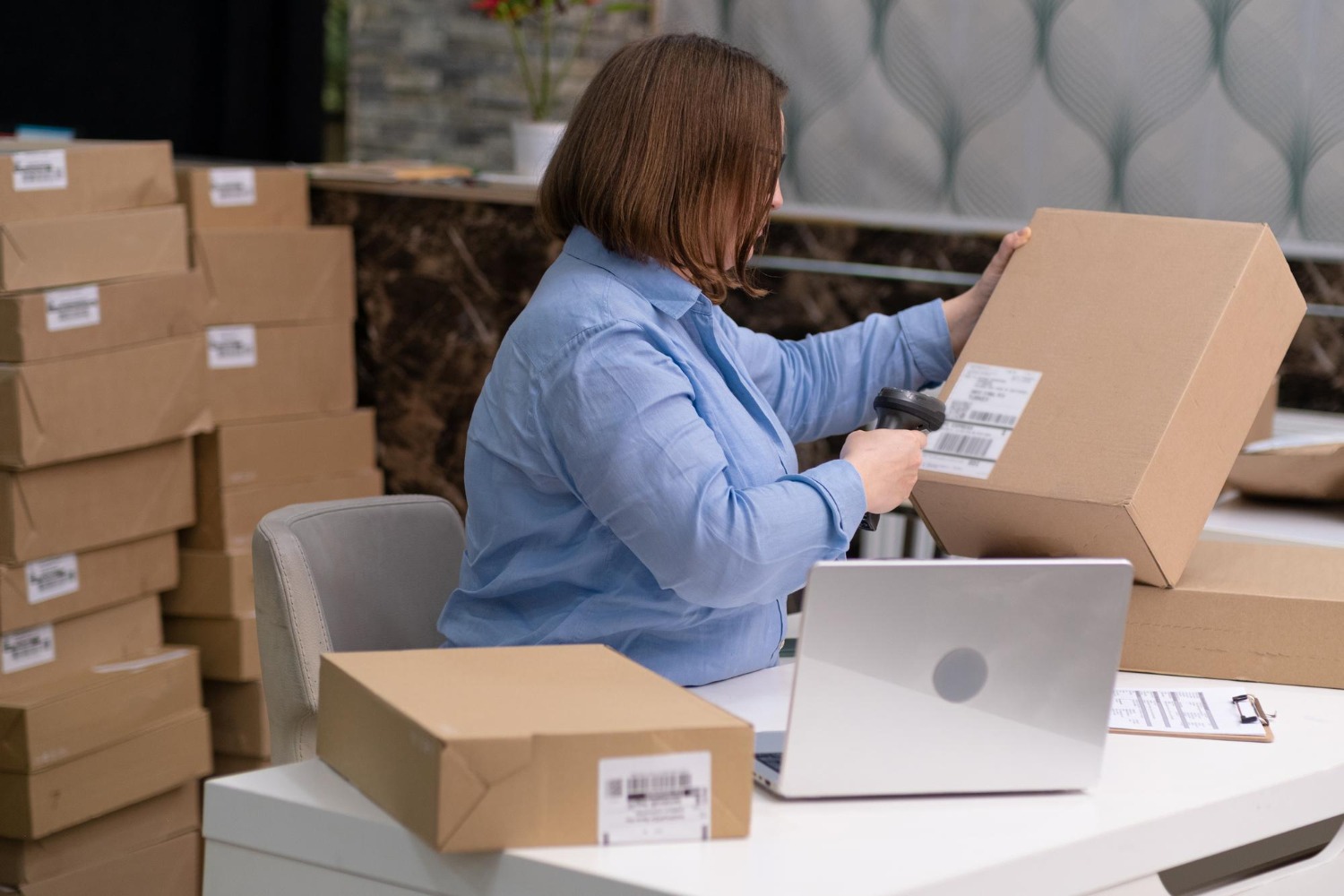
Warehousing and freight are separate functions. Many 3PLs store and prep inventory but do not manage the transport leg into Amazon.
Amazon Australia accepts inbound shipments via parcel carriers, road freight, and pallet networks, as outlined by Seller Central inbound shipment requirements. The chosen carrier must meet Amazon's booking and delivery requirements.
Sellers can use Couriers & Freight to book freight from a supplier or 3PL warehouse into Amazon fulfilment centres through a single platform, providing access to multiple carrier options without setting up separate accounts.
Choosing a 3PL that can either manage this process or integrate with a freight platform reduces operational friction and manual coordination.
Before selecting a provider, request a full pricing schedule. This should include:
Industry analysis from Jungle Scout identifies pallet breakdown fees, relabelling penalties, and peak season storage surcharges as the most common sources of unexpected 3PL costs for FBA sellers.
When deciding on a provider, insist on clear, itemised pricing with no undefined or variable charges. Be cautious with providers that cannot offer clear or predictable pricing structures.
Seller Central integration reduces manual errors and improves replenishment timing. A connected 3PL can sync inventory levels, create inbound shipments, and update stock automatically.
Without integration, sellers must manually reconcile inventory between systems. This increases the risk of stock discrepancies and delayed replenishment orders.
Amazon's inventory planning tools rely on accurate, real-time stock data to generate replenishment recommendations. Not all Australian 3PLs support direct Seller Central integration, so confirm system capability before committing.
When assessing providers, prioritise those offering direct system integration or reliable automated workflows over manual processes.
Once a seller has chosen a 3PL for storage and prep, inventory still needs to move from that 3PL into Amazon fulfilment centres. This freight leg is a separate requirement that 3PLs do not always handle, and booking each carrier separately adds administrative overhead.
Couriers & Freight provides a platform to manage this freight movement:
This reduces the need to manage separate carrier accounts for each replenishment run.
Book inbound FBA freight through Couriers & Freight.
Use Couriers & Freight to book road freight or pallet deliveries from your Australian 3PL warehouse into Amazon fulfilment centres in Sydney, Melbourne, Brisbane, or Perth.
Get a Quote Now


MHP

No Surcharge*

$16.50
$14
$15.50
$0
$15.50
$14.75
$0
$0
$0
$0
MHP Large Item
No Surcharge*
$16.50
$75
$62
$62
$60.10
$14.75
$0
$0
$0
$0
Residential Pickup
No Surcharge*
$6
$0
$9
--
$9
$10.60
$0
$0
$0
$38.50
Reidential pick up 30-99kgs
No Surcharge*
$63
$0
$9
$0
$9
$74.15
$20
Won't carry
Won't carry
$38.50
Residential pick up 100kgs+
No Surcharge*
$198
$0
$9
$0
$9
$158.87
$50
Won't carry
Won't carry
$38.50
Residential Delivery up to 29kgs
No Surcharge*
$6
$0
$9
--
$9.00
$10.60
$0
$0
$0
$38.50
Residential Delivery up 30-99kgs
No Surcharge*
$63
$0
$9
$0
$9
$74.15
$20
Won't carry
Won't carry
$38.50
Residential Delivery 100kgs+
No Surcharge*
$198
$0
$9
--
$9
$158.57
$50
Won't carry
Won't carry
$38.50
Tail Lift Pick up 50-99kgs Sydney / Melbourne
No Surcharge*
$45
$50-$250
$88
$88
$88
$44.07
$120
Won't carry
Won't carry
$61.50
Tail Lift Pick up 100-299kgs Sydney / Melbourne
No Surcharge*
$85
$50-$250
$88
$88
$88
$44.07
$120
Won't carry
Won't carry
$61.50
Tail Lift Pick up 300-499kgs Sydney / Melbourne
No Surcharge*
$120
$50-$250
$88
$88
$88
$44.07
$120
Won't carry
Won't carry
$61.50
Tail Lift Pick up 500kgs + Sydney / Melbourne
No Surcharge*
$250
$50-$250
$88
$88
$88
$44.07
$120
Won't carry
Won't carry
$61.50
Tail Lift Delivery 50-99kgs Sydney / Melbourne
No Surcharge*
$45
$50-$250
$88
$88
$88
$44.07
$120
Won't carry
Won't carry
$61.50
Tail Lift Delivery 100-299kgs Sydney / Melbourne
No Surcharge*
$85
$50-$250
$88
$88
$88
$44.07
$120
Won't carry
Won't carry
$61.50
Tail Lift Delivery300-499kgs Sydney / Melbourne
No Surcharge*
$120
$50-$250
$88
$88
$88
$44.07
$120
Won't carry
Won't carry
$61.50
Tail Lift Delivery 500kgs + Sydney / Melbourne
No Surcharge*
$250
$50-$250
$88
$88
$88
$44.07
$120
Won't carry
Won't carry
$61.50
Dead weight over 32KGS carton freight
No Surcharge*
$16.50
$75
$70
$70
$70
$14.75
$0
Won't carry
Won't carry
$0
Oversize Surcharge 1.20 - 1.54
No Surcharge*
--
$0
$0
$0
$0
$5.40
$10
$15
Won't carry
$0
Oversize Surcharge 1.55 - 1.85
No Surcharge*
$17
$20
$0
$0
$0
$11.93
$10
$15
Won't carry
$0
Oversize Surcharge 1.86 - 2.20
No Surcharge*
$37
$40
$0
$0
$0
$11.93
$10
Won't carry
Won't carry
$0
Pallet Surcharge
No Surcharge*
--
$0
$0
$0
$0
$0
$0
Won't carry
Won't carry
$0
Hand Unload Fee Carton
No Surcharge*
--
$0
$70
$70
$70
$47
$0
Won't carry
Won't carry
$61.50
Western Australia Regional Surcharge
No Surcharge*
%10
$0
$0
$0
$0
$0
$0
$0
$0
$0
*Surcharges may apply to areas/deimensions not listed
**Prices correct of 16th September 2024

Click to start shipping in less than 60 seconds