
🎄 Festive Rush - Deliveries might take a bit longer. We appreciate your patience.
Festive Period 2025
Cut-Off Times

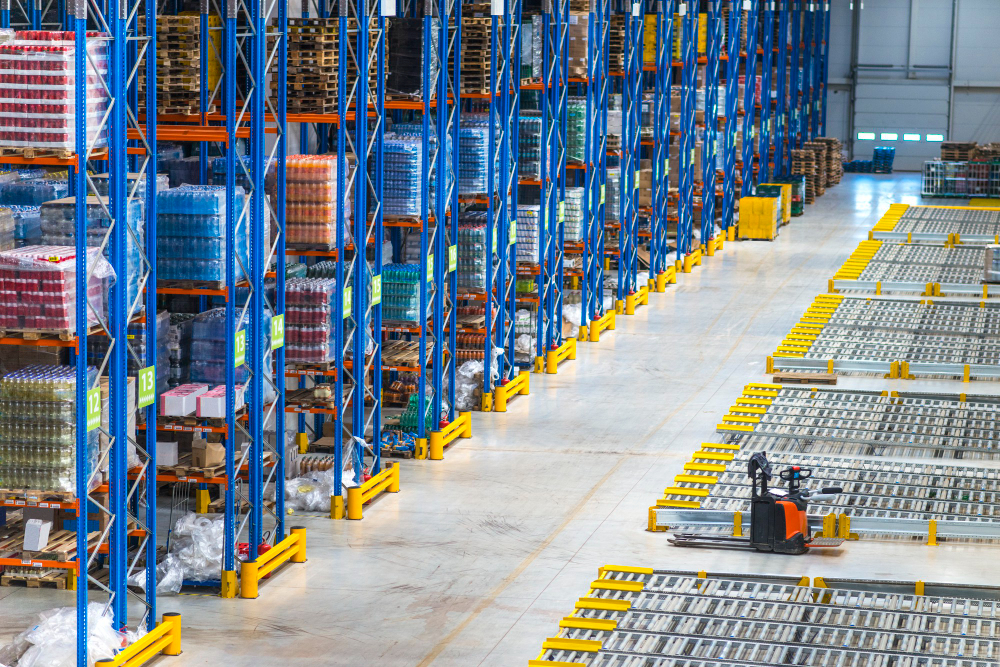
Nearly 60% of Australian brands have changed third-party logistics (3PL) providers multiple times due to ongoing delivery issues, making it worthwhile to choose the right 3PL before signing a contract.
Each time a business changes providers, it brings onboarding delays, inventory disruption and extra operational costs, and few businesses budget for a repeat migration.
This article sets out five questions to ask before signing with a 3PL company, covering product fit, warehouse location, tech integration, fee structure and minimum volume requirements.
Couriers & Freight handles pallet storage, pick and pack and multi-carrier dispatch for Australian ecommerce fulfilment.
Get a Quote NowIf you are short on time, here is the complete framework for how to choose a 3PL in Australia:
Once you have completed these five checks, compare shortlisted providers against the same criteria before making a final decision.
Businesses ready to evaluate operational fit can review the available options through Couriers & Freight's 3PL services.
Choosing a 3PL in Australia comes down to assessing each provider against five practical criteria.
Not all warehouses manage all products the same way. A facility built for B2C pick and pack, where individual items are picked, packed, and dispatched to consumers, operates very differently from one set up for B2B pallet storage, where stock ships in bulk to retailers or distributors.
Specialty categories such as temperature-controlled goods, TGA-certified products, or HACCP-compliant food items need infrastructure and processes that general freight warehouses do not have.
A common mismatch in Australia involves supplement brands signing with a general freight warehouse that lacks lot and batch tracking. If a product recall occurs, the business may struggle to identify affected inventory.
Before signing, ask the 3PL whether it has experience handling your inventory category, what certifications its facility holds, and how it manages traceability requirements.
For therapeutic goods, ask whether warehouse processes support compliance with Therapeutic Goods Administration (TGA) requirements and Good Manufacturing Practice (GMP) standards where applicable. If the provider cannot explain its procedures in detail, treat this as a warning sign.
Warehouse location directly affects delivery speed and transport costs. Australia Post delivery estimates show that parcels travelling within the same state can arrive in as little as one business day.
Meanwhile, interstate deliveries and regional destinations often require several additional days depending on the route.
A Sydney-based 3PL may support next-business-day delivery across metropolitan NSW, while deliveries to regional Western Australia can extend beyond four business days if parcels are not injected into a local carrier network.
Examples of typical transit ranges include:
If 70% or more of your orders ship within the Sydney, Melbourne, and Brisbane corridor, a 3PL with East Coast concentration is a sound fit. If a significant share of your customers are in regional Queensland, South Australia, Western Australia, or the Northern Territory, ask the provider how they coordinate those routes specifically.
Some 3PLs partner with regional carrier networks to inject parcels closer to the final destination, which cuts days off delivery. Others simply hand everything to a single national carrier and let the standard network timeframes apply.
Ask for actual transit performance data for your five highest-volume delivery postcodes rather than relying on claims of national coverage. When assessing how to choose a 3PL in Australia, postcode-level delivery data provides a more accurate measure of service capability than carrier network maps alone.

For a business running on Shopify or WooCommerce, the difference between a native plugin integration and a manual CSV upload process is significant. A native integration syncs orders, stock levels, and tracking numbers automatically.
A CSV-based system relies on someone manually exporting and uploading files, which introduces delays and errors, particularly during high-volume periods.
A functional 3PL dashboard should provide real-time visibility of stock levels by SKU, order status, and returns management from a single interface. It should not require emailing the warehouse directly to get any of this.
Without this, you are relying on the 3PL's team to manually relay information, which slows down customer service on your end.
If stock levels fail to sync between Shopify and the warehouse, customers may continue placing orders for inventory that is no longer available.
Before signing, request a live demonstration of the platform you will use and confirm whether Shopify, WooCommerce, Amazon Multi-Channel Fulfilment (MCF), and other relevant integrations are supported natively.
A 3PL's pricing structure usually falls into four categories. Getting a written breakdown of each before signing is the only way to compare providers accurately, because advertised headline rates rarely tell the full story.
Many national 3PL providers structure pricing and account management around businesses processing between 500 and 1,000 orders per month. Businesses operating below these thresholds may face onboarding restrictions or minimum monthly charges.
Businesses processing fewer than 500 orders per month may find a boutique or SME-focused provider a better operational fit for their requirements. These providers often support lower volumes without large monthly commitments. When considering how to choose a 3PL in Australia, ask whether minimum monthly spend requirements apply and how those commitments change during seasonal fluctuations.
Beyond the baseline minimum, ask how the provider increases warehouse labour and dispatch capacity during peak trading periods. Specifically, find out how the provider scales labour during Black Friday and the Christmas period without extending dispatch cut-off times.
A 3PL that cannot bring on additional pickers during peak will either slow your dispatch times or push orders to the next day. Both outcomes directly affect customer experience during your busiest sales period.
Ask for a specific example of how they handled peak volume in the most recent Christmas trading period, including whether cut-off times changed.
The next step after this evaluation is matching a provider against those same five criteria. Couriers & Freight offers 3PL warehousing across Australia, including pallet storage, pick and pack and multi-carrier dispatch, through its warehouse and fulfilment services.
Get a 3PL quote from Couriers & Freight to get started.
Couriers & Freight handles pallet storage, pick and pack and multi-carrier dispatch for Australian ecommerce fulfilment.
Get a Quote Now


MHP

No Surcharge*

$16.50
$14
$15.50
$0
$15.50
$14.75
$0
$0
$0
$0
MHP Large Item
No Surcharge*
$16.50
$75
$62
$62
$60.10
$14.75
$0
$0
$0
$0
Residential Pickup
No Surcharge*
$6
$0
$9
--
$9
$10.60
$0
$0
$0
$38.50
Reidential pick up 30-99kgs
No Surcharge*
$63
$0
$9
$0
$9
$74.15
$20
Won't carry
Won't carry
$38.50
Residential pick up 100kgs+
No Surcharge*
$198
$0
$9
$0
$9
$158.87
$50
Won't carry
Won't carry
$38.50
Residential Delivery up to 29kgs
No Surcharge*
$6
$0
$9
--
$9.00
$10.60
$0
$0
$0
$38.50
Residential Delivery up 30-99kgs
No Surcharge*
$63
$0
$9
$0
$9
$74.15
$20
Won't carry
Won't carry
$38.50
Residential Delivery 100kgs+
No Surcharge*
$198
$0
$9
--
$9
$158.57
$50
Won't carry
Won't carry
$38.50
Tail Lift Pick up 50-99kgs Sydney / Melbourne
No Surcharge*
$45
$50-$250
$88
$88
$88
$44.07
$120
Won't carry
Won't carry
$61.50
Tail Lift Pick up 100-299kgs Sydney / Melbourne
No Surcharge*
$85
$50-$250
$88
$88
$88
$44.07
$120
Won't carry
Won't carry
$61.50
Tail Lift Pick up 300-499kgs Sydney / Melbourne
No Surcharge*
$120
$50-$250
$88
$88
$88
$44.07
$120
Won't carry
Won't carry
$61.50
Tail Lift Pick up 500kgs + Sydney / Melbourne
No Surcharge*
$250
$50-$250
$88
$88
$88
$44.07
$120
Won't carry
Won't carry
$61.50
Tail Lift Delivery 50-99kgs Sydney / Melbourne
No Surcharge*
$45
$50-$250
$88
$88
$88
$44.07
$120
Won't carry
Won't carry
$61.50
Tail Lift Delivery 100-299kgs Sydney / Melbourne
No Surcharge*
$85
$50-$250
$88
$88
$88
$44.07
$120
Won't carry
Won't carry
$61.50
Tail Lift Delivery300-499kgs Sydney / Melbourne
No Surcharge*
$120
$50-$250
$88
$88
$88
$44.07
$120
Won't carry
Won't carry
$61.50
Tail Lift Delivery 500kgs + Sydney / Melbourne
No Surcharge*
$250
$50-$250
$88
$88
$88
$44.07
$120
Won't carry
Won't carry
$61.50
Dead weight over 32KGS carton freight
No Surcharge*
$16.50
$75
$70
$70
$70
$14.75
$0
Won't carry
Won't carry
$0
Oversize Surcharge 1.20 - 1.54
No Surcharge*
--
$0
$0
$0
$0
$5.40
$10
$15
Won't carry
$0
Oversize Surcharge 1.55 - 1.85
No Surcharge*
$17
$20
$0
$0
$0
$11.93
$10
$15
Won't carry
$0
Oversize Surcharge 1.86 - 2.20
No Surcharge*
$37
$40
$0
$0
$0
$11.93
$10
Won't carry
Won't carry
$0
Pallet Surcharge
No Surcharge*
--
$0
$0
$0
$0
$0
$0
Won't carry
Won't carry
$0
Hand Unload Fee Carton
No Surcharge*
--
$0
$70
$70
$70
$47
$0
Won't carry
Won't carry
$61.50
Western Australia Regional Surcharge
No Surcharge*
%10
$0
$0
$0
$0
$0
$0
$0
$0
$0
*Surcharges may apply to areas/deimensions not listed
**Prices correct of 16th September 2024

Click to start shipping in less than 60 seconds