
🎄 Festive Rush - Deliveries might take a bit longer. We appreciate your patience.
Festive Period 2025
Cut-Off Times


Sports & fitness dropshipping is one of the more commercially active niches in Australian e-commerce. The Australian sports and fitness goods market reached $1,433.3 million in 2024 and is projected to grow at a CAGR of around 6% to 2033, supported by 15.5% year-on-year growth in Australian e-commerce.
Product demand alone does not guarantee a profitable business. Many new sellers underestimate how shipping costs, delivery times, and fulfilment processes affect margins and customer satisfaction. This guide explains how to choose a good sub-niche, evaluate suppliers, and build a fulfilment model that supports sustainable growth in sports & fitness dropshipping.
Couriers & Freight receives, stores, and dispatches sports and fitness inventory through its national carrier network.
Get a Quote NowSports & fitness dropshipping in Australia involves selecting products, sourcing suppliers, and building a fulfilment strategy that matches local customer expectations. Before launching, focus on the following decisions:
As sales grow, a 3PL solution from Couriers & Freight can provide the domestic warehousing and fulfilment infrastructure needed to scale beyond supplier-direct shipping.
For a sports goods seller, the product category you choose directly impacts freight costs, supplier requirements, and fulfilment complexity. Look at demand trends, competition levels, average order value, and shipping requirements before choosing a niche. Choosing between them before you approach suppliers saves significant time and avoids costly catalogue changes after launch.
Activewear, resistance bands, gym gloves, and similar accessories are lightweight and compact. They are easier to store and ship. A set of resistance bands typically weighs between 300 and 700 grams, depending on configuration, and can usually be delivered in a satchel-sized parcel. Lower freight costs help keep margins predictable. They also reduce warehousing complexity.
IBISWorld reports that Australia's fitness and athletic clothing sector recorded approximately 3% annualised growth between 2019 and 2024, supported by continued consumer spending on health and fitness products.
Fitness equipment presents a different logistics profile. A pair of 10kg dumbbells weighs more than 20 kilograms, while larger products such as treadmills can exceed 30 kilograms and attract higher freight and handling charges. Product dimensions also influence courier pricing through volumetric weight calculations.
While equipment often generates higher-order values, fulfilment costs require closer management. Sellers entering this category should evaluate freight requirements early to avoid underestimating delivery costs.
Many sports & fitness dropshipping businesses begin with overseas suppliers because they offer broad product ranges and low upfront costs.
The challenge is that most major dropshipping networks are designed around North American and European fulfilment routes rather than Australian delivery expectations. Shippit reports that the average Australian delivery is completed in approximately 2.2 days, with 64% of consumers saying they won't return to a brand after a poor delivery experience. Suppliers that rely on international dispatch often struggle to meet those expectations.
China-based fulfilment allows sports & fitness dropshipping sellers to launch without having to purchase inventory upfront. However, delivery times often extend to two to four weeks, and international freight costs can reduce margins. While a 500-gram resistance band set may remain economical to ship, heavier products can quickly become expensive when freight charges are applied to every order.
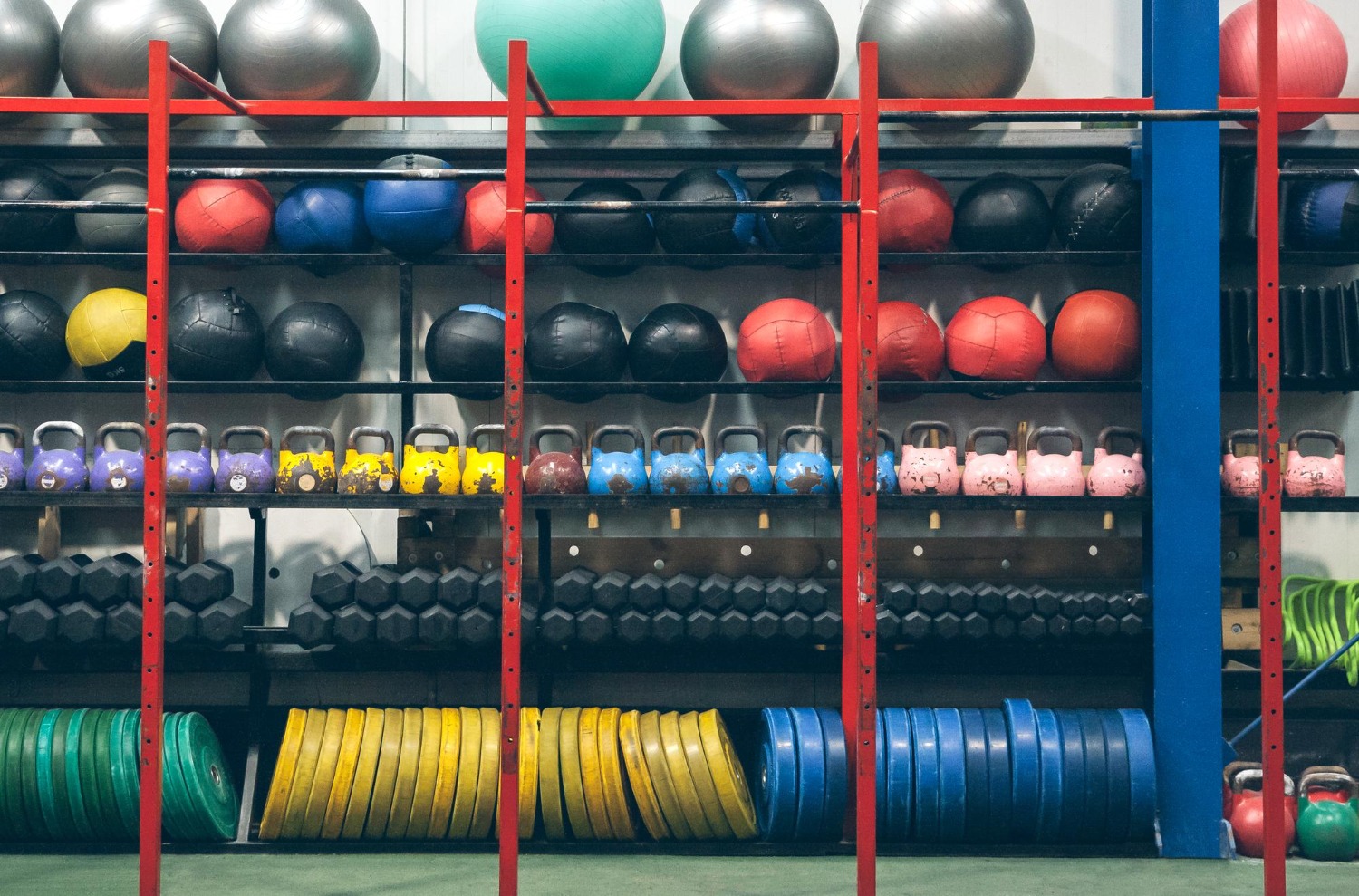
Australia-based stock held by a supplier or 3PL supports delivery within a few business days and reduces per-order freight costs. This model is particularly beneficial for e-commerce businesses selling heavier products, such as dumbbells and kettlebells, where domestic freight is generally more cost-effective than repeated international shipments.
A hybrid approach combines both models. Fast-moving products are stored in Australia, while slower-selling products remain overseas. This gives sports & fitness dropshipping businesses access to a broader catalogue without sacrificing delivery performance on their most popular items.
When evaluating suppliers, confirm that orders, inventory updates, and tracking information flow automatically between the supplier and your Shopify or WooCommerce store. Effective integration reduces manual administration and helps maintain accurate stock levels across sales channels.
Poor integration creates operational problems as order volumes grow. Without inventory synchronisation, products can remain available for purchase after stock has been depleted. Without automated tracking updates, customers receive fewer shipment notifications, resulting in additional customer service enquiries and order management tasks.
Many sports & fitness dropshipping businesses shift from supplier-direct fulfilment to bulk importing to accommodate more orders. Businesses ship inventory to a local warehouse, store it domestically, and distribute orders through Australian carrier networks.
For many sellers, this becomes the next logical step once supplier-direct fulfilment can no longer keep pace with customer demand. Rather than shipping individual orders from an overseas supplier after each sale, businesses import stock in bulk and fulfil orders from inventory already held in Australia.
This approach typically delivers faster transit times and lower per-order shipping costs. It also provides greater control over inventory availability and delivery performance.
As an online fitness brand grows, importing inventory in bulk often becomes more cost-effective than relying solely on supplier-direct fulfilment. A shipment of activewear, resistance bands, gym accessories, or other fitness products may arrive from a supplier in China or Vietnam as a container or LCL shipment. The inventory is received into an Australian 3PL warehouse, checked, stored, and prepared for domestic fulfilment.
When customer orders are placed, warehouse staff pick and pack individual items before dispatching them through Australian carrier networks. Customers receive their orders in days rather than weeks, while businesses benefit from more predictable shipping costs and faster delivery performance. Sellers planning imports can also review sea freight options before arranging inbound shipments.
Couriers & Freight's 3PL service supports this operating model by managing inbound freight receipts, warehousing, pick and pack operations, and domestic distribution through a national carrier network. Contact Couriers & Freight to request a 3PL warehousing and fulfilment quote for your sports and fitness product range. Sellers planning imports can also review sea freight options before arranging inbound stock shipments.
Before your store goes live, several shipping decisions need to be confirmed and configured. Leaving them until after launch often creates customer service issues and unexpected fulfilment costs.
By establishing clear shipping policies from the outset, fitness e-commerce stores can reduce customer enquiries, improve delivery performance, and create a more consistent purchasing experience.
The next stage of sports & fitness dropshipping depends on the supplier and fulfilment model that best supports your current order volume. Sellers who are testing demand may continue with supplier-direct fulfilment, while businesses with established sales often benefit from importing inventory and distributing orders from local stock.
If you have selected a supplier and are ready to ship inventory into Australian storage, Couriers & Freight can manage inbound freight, warehousing, pick and pack services, and domestic fulfilment.
Contact Couriers & Freight to request a 3PL warehousing and fulfilment quote for your sports and fitness products.
Couriers & Freight receives, stores, and dispatches sports and fitness inventory through its national carrier network.
Get a Quote Now


MHP

No Surcharge*

$16.50
$14
$15.50
$0
$15.50
$14.75
$0
$0
$0
$0
MHP Large Item
No Surcharge*
$16.50
$75
$62
$62
$60.10
$14.75
$0
$0
$0
$0
Residential Pickup
No Surcharge*
$6
$0
$9
--
$9
$10.60
$0
$0
$0
$38.50
Reidential pick up 30-99kgs
No Surcharge*
$63
$0
$9
$0
$9
$74.15
$20
Won't carry
Won't carry
$38.50
Residential pick up 100kgs+
No Surcharge*
$198
$0
$9
$0
$9
$158.87
$50
Won't carry
Won't carry
$38.50
Residential Delivery up to 29kgs
No Surcharge*
$6
$0
$9
--
$9.00
$10.60
$0
$0
$0
$38.50
Residential Delivery up 30-99kgs
No Surcharge*
$63
$0
$9
$0
$9
$74.15
$20
Won't carry
Won't carry
$38.50
Residential Delivery 100kgs+
No Surcharge*
$198
$0
$9
--
$9
$158.57
$50
Won't carry
Won't carry
$38.50
Tail Lift Pick up 50-99kgs Sydney / Melbourne
No Surcharge*
$45
$50-$250
$88
$88
$88
$44.07
$120
Won't carry
Won't carry
$61.50
Tail Lift Pick up 100-299kgs Sydney / Melbourne
No Surcharge*
$85
$50-$250
$88
$88
$88
$44.07
$120
Won't carry
Won't carry
$61.50
Tail Lift Pick up 300-499kgs Sydney / Melbourne
No Surcharge*
$120
$50-$250
$88
$88
$88
$44.07
$120
Won't carry
Won't carry
$61.50
Tail Lift Pick up 500kgs + Sydney / Melbourne
No Surcharge*
$250
$50-$250
$88
$88
$88
$44.07
$120
Won't carry
Won't carry
$61.50
Tail Lift Delivery 50-99kgs Sydney / Melbourne
No Surcharge*
$45
$50-$250
$88
$88
$88
$44.07
$120
Won't carry
Won't carry
$61.50
Tail Lift Delivery 100-299kgs Sydney / Melbourne
No Surcharge*
$85
$50-$250
$88
$88
$88
$44.07
$120
Won't carry
Won't carry
$61.50
Tail Lift Delivery300-499kgs Sydney / Melbourne
No Surcharge*
$120
$50-$250
$88
$88
$88
$44.07
$120
Won't carry
Won't carry
$61.50
Tail Lift Delivery 500kgs + Sydney / Melbourne
No Surcharge*
$250
$50-$250
$88
$88
$88
$44.07
$120
Won't carry
Won't carry
$61.50
Dead weight over 32KGS carton freight
No Surcharge*
$16.50
$75
$70
$70
$70
$14.75
$0
Won't carry
Won't carry
$0
Oversize Surcharge 1.20 - 1.54
No Surcharge*
--
$0
$0
$0
$0
$5.40
$10
$15
Won't carry
$0
Oversize Surcharge 1.55 - 1.85
No Surcharge*
$17
$20
$0
$0
$0
$11.93
$10
$15
Won't carry
$0
Oversize Surcharge 1.86 - 2.20
No Surcharge*
$37
$40
$0
$0
$0
$11.93
$10
Won't carry
Won't carry
$0
Pallet Surcharge
No Surcharge*
--
$0
$0
$0
$0
$0
$0
Won't carry
Won't carry
$0
Hand Unload Fee Carton
No Surcharge*
--
$0
$70
$70
$70
$47
$0
Won't carry
Won't carry
$61.50
Western Australia Regional Surcharge
No Surcharge*
%10
$0
$0
$0
$0
$0
$0
$0
$0
$0
*Surcharges may apply to areas/deimensions not listed
**Prices correct of 16th September 2024

Click to start shipping in less than 60 seconds