
🎄 Festive Rush - Deliveries might take a bit longer. We appreciate your patience.
Festive Period 2025
Cut-Off Times


Learning how to avoid Amazon FBA stockouts is critical for protecting your Best Seller Rank, as inactive listings lose search visibility and sales momentum quickly. Jungle Scout's 2025 report found that 46% of sellers lost significant revenue due to inventory gaps.
Recovery can take weeks, since Amazon's algorithm requires sustained sales velocity and increased ad spend to restore rankings. Australian sellers face added pressure from long international lead times, making local 3PL staging a practical solution for consistent FBA replenishment.
The following seven tactics cover forecasting, buffer stock, and 3PL staging: the operational steps that keep FBA inventory levels stable and rankings protected.
Book 3PL warehousing with Couriers & Freight to receive inbound stock at an Australian warehouse and coordinate replenishment runs directly into FBA.
Get a Quote NowAvoiding Amazon FBA stockouts requires a combination of accurate forecasting, buffer inventory, and flexible fulfilment strategies, especially for Australian sellers managing long international lead times.
These strategies help protect your Best Seller Rank, maintain Buy Box eligibility, and prevent costly disruptions to your sales momentum during peak periods.
Australian sellers managing high-volume or seasonal inventory can learn how 3PL warehousing supports FBA replenishment through Couriers & Freight.
Amazon removes a listing from organic search results the moment FBA inventory reaches zero. This removal deprioritises the listing in ranking algorithms, and the listing does not recover automatically once you restore stock. Recovery requires rebuilding sales velocity over time, often supported by increased advertising investment.
Multiply your average daily sales by your longest recorded lead time from the past 12 months to set your reorder trigger. If you move 10 units daily and your supplier has taken 60 days to deliver, your reorder point is 600 units. Using worst-case lead times ensures your replenishment planning remains resilient against delays rather than relying on optimistic averages.
Safety stock acts as a separate reserve held above your reorder point to absorb demand spikes and supplier delays. Maintain a 14 to 21-day safety stock buffer for high-velocity A-tier products. This buffer works alongside your reorder point rather than replacing it, giving you an additional layer of protection against volatility.
Access the Restock Inventory Report within the Inventory menu of Seller Central to monitor SKUs approaching stockout. This tool analyses the previous 90 days of sales data to recommend reorder quantities and ship dates. Review this report every week to catch shifts in velocity that manual reviews might miss.
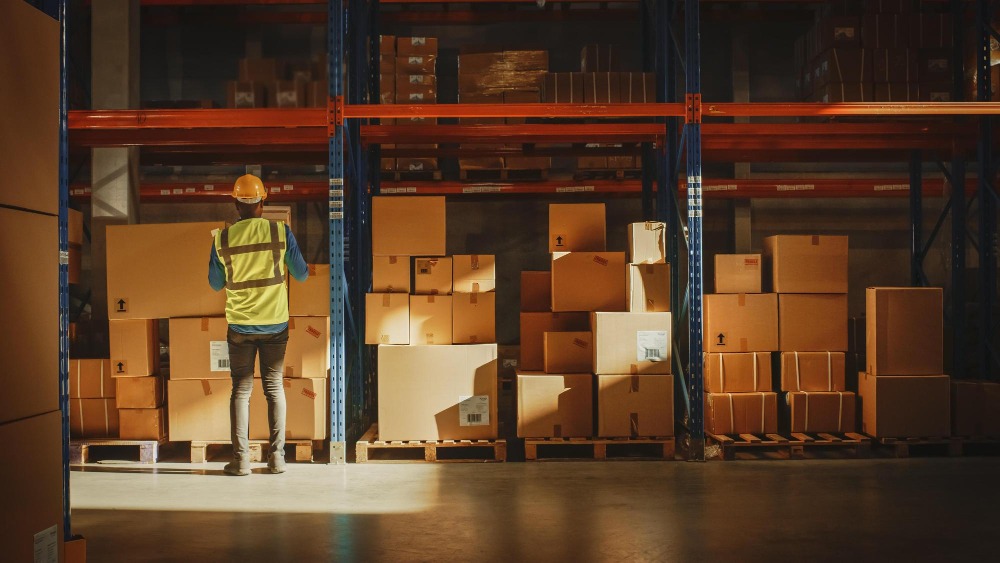
Fulfilled by Merchant (FBM) serves as a failsafe that keeps your product live on Amazon when FBA stock hits zero. This strategy requires you to hold a separate stock reserve in Australia and maintain the operational capacity to ship orders directly. Active Amazon listings prevent your organic ranking from disappearing during replenishment gaps.
Review actual versus quoted lead times every three months to compare order dates against FBA check-in dates. Adjust your reorder triggers to account for extended windows during the Chinese New Year shutdown or the Q4 peak season. This practice ensures your forecasting remains accurate despite seasonal shipping volatility.
Identify the single 30-day window in the past year with your highest daily sales velocity and use that as your baseline for peak planning. Rolling demand windows weigh recent sales data more heavily than static annual averages to reflect current buyer behaviour. This method prevents under-replenishment during sudden market shifts or seasonal growth.
FBA storage limits often prevent sellers from shipping entire bulk orders directly to Amazon. A 3PL warehouse acts as a staging point that holds bulk stock and replenishes FBA in smaller scheduled batches. This approach keeps your inventory available for replenishment while ensuring you stay within Amazon's storage allocation to avoid overage fees.
Landing a full container at an Australian port and transporting it to a 3PL warehouse and fulfilment centre holds the bulk quantity and stages controlled replenishment runs into FBA. The 3PL receives the inbound stock and coordinates weekly batches to FBA to maintain stock levels without exceeding capacity limits.
Couriers & Freight provides 3PL warehousing and fulfilment that covers inbound freight booking from the port, bulk storage, and outbound FBA replenishment runs across road, rail, and air networks. Sellers book inbound freight from their supplier, store goods at the warehouse, and schedule FBA replenishment batches through the Couriers & Freight platform without coordinating multiple carriers separately.
Get a quote for 3PL Warehousing and FBA replenishment with Couriers & Freight.
Book 3PL warehousing with Couriers & Freight to receive inbound stock at an Australian warehouse and coordinate replenishment runs directly into FBA.
Get a Quote Now


MHP

No Surcharge*

$16.50
$14
$15.50
$0
$15.50
$14.75
$0
$0
$0
$0
MHP Large Item
No Surcharge*
$16.50
$75
$62
$62
$60.10
$14.75
$0
$0
$0
$0
Residential Pickup
No Surcharge*
$6
$0
$9
--
$9
$10.60
$0
$0
$0
$38.50
Reidential pick up 30-99kgs
No Surcharge*
$63
$0
$9
$0
$9
$74.15
$20
Won't carry
Won't carry
$38.50
Residential pick up 100kgs+
No Surcharge*
$198
$0
$9
$0
$9
$158.87
$50
Won't carry
Won't carry
$38.50
Residential Delivery up to 29kgs
No Surcharge*
$6
$0
$9
--
$9.00
$10.60
$0
$0
$0
$38.50
Residential Delivery up 30-99kgs
No Surcharge*
$63
$0
$9
$0
$9
$74.15
$20
Won't carry
Won't carry
$38.50
Residential Delivery 100kgs+
No Surcharge*
$198
$0
$9
--
$9
$158.57
$50
Won't carry
Won't carry
$38.50
Tail Lift Pick up 50-99kgs Sydney / Melbourne
No Surcharge*
$45
$50-$250
$88
$88
$88
$44.07
$120
Won't carry
Won't carry
$61.50
Tail Lift Pick up 100-299kgs Sydney / Melbourne
No Surcharge*
$85
$50-$250
$88
$88
$88
$44.07
$120
Won't carry
Won't carry
$61.50
Tail Lift Pick up 300-499kgs Sydney / Melbourne
No Surcharge*
$120
$50-$250
$88
$88
$88
$44.07
$120
Won't carry
Won't carry
$61.50
Tail Lift Pick up 500kgs + Sydney / Melbourne
No Surcharge*
$250
$50-$250
$88
$88
$88
$44.07
$120
Won't carry
Won't carry
$61.50
Tail Lift Delivery 50-99kgs Sydney / Melbourne
No Surcharge*
$45
$50-$250
$88
$88
$88
$44.07
$120
Won't carry
Won't carry
$61.50
Tail Lift Delivery 100-299kgs Sydney / Melbourne
No Surcharge*
$85
$50-$250
$88
$88
$88
$44.07
$120
Won't carry
Won't carry
$61.50
Tail Lift Delivery300-499kgs Sydney / Melbourne
No Surcharge*
$120
$50-$250
$88
$88
$88
$44.07
$120
Won't carry
Won't carry
$61.50
Tail Lift Delivery 500kgs + Sydney / Melbourne
No Surcharge*
$250
$50-$250
$88
$88
$88
$44.07
$120
Won't carry
Won't carry
$61.50
Dead weight over 32KGS carton freight
No Surcharge*
$16.50
$75
$70
$70
$70
$14.75
$0
Won't carry
Won't carry
$0
Oversize Surcharge 1.20 - 1.54
No Surcharge*
--
$0
$0
$0
$0
$5.40
$10
$15
Won't carry
$0
Oversize Surcharge 1.55 - 1.85
No Surcharge*
$17
$20
$0
$0
$0
$11.93
$10
$15
Won't carry
$0
Oversize Surcharge 1.86 - 2.20
No Surcharge*
$37
$40
$0
$0
$0
$11.93
$10
Won't carry
Won't carry
$0
Pallet Surcharge
No Surcharge*
--
$0
$0
$0
$0
$0
$0
Won't carry
Won't carry
$0
Hand Unload Fee Carton
No Surcharge*
--
$0
$70
$70
$70
$47
$0
Won't carry
Won't carry
$61.50
Western Australia Regional Surcharge
No Surcharge*
%10
$0
$0
$0
$0
$0
$0
$0
$0
$0
*Surcharges may apply to areas/deimensions not listed
**Prices correct of 16th September 2024

Click to start shipping in less than 60 seconds