
🎄 Festive Rush - Deliveries might take a bit longer. We appreciate your patience.
Festive Period 2025
Cut-Off Times


In 2024, Amazon introduced new inbound placement fees that increased the cost of sending stock into its fulfilment network. For Australian sellers, this made the choice between FBA, FBM, and 3PL a more significant freight decision than before. These changes have increased inbound costs and created pressure to optimise shipment size and frequency
Amazon sellers can now choose between three models: Fulfilment by Amazon, Fulfilment by Merchant, and third-party logistics. Each has a different cost structure, delivery responsibilities, and operational risk profiles. This article explains how each model works and where freight decisions affect your costs.
Get freight quotes for FTL and LTL shipments to Amazon fulfilment centres, last-mile delivery for FBM orders, and 3PL storage and dispatch.
Get a Quote NowAmazon shipping options determine how inventory moves from supplier to customer and who manages fulfilment.
Sellers shipping inventory into Amazon fulfilment centres can review inbound freight requirements and compare shipping options with Couriers & Freight.
FBA is one of the most widely used Amazon shipping models for sellers who want to outsource order fulfilment to Amazon’s warehouse network. Sellers ship inventory to Amazon fulfilment centres, where Amazon stores products and completes picking, packing, delivery, and customer service. Products stored in these facilities qualify for Prime delivery, which affects listing visibility and delivery speed.
Sellers remain responsible for the inbound stage. They must move inventory from suppliers or warehouses into Amazon fulfilment centres. This stage requires selecting the right freight structure.
Full Truck Load (FTL) shipments move large volumes on a dedicated vehicle and suit bulk inventory transfers. Less Than Truck Load (LTL) shipments consolidate smaller consignments and suit regular restocking or lower-volume shipments.
Amazon introduced several fee changes in 2024 that affect FBA operations. These include new inbound placement service fees and adjustments to storage and inventory charges, which increase the cost of inefficient shipment planning. These changes require sellers to plan shipment size, frequency, and warehouse allocation more carefully.
Sellers sending inventory to Amazon fulfilment centres can compare FTL and LTL inbound freight rates through Couriers & Freight when organising shipments from suppliers or distribution points.
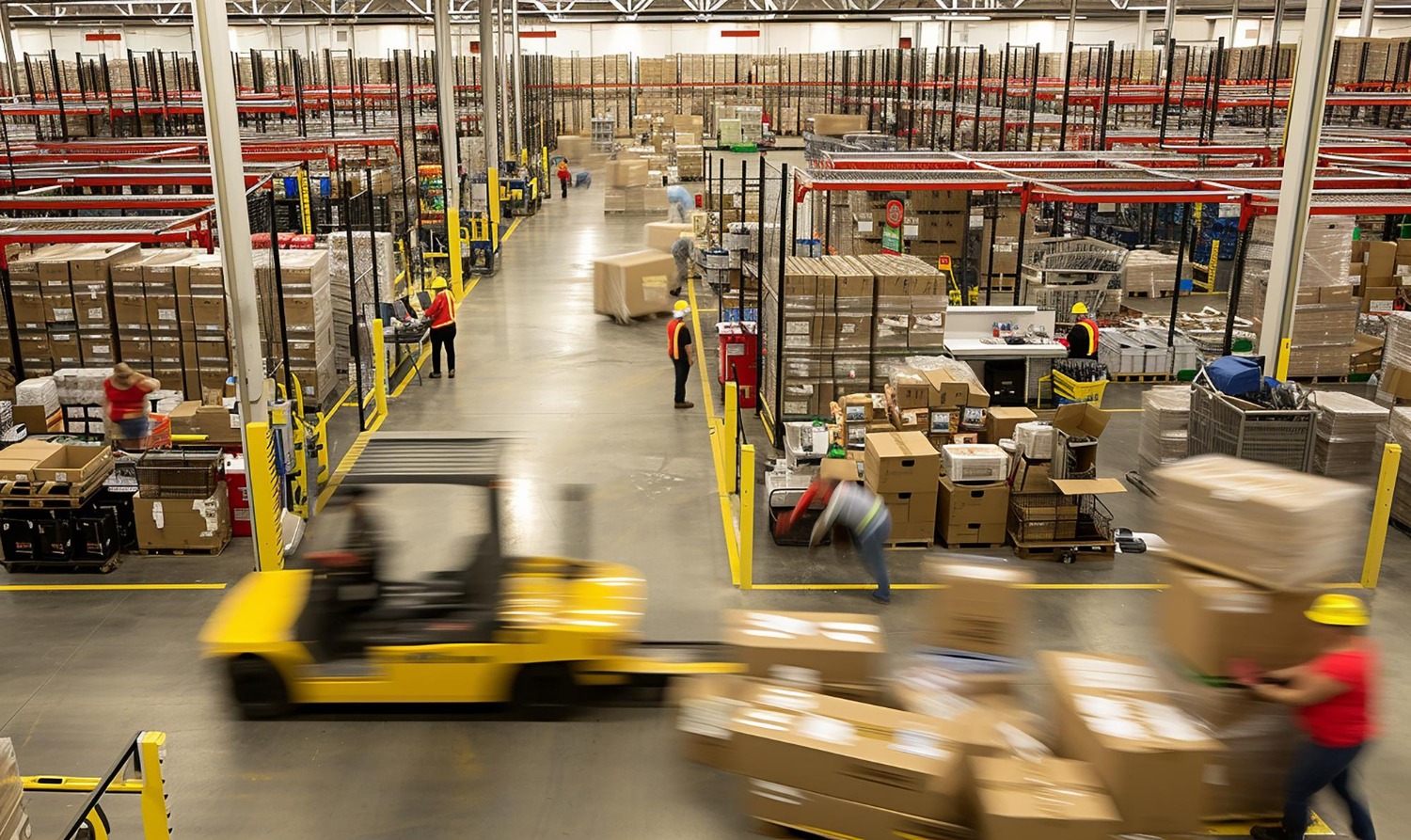
FBM is an Amazon shipping model where sellers manage the entire fulfilment process independently.
Sellers store inventory in their own facility and handle picking, packing, dispatch, and delivery. Amazon processes the order and payment, but the seller controls logistics execution.
Sellers use FBM when product characteristics or cost structures make FBA less viable. Oversized or heavy items often incur higher storage and fulfilment fees in Amazon warehouses. Products with slower turnover can also increase storage costs under FBA. Some sellers also use FBM to control packaging standards or manage bundled products outside Amazon’s fulfilment requirements.
Last-mile delivery is the most critical part of FBM operations. Delivery speed and tracking accuracy directly affect seller performance metrics such as on-time delivery rate and valid tracking rate.
Under FBM, carrier performance directly impacts delivery reliability and customer experience. Sellers managing their own dispatch can access last-mile delivery carriers through Couriers & Freight to compare rates and transit times across different courier networks.
3PL is an Amazon shipping model where a warehouse provider stores and fulfils orders on behalf of the seller. In this model, sellers send inventory to a 3PL warehouse, where staff manage receiving, storage, picking, packing, and dispatch. The seller retains control over fulfilment rules and sales channels while outsourcing physical operations.
3PL becomes practical when order volume increases beyond what internal teams can manage. Sellers processing consistent daily orders often shift to 3PL to avoid warehouse leasing, staffing, and operational bottlenecks.
This model also supports multi-channel fulfilment, allowing sellers to handle Amazon orders alongside Shopify or direct-to-consumer sales using a single inventory pool.
Demand for outsourced logistics continues to grow alongside e-commerce expansion. CBRE reports sustained demand for logistics warehouse space in Australia, driven by retailers and online sellers increasing their reliance on third-party fulfilment providers.
Sellers looking to outsource fulfilment can explore Couriers & Freight’s 3PL service, which covers storage, pick and pack, and order dispatch for Australian-based inventory. This makes 3PL a flexible Amazon shipping option for sellers scaling across multiple channels.
This comparison shows how each Amazon shipping model assigns storage, delivery, and cost responsibility.
Amazon shipping requires different logistics support depending on the fulfilment model used. Sellers using FBA organise FTL or LTL freight to move inventory into Amazon fulfilment centres. Sellers operating under FBM arrange courier services for last-mile delivery. Businesses using 3PL rely on warehouse services that store inventory and dispatch orders.
Couriers & Freight supports these requirements through inbound freight services, last-mile delivery carrier access, and its own 3PL warehouse operations for Australian sellers.
Compare shipping rates for your Amazon orders.
Get freight quotes for FTL and LTL shipments to Amazon fulfilment centres, last-mile delivery for FBM orders, and 3PL storage and dispatch.
Get a Quote Now


MHP

No Surcharge*

$16.50
$14
$15.50
$0
$15.50
$14.75
$0
$0
$0
$0
MHP Large Item
No Surcharge*
$16.50
$75
$62
$62
$60.10
$14.75
$0
$0
$0
$0
Residential Pickup
No Surcharge*
$6
$0
$9
--
$9
$10.60
$0
$0
$0
$38.50
Reidential pick up 30-99kgs
No Surcharge*
$63
$0
$9
$0
$9
$74.15
$20
Won't carry
Won't carry
$38.50
Residential pick up 100kgs+
No Surcharge*
$198
$0
$9
$0
$9
$158.87
$50
Won't carry
Won't carry
$38.50
Residential Delivery up to 29kgs
No Surcharge*
$6
$0
$9
--
$9.00
$10.60
$0
$0
$0
$38.50
Residential Delivery up 30-99kgs
No Surcharge*
$63
$0
$9
$0
$9
$74.15
$20
Won't carry
Won't carry
$38.50
Residential Delivery 100kgs+
No Surcharge*
$198
$0
$9
--
$9
$158.57
$50
Won't carry
Won't carry
$38.50
Tail Lift Pick up 50-99kgs Sydney / Melbourne
No Surcharge*
$45
$50-$250
$88
$88
$88
$44.07
$120
Won't carry
Won't carry
$61.50
Tail Lift Pick up 100-299kgs Sydney / Melbourne
No Surcharge*
$85
$50-$250
$88
$88
$88
$44.07
$120
Won't carry
Won't carry
$61.50
Tail Lift Pick up 300-499kgs Sydney / Melbourne
No Surcharge*
$120
$50-$250
$88
$88
$88
$44.07
$120
Won't carry
Won't carry
$61.50
Tail Lift Pick up 500kgs + Sydney / Melbourne
No Surcharge*
$250
$50-$250
$88
$88
$88
$44.07
$120
Won't carry
Won't carry
$61.50
Tail Lift Delivery 50-99kgs Sydney / Melbourne
No Surcharge*
$45
$50-$250
$88
$88
$88
$44.07
$120
Won't carry
Won't carry
$61.50
Tail Lift Delivery 100-299kgs Sydney / Melbourne
No Surcharge*
$85
$50-$250
$88
$88
$88
$44.07
$120
Won't carry
Won't carry
$61.50
Tail Lift Delivery300-499kgs Sydney / Melbourne
No Surcharge*
$120
$50-$250
$88
$88
$88
$44.07
$120
Won't carry
Won't carry
$61.50
Tail Lift Delivery 500kgs + Sydney / Melbourne
No Surcharge*
$250
$50-$250
$88
$88
$88
$44.07
$120
Won't carry
Won't carry
$61.50
Dead weight over 32KGS carton freight
No Surcharge*
$16.50
$75
$70
$70
$70
$14.75
$0
Won't carry
Won't carry
$0
Oversize Surcharge 1.20 - 1.54
No Surcharge*
--
$0
$0
$0
$0
$5.40
$10
$15
Won't carry
$0
Oversize Surcharge 1.55 - 1.85
No Surcharge*
$17
$20
$0
$0
$0
$11.93
$10
$15
Won't carry
$0
Oversize Surcharge 1.86 - 2.20
No Surcharge*
$37
$40
$0
$0
$0
$11.93
$10
Won't carry
Won't carry
$0
Pallet Surcharge
No Surcharge*
--
$0
$0
$0
$0
$0
$0
Won't carry
Won't carry
$0
Hand Unload Fee Carton
No Surcharge*
--
$0
$70
$70
$70
$47
$0
Won't carry
Won't carry
$61.50
Western Australia Regional Surcharge
No Surcharge*
%10
$0
$0
$0
$0
$0
$0
$0
$0
$0
*Surcharges may apply to areas/deimensions not listed
**Prices correct of 16th September 2024

Click to start shipping in less than 60 seconds