How to Ship Your First Pallet: A Step-by-Step Guide From Supplier to Port

Apr 21, 2026
How to Ship Your First Pallet: A Step-by-Step Guide From Supplier to Port

First-time importers regularly place bulk orders without a clear picture of how goods are shipped from the supplier to the port. Australia's imports reached $629.9 billion in 2024-25, a 4.4% increase, and palletised freight accounts for a significant share of that volume.

This guide covers the six steps to get your first shipment ready and booked correctly.


Ship Your First Pallet with Couriers & Freight


Book domestic road freight or international pallet shipping through Couriers & Freight and compare carrier rates before your first pickup.

     Get a Quote Now   
 

What to Know Before Shipping Your First Pallet: Quick Summary

  • Choose a standard pallet size of 1.2m x 1.2m to match carrier requirements and avoid rejection. Ensure all wooden pallets meet ISPM 15 heat-treatment standards for international shipping.
  • Stack the load with heavier items at the base using an interlocking pattern to maintain stability during transit.
  • Secure the load using 3 to 5 layers of stretch wrap, adding edge boards or strapping where required for heavy or high-value goods.
  • Label the pallet on at least two sides with sender and receiver details, contact number, and consignment reference.
  • Prepare all required documents, including the Bill of Lading, commercial invoice with HS codes, packing list, and ISPM 15 certification where applicable.
  • Book pallet pickup with accurate dimensions, weight, locations, and tailgate lift requirements to avoid surcharges.
Compare carriers with Couriers & Freight and book your pallet shipment once all preparation steps are complete.

From Supplier to Port: 6 Steps to Ship Your First Pallet

Which Pallet Type Do You Need?

Pallet Type Approximate Cost ISPM 15 Status Carrier Acceptance
CHEP (hire pallet) Hire fee applies; no purchase cost Heat-treated and ISPM 15 compliant Accepted by most domestic carriers; check with carrier for export use
Plain timber (new) $20 to $40 per pallet Compliant if sourced from an AWPCS-accredited provider Accepted domestically and internationally with valid IPPC stamp
Plain timber (refurbished) $10 to $25 per pallet Compliant only if re-certified by an AWPCS-accredited provider Accepted if structurally sound and correctly stamped; rejected if damaged
Plastic $80 to $200 per pallet Exempt from ISPM 15 requirements Accepted domestically and internationally; preferred for food and pharmaceutical freight

Comparison of standard Australian pallet types -- CHEP hire, new timber, refurbished timber, and plastic -- across cost, ISPM 15 compliance status, and domestic and international carrier acceptance.

Step 1: Choose the Right Pallet

The standard Australian pallet measures 1.2m x 1.2m, and selecting the correct size ensures carrier acceptance and prevents load overhang. A pallet that does not match your load footprint results in carrier rejection or added charges at the port.

When selecting a pallet, confirm:

  • Structural condition: The pallet must have no cracks, missing boards, or exposed nails. Damaged pallets are rejected at pickup or port.
  • ISPM 15 compliance: All wooden pallets used for international shipments must be heat-treated and marked with the IPPC stamp. Australian requirements are enforced through BICON. Non-compliant pallets may be destroyed or re-exported.
  • Source: Use new or certified refurbished pallets from providers accredited under the Australian Wood Packaging Certification Scheme (AWPCS).

Step 2: Stack the Load Correctly

Incorrect stacking causes load instability, rejected insurance claims, and damaged goods during transit. Carriers assess stacking quality when determining liability.

Follow these rules:
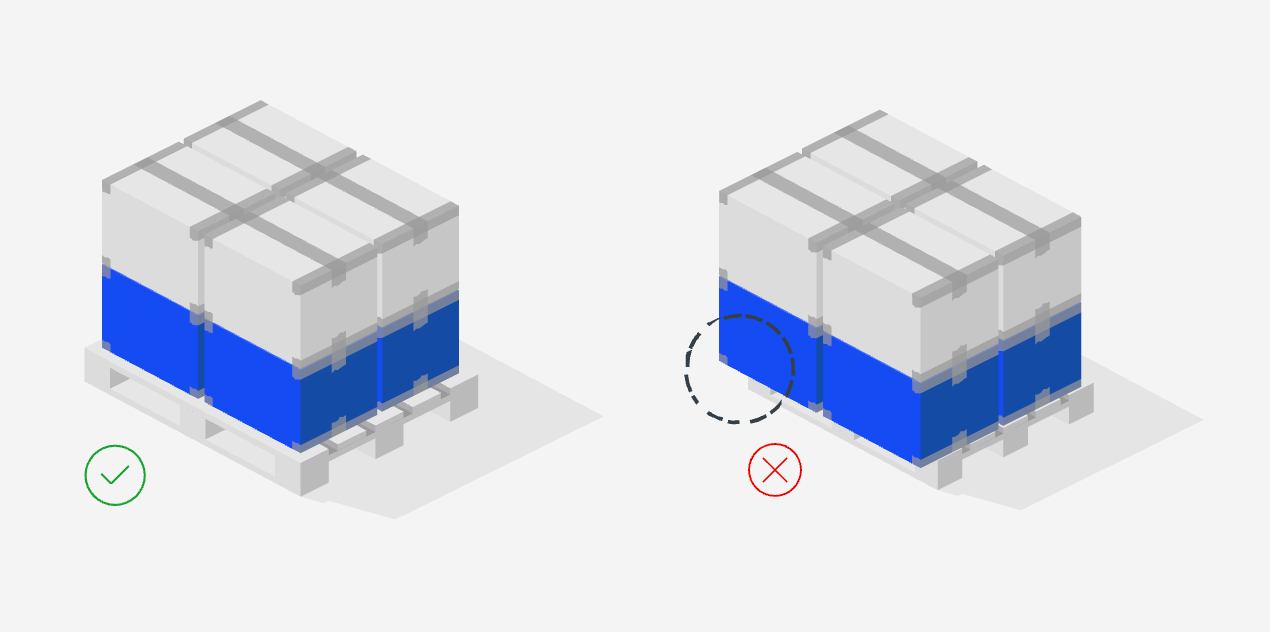
  • Heaviest items on the bottom. This lowers the centre of gravity and prevents collapse during transport.
  • Use an interlocking pattern. Stagger cartons across layers to prevent vertical weak points. Column stacking increases the risk of failure.
  • Keep the top flat. Uneven loads trigger non-stackable surcharges and increase freight costs.
  • No overhang. Goods must stay within pallet edges. Overhang causes rejection or additional charges.
Alt text: Do Not Overhang illustration

Step 3: Secure the Load

A stacked pallet that is not secured will shift during handling and transport, increasing the risk of damage or load failure.

Apply securing methods in sequence:

  • Stretch wrap. Use a minimum of 3 to 5 passes, anchoring at the base and wrapping upward to lock goods to the pallet.
  • Edge boards. Use corner protection for loads with sharp edges or long transit exposure.
  • Strapping. Apply straps for heavy or high-value freight to prevent shifting.

Australian load restraint standards are defined by the National Transport Commission.
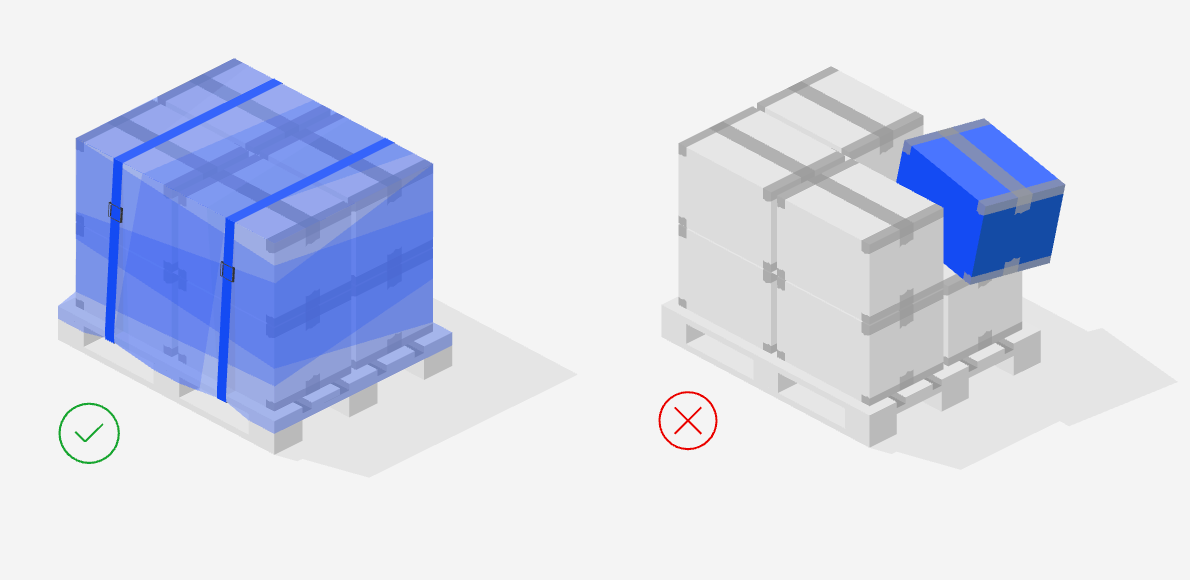
Alt text: Secure the load illustration

Step 4: Label the Pallet Correctly

Incorrect or incomplete labelling results in misrouted freight, delivery delays, or rejected consignments at pickup. Apply labels to at least two sides of the pallet at a readable height.
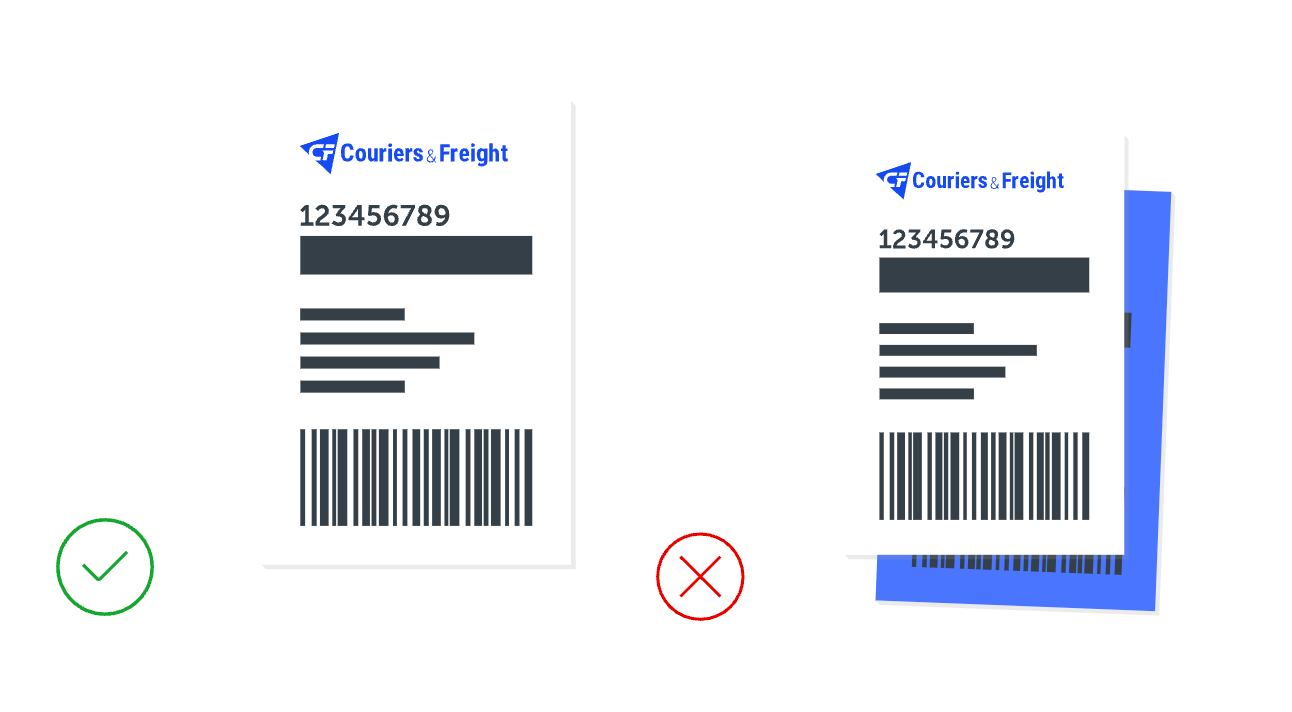
Alt text: Label correctly illustration

Each label must include:

  • Sender name and full address
  • Receiver name and full address
  • Contact phone number for both parties
  • Consignment number or booking reference

For international shipments, carrier-specific or customs-compliant labels may be required. Verify requirements directly with your carrier. For example, DHL's pallet labelling guidelines outline placement rules, mandatory fields, and customs label formats.

Step 5: Prepare Your Documents Before Pickup

Missing or incomplete documentation causes customs holds, port delays, and rejected shipments. Have all documents ready before the scheduled pickup date.

The core documents required for international palletised freight are:

  • Bill of Lading (BOL). The primary contract between shipper and carrier. It confirms the goods collected, the agreed destination, and transport terms. The carrier issues it after collection, but you must have shipper and consignee details, pallet count, weight, cargo description, and port information ready at booking.
  • Commercial invoice. The basis for customs clearance. Must include declared value, HS tariff code, country of origin, goods description, and terms of sale (e.g. FOB or CIF).
  • Packing list. Itemises physical contents at carton level: quantity, weight, and dimensions. Distinct from the commercial invoice, which declares value and terms. Customs authorities cross-reference both, and both are required.
  • ISPM 15 certification. Wooden pallets crossing international borders require documentation confirming treatment by a certified provider. Confirm requirements with your freight forwarder before dispatch.

Step 6: Book Pallet Pickup, Declare Dimensions, and Confirm Tailgate Requirements

Incomplete booking details cause delays, failed pickups, or additional charges applied after collection.

Prepare the following:

  • Pallet dimensions and gross weight, including the pallet itself
  • Pickup and delivery addresses or port details
  • Tailgate lift requirement where no forklift or loading dock is available

A tailgate lift is required when goods must be loaded or unloaded at ground level. If not declared in advance, carriers may refuse collection or apply surcharges.

Compare carriers based on transit time, service capability, and route coverage before confirming your booking.

Book Domestic and International Pallet Freight with Couriers & Freight

Once your pallet is prepared, your labels are applied, and your documents are complete, the next step is selecting a carrier for delivery to port or international freight movement. Contacting multiple providers individually creates delays and makes it difficult to compare service levels accurately.

Couriers & Freight allows you to compare domestic road freight carriers for port delivery, book pallet pickup, and track your shipment through to international freight if your goods are moving cross-border.


Ship Your First Pallet with Couriers & Freight


Book domestic road freight or international pallet shipping through Couriers & Freight and compare carrier rates before your first pickup.

     Get a Quote Now   
 
robert lynch headshot

Robert Lynch

Founder of Australia’s largest outside hire company Couriers & Freight, Robert Lynch is a seasoned business leader in the shipping industry with over 20 years of experience. His expertise spans from outside hire, taxi truck, and last-mile services to freight management, freight forwarding and warehousing. 

Robert has also incorporated technology into his business through custom software to enhance growth and efficiency. Robert is a valuable resource for business owners looking to improve their logistics operations.

Connect with Robert Lynch on LinkedIn.

**
Consumer +
TNT logo
StarTrack logo
Team Global Express logo
IPEC
Team Global Express logo
Priority
Allied Express logo
HunterExpress logo
Aramex Express logo
NorthlineExpress logo

MHP

No Surcharge*

$16.50

$14

$15.50

$0

$15.50

$14.75

$0

$0

$0

$0

MHP Large Item

No Surcharge*

$16.50

$75

$62

$62

$60.10

$14.75

$0

$0

$0

$0

Residential Pickup

No Surcharge*

$6

$0

$9

--

$9

$10.60

$0

$0

$0

$38.50

Reidential pick up 30-99kgs

No Surcharge*

$63

$0

$9

$0

$9

$74.15

$20

Won't carry

Won't carry

$38.50

Residential pick up 100kgs+

No Surcharge*

$198

$0

$9

$0

$9

$158.87

$50

Won't carry

Won't carry

$38.50

Residential Delivery up to 29kgs

No Surcharge*

$6

$0

$9

--

$9.00

$10.60

$0

$0

$0

$38.50

Residential Delivery up 30-99kgs

No Surcharge*

$63

$0

$9

$0

$9

$74.15

$20

Won't carry

Won't carry

$38.50

Residential Delivery 100kgs+

No Surcharge*

$198

$0

$9

--

$9

$158.57

$50

Won't carry

Won't carry

$38.50

Tail Lift Pick up 50-99kgs Sydney / Melbourne

No Surcharge*

$45

$50-$250

$88

$88

$88

$44.07

$120

Won't carry

Won't carry

$61.50

Tail Lift Pick up 100-299kgs Sydney / Melbourne

No Surcharge*

$85

$50-$250

$88

$88

$88

$44.07

$120

Won't carry

Won't carry

$61.50

Tail Lift Pick up 300-499kgs Sydney / Melbourne

No Surcharge*

$120

$50-$250

$88

$88

$88

$44.07

$120

Won't carry

Won't carry

$61.50

Tail Lift Pick up 500kgs + Sydney / Melbourne

No Surcharge*

$250

$50-$250

$88

$88

$88

$44.07

$120

Won't carry

Won't carry

$61.50

Tail Lift Delivery 50-99kgs Sydney / Melbourne

No Surcharge*

$45

$50-$250

$88

$88

$88

$44.07

$120

Won't carry

Won't carry

$61.50

Tail Lift Delivery 100-299kgs Sydney / Melbourne

No Surcharge*

$85

$50-$250

$88

$88

$88

$44.07

$120

Won't carry

Won't carry

$61.50

Tail Lift Delivery300-499kgs Sydney / Melbourne

No Surcharge*

$120

$50-$250

$88

$88

$88

$44.07

$120

Won't carry

Won't carry

$61.50

Tail Lift Delivery 500kgs + Sydney / Melbourne

No Surcharge*

$250

$50-$250

$88

$88

$88

$44.07

$120

Won't carry

Won't carry

$61.50

Dead weight over 32KGS carton freight

No Surcharge*

$16.50

$75

$70

$70

$70

$14.75

$0

Won't carry

Won't carry

$0

Oversize Surcharge 1.20 - 1.54

No Surcharge*

--

$0

$0

$0

$0

$5.40

$10

$15

Won't carry

$0

Oversize Surcharge 1.55 - 1.85

No Surcharge*

$17

$20

$0

$0

$0

$11.93

$10

$15

Won't carry

$0

Oversize Surcharge 1.86 - 2.20

No Surcharge*

$37

$40

$0

$0

$0

$11.93

$10

Won't carry

Won't carry

$0

Pallet Surcharge

No Surcharge*

--

$0

$0

$0

$0

$0

$0

Won't carry

Won't carry

$0

Hand Unload Fee Carton

No Surcharge*

--

$0

$70

$70

$70

$47

$0

Won't carry

Won't carry

$61.50

Western Australia Regional Surcharge

No Surcharge*

%10

$0

$0

$0

$0

$0

$0

$0

$0

$0

*Surcharges may apply to areas/deimensions not listed

**Prices correct of 16th September 2024

Get Started

Click to start shipping in less than 60 seconds

Get Started