
🎄 Festive Rush - Deliveries might take a bit longer. We appreciate your patience.
Festive Period 2025
Cut-Off Times

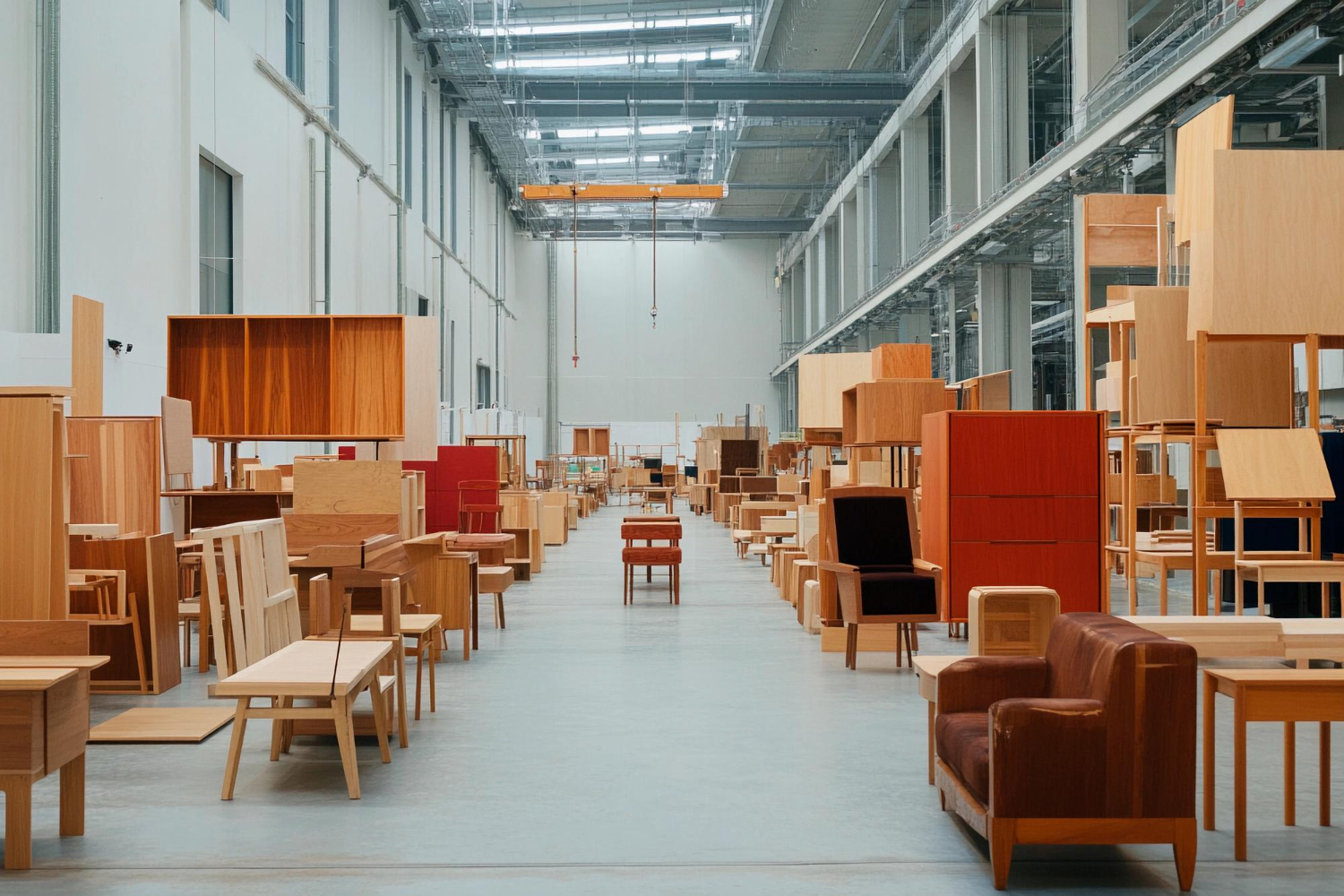
Australia imported approximately $4.26 billion worth of furniture, lighting and prefabricated building products from China in 2025. Most of that stock lands with the buyer who is unclear on the biosecurity paperwork, customs duties or freight decisions the shipment actually requires.
This guide covers how to import furniture from China to Australia, from sourcing and quality control through customs, biosecurity compliance, freight selection and landed costs. It also explains when to choose LCL or FCL sea freight and how to book shipments to Australia.
Request a quote to compare LCL and FCL sea freight rates for furniture shipments from Chinese ports.
Get a Quote NowBefore you import furniture from China to Australia, complete these steps in order:
Once your shipment volume is confirmed, compare LCL and FCL sea freight rates through Couriers & Freight before booking.
Most Australian importers source furniture from manufacturing centres in Foshan, Dongguan and Zhejiang. Foshan is recognised for residential and commercial furniture. Dongguan produces upholstered and timber furniture. Zhejiang manufactures indoor, outdoor and home furnishing products for export.
Australian buyers commonly source through:
Arrange a pre-shipment inspection before goods are packed. The inspection should confirm product specifications, workmanship and dimensions. It should also check finishes and packaging quality, which reduces defects and delivery delays once the shipment reaches Australia.
Importing furniture into Australia requires compliance with customs, taxation and biosecurity requirements before goods can be released from the port.
Goods imported into Australia are generally subject to Goods and Services Tax (GST), which is calculated on the taxable importation value. This includes the customs value of the goods, international freight and insurance. It also includes customs duty where applicable, and any Wine Equalisation Tax where relevant.
Most furniture classified under Chapter 94 attracts a general customs duty of 5%. However, eligible goods imported under the China-Australia Free Trade Agreement (ChAFTA) may receive a preferential duty rate of 0% when supported by a valid Certificate of Origin or other approved origin documentation.
A formal Import Declaration is generally required for goods with a value exceeding the Australian Border Force (ABF) import threshold, and an Import Processing Charge applies to declarations that require formal entry.
Furniture manufactured from timber, bamboo, rattan and other plant-based materials is regulated under Australia's biosecurity framework because these materials may carry insects or plant diseases. Timber packaging must comply with International Standards for Phytosanitary Measures (ISPM)15 through either heat treatment (HT) or methyl bromide fumigation (MB), with the appropriate certification mark displayed.
Before shipment, confirm your supplier can provide:
Missing or incomplete documentation may result in inspection, treatment, export from Australia or destruction of the goods. Product-specific import conditions can be confirmed through the Department of Agriculture, Fisheries and Forestry (DAFF) BICON system.
Once a shipment exceeds the import threshold covered above, the ABF processes the Import Declaration and confirms compliance with Australian import legislation.
Most commercial furniture importers appoint a licensed customs broker to prepare and lodge the Import Declaration, manage tariff classification and coordinate any biosecurity directions issued by the DAFF. This reduces the risk of documentation errors that may delay customs clearance.
Once your furniture order is confirmed and the required biosecurity documents have been prepared, the next decision is whether to ship by Less than Container Load (LCL) or Full Container Load (FCL).
The right option depends on your shipment volume, delivery timeframe and overall landed cost. Smaller consignments generally benefit from LCL, while larger commercial orders are often more cost-effective as FCL shipments.
Here's how the two options stack up on the factors that matter most for a booking decision:
A typical furniture import takes between six and twelve weeks from production through arrival in Australia, depending on manufacturing lead time, shipping schedules and customs clearance.
After production, sea freight generally requires another 20 to 35 days, subject to the departure port, destination port and shipping schedule.
Your landed cost includes:
Where customs formalities are required, a licensed broker can coordinate customs clearance before delivery to the final destination. More information is available from Couriers & Freight's Customs Clearance service.
An Australian importer has confirmed the shipment volume, received the required biosecurity documents from the supplier and is ready to compare freight options from Guangzhou or Foshan before booking.
The next step is comparing LCL and FCL sea freight rates through Couriers & Freight to match the service to shipment size and delivery schedule.
To arrange sea freight:
Request a sea freight quote through Couriers & Freight to compare LCL and FCL options for shipments from China and complete your booking.
Request a quote to compare LCL and FCL sea freight rates for furniture shipments from Chinese ports.
Get a Quote Now


MHP

No Surcharge*

$16.50
$14
$15.50
$0
$15.50
$14.75
$0
$0
$0
$0
MHP Large Item
No Surcharge*
$16.50
$75
$62
$62
$60.10
$14.75
$0
$0
$0
$0
Residential Pickup
No Surcharge*
$6
$0
$9
--
$9
$10.60
$0
$0
$0
$38.50
Reidential pick up 30-99kgs
No Surcharge*
$63
$0
$9
$0
$9
$74.15
$20
Won't carry
Won't carry
$38.50
Residential pick up 100kgs+
No Surcharge*
$198
$0
$9
$0
$9
$158.87
$50
Won't carry
Won't carry
$38.50
Residential Delivery up to 29kgs
No Surcharge*
$6
$0
$9
--
$9.00
$10.60
$0
$0
$0
$38.50
Residential Delivery up 30-99kgs
No Surcharge*
$63
$0
$9
$0
$9
$74.15
$20
Won't carry
Won't carry
$38.50
Residential Delivery 100kgs+
No Surcharge*
$198
$0
$9
--
$9
$158.57
$50
Won't carry
Won't carry
$38.50
Tail Lift Pick up 50-99kgs Sydney / Melbourne
No Surcharge*
$45
$50-$250
$88
$88
$88
$44.07
$120
Won't carry
Won't carry
$61.50
Tail Lift Pick up 100-299kgs Sydney / Melbourne
No Surcharge*
$85
$50-$250
$88
$88
$88
$44.07
$120
Won't carry
Won't carry
$61.50
Tail Lift Pick up 300-499kgs Sydney / Melbourne
No Surcharge*
$120
$50-$250
$88
$88
$88
$44.07
$120
Won't carry
Won't carry
$61.50
Tail Lift Pick up 500kgs + Sydney / Melbourne
No Surcharge*
$250
$50-$250
$88
$88
$88
$44.07
$120
Won't carry
Won't carry
$61.50
Tail Lift Delivery 50-99kgs Sydney / Melbourne
No Surcharge*
$45
$50-$250
$88
$88
$88
$44.07
$120
Won't carry
Won't carry
$61.50
Tail Lift Delivery 100-299kgs Sydney / Melbourne
No Surcharge*
$85
$50-$250
$88
$88
$88
$44.07
$120
Won't carry
Won't carry
$61.50
Tail Lift Delivery300-499kgs Sydney / Melbourne
No Surcharge*
$120
$50-$250
$88
$88
$88
$44.07
$120
Won't carry
Won't carry
$61.50
Tail Lift Delivery 500kgs + Sydney / Melbourne
No Surcharge*
$250
$50-$250
$88
$88
$88
$44.07
$120
Won't carry
Won't carry
$61.50
Dead weight over 32KGS carton freight
No Surcharge*
$16.50
$75
$70
$70
$70
$14.75
$0
Won't carry
Won't carry
$0
Oversize Surcharge 1.20 - 1.54
No Surcharge*
--
$0
$0
$0
$0
$5.40
$10
$15
Won't carry
$0
Oversize Surcharge 1.55 - 1.85
No Surcharge*
$17
$20
$0
$0
$0
$11.93
$10
$15
Won't carry
$0
Oversize Surcharge 1.86 - 2.20
No Surcharge*
$37
$40
$0
$0
$0
$11.93
$10
Won't carry
Won't carry
$0
Pallet Surcharge
No Surcharge*
--
$0
$0
$0
$0
$0
$0
Won't carry
Won't carry
$0
Hand Unload Fee Carton
No Surcharge*
--
$0
$70
$70
$70
$47
$0
Won't carry
Won't carry
$61.50
Western Australia Regional Surcharge
No Surcharge*
%10
$0
$0
$0
$0
$0
$0
$0
$0
$0
*Surcharges may apply to areas/deimensions not listed
**Prices correct of 16th September 2024

Click to start shipping in less than 60 seconds