
🎄 Festive Rush - Deliveries might take a bit longer. We appreciate your patience.
Festive Period 2025
Cut-Off Times

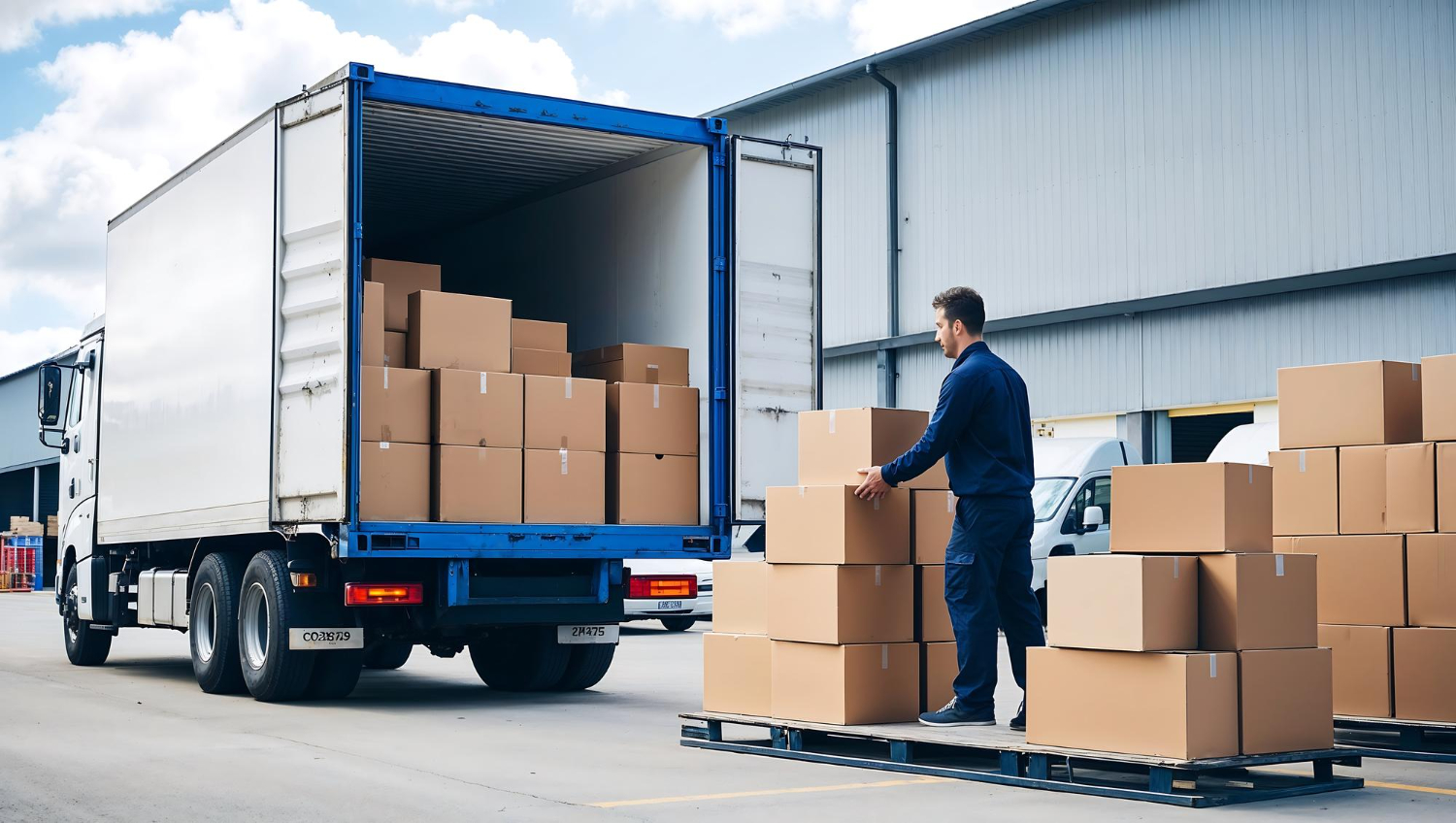
One Amazon FBA seller planned a 26-pallet delivery, only for Amazon’s system to reconfigure it to nearly 40 pallets at the last minute. The result: only around 60% of a truck could be shipped. Others report repeated pickup deferrals, missed appointments, or full truckloads sitting unaccounted for weeks.
For sellers shipping full truckloads into Amazon, this type of disruption is increasingly common. Loads are delayed, split, or refused when appointment windows are missed, pallet counts change, or the truck arriving doesn’t meet Amazon’s delivery requirements.
This guide is for sellers moving high-volume, palletised or full-truckload (FTL) freight into Amazon fulfilment centres across Australia. It explains the end-to-end process, the rules Amazon enforces, and the most common reasons truckloads are delayed or refused, so you can plan shipments correctly and avoid unnecessary costs.
Move palletised freight to Amazon fulfilment centres in Australia using compliant full truckload transport with Couriers & Freight.
Get a Quote NowPartnering with Couriers & Freight ensures each step is handled correctly to reduce delays, refusals, and extra costs.
Move palletised freight to Amazon fulfilment centres in Australia using compliant full truckload transport with Couriers & Freight.
Get a Quote NowA full truckload (FTL) shipment to Amazon Australia is defined by pallet volume and trailer use, not weight alone. In most cases, an FTL delivery involves a dedicated trailer carrying around 22 to 34 pallets, depending on the trailer configuration. All inventory in the load belongs to a single seller and is delivered directly to one Amazon fulfilment centre.
This is different from less-than-truckload (LTL) freight, where pallets from multiple sellers share the same trailer. Amazon treats LTL and FTL deliveries differently because full truckloads require longer unloading times, stricter scheduling, and greater dock coordination at the fulfilment centre.
FTL shipments to Amazon Australia are domestic and pallet-based. They do not include international freight, carton-only deliveries, or small-parcel shipments, all of which follow separate inbound processes. Standard four-way wooden pallets are expected, and pallet build quality matters because Amazon unloads these shipments using forklifts and pallet jacks.
Sellers moving from LTL to full truckloads often encounter new challenges. Shared trucks are no longer an option, vehicle specifications become critical, and appointment timing leaves little room for error. Understanding what Amazon considers a full truckload and planning accordingly is essential to avoid delivery delays, rejected loads, or unnecessary rebooking costs.
Amazon enforces strict requirements for all LTL and full-truckload (FTL) deliveries to its Australian fulfilment centres. These rules exist to control dock congestion, protect staff safety, and ensure inventory is received accurately. When a shipment does not meet these standards, Amazon may delay unloading or refuse the load entirely.
All LTL and FTL deliveries must be scheduled in advance so Amazon can manage receiving capacity. Carriers are required to book delivery appointments through Carrier Central at least 24 hours before arrival, and only professional, registered carriers are permitted to do so.
Before an appointment is approved, the carrier must submit accurate pallet, box, and unit counts for the shipment. If a truck arrives 15 minutes or more outside the scheduled window, Amazon may refuse the delivery and require the load to be rescheduled.
Amazon relies on delivery paperwork to verify shipments before unloading begins. Every load must be accompanied by a valid Bill of Lading (BOL) that clearly lists all Amazon Reference IDs and Shipment IDs.
The BOL can be provided as a physical document or as a pre-submitted electronic copy, but it must be accessible at the time of delivery. Missing or incorrect documentation is a common cause of unloading delays and load refusals.
Amazon applies strict vehicle specifications to ensure safe and efficient unloading at the dock. Rear-unload trailers must have a dock height between 1,100 mm and 1,550 mm. B-doubles and hydraulic tailgate trucks are not accepted for Amazon pallet deliveries.
Trailer floors must be solid, level, and suitable for pallet jacks and forklifts. Corrugated, damaged, uneven, or contaminated floors can result in immediate refusal, regardless of the shipment’s contents.
Amazon prefers palletised freight for both LTL and FTL deliveries. Pallets must be stable, accessible on all sides, and suitable for mechanical unloading.
If a shipment is floor-loaded, the carrier must declare it as Non-palletised at the time of booking and confirm that the receiving fulfilment centre accepts floor-loaded freight. Undeclared floor-loaded shipments are frequently refused on arrival.
All drivers and delivery personnel entering Amazon facilities must comply with basic safety requirements. This includes wearing high-visibility clothing, enclosed footwear, and following site-specific Work Health and Safety (WHS) protocols. Failure to meet these standards can delay unloading or prevent site access.
This process applies to domestic LTL and full-truckload (FTL) deliveries into Amazon Australia fulfilment centres. Each step must be completed correctly to avoid refusals, rebooking delays, or added freight costs.
Before booking, confirm that your freight is pallet-based and moving as a single-seller load. Amazon treats LTL and full truckloads differently at the dock, and selecting the wrong delivery type can lead to appointment issues or unloading delays.
The trailer must meet Amazon’s delivery requirements. Rear-unload trailers are required, with the correct bed height and a solid, level floor. Trucks fitted with hydraulic tailgates or B-double configurations are not accepted and may be refused on arrival.
Amazon expects stable, palletised freight built on standard four-way wooden pallets. If the shipment is floor-loaded, it must be declared as Non-palletised at the time of booking and accepted by the receiving fulfilment centre. Undeclared floor-loaded shipments are commonly turned away.
Your Bill of Lading (BOL) must include all Amazon Reference IDs and Shipment IDs linked to the load. Incomplete or inaccurate paperwork often prevents Amazon from verifying the shipment, delaying unloading or triggering refusal.
Amazon requires accurate counts before approving a delivery appointment. Differences between declared and actual quantities can cause appointment rejection or receiving delays at the fulfilment centre.
The carrier must book the appointment through Carrier Central. Only registered carriers can do this. Deliveries arriving outside the scheduled window, even by a short margin, risk being refused and rescheduled.
On delivery day, the driver must arrive on time, wear appropriate safety gear, and present the correct documentation. Pallets must match the declared load and be suitable for forklift unloading. Failure at this stage often results in refusal and re-delivery costs.
Shipping a full truckload to an Amazon fulfilment centre involves predictable cost drivers. While rates vary by lane and carrier, most FTL pricing is influenced by how the load is built, how far it travels, and whether the delivery meets Amazon’s requirements on the first attempt.
When Amazon requirements are not met, costs escalate quickly. Accurate counts, correct paperwork, and compliant vehicles help keep full truckload pricing predictable and prevent avoidable charges.
Shipping a full truckload to Amazon Australia leaves little room for error. Missed appointment windows, non-compliant vehicles, or incorrect paperwork can quickly lead to refused deliveries, rebookings, and delayed inventory reaching Amazon fulfilment centres.
Couriers & Freight supports Amazon sellers by coordinating compliant LTL and full truckload deliveries, managing appointment scheduling, and checking documentation and pallet details before dispatch. If you’re moving high-volume inventory, comparing LTL and FTL options early helps avoid delays and extra charges.
Get a truckload quote with Couriers & Freight to plan your next Amazon delivery more accurately.
Move palletised freight to Amazon fulfilment centres in Australia using compliant full truckload transport with Couriers & Freight.
Get a Quote Now


MHP

No Surcharge*

$16.50
$14
$15.50
$0
$15.50
$14.75
$0
$0
$0
$0
MHP Large Item
No Surcharge*
$16.50
$75
$62
$62
$60.10
$14.75
$0
$0
$0
$0
Residential Pickup
No Surcharge*
$6
$0
$9
--
$9
$10.60
$0
$0
$0
$38.50
Reidential pick up 30-99kgs
No Surcharge*
$63
$0
$9
$0
$9
$74.15
$20
Won't carry
Won't carry
$38.50
Residential pick up 100kgs+
No Surcharge*
$198
$0
$9
$0
$9
$158.87
$50
Won't carry
Won't carry
$38.50
Residential Delivery up to 29kgs
No Surcharge*
$6
$0
$9
--
$9.00
$10.60
$0
$0
$0
$38.50
Residential Delivery up 30-99kgs
No Surcharge*
$63
$0
$9
$0
$9
$74.15
$20
Won't carry
Won't carry
$38.50
Residential Delivery 100kgs+
No Surcharge*
$198
$0
$9
--
$9
$158.57
$50
Won't carry
Won't carry
$38.50
Tail Lift Pick up 50-99kgs Sydney / Melbourne
No Surcharge*
$45
$50-$250
$88
$88
$88
$44.07
$120
Won't carry
Won't carry
$61.50
Tail Lift Pick up 100-299kgs Sydney / Melbourne
No Surcharge*
$85
$50-$250
$88
$88
$88
$44.07
$120
Won't carry
Won't carry
$61.50
Tail Lift Pick up 300-499kgs Sydney / Melbourne
No Surcharge*
$120
$50-$250
$88
$88
$88
$44.07
$120
Won't carry
Won't carry
$61.50
Tail Lift Pick up 500kgs + Sydney / Melbourne
No Surcharge*
$250
$50-$250
$88
$88
$88
$44.07
$120
Won't carry
Won't carry
$61.50
Tail Lift Delivery 50-99kgs Sydney / Melbourne
No Surcharge*
$45
$50-$250
$88
$88
$88
$44.07
$120
Won't carry
Won't carry
$61.50
Tail Lift Delivery 100-299kgs Sydney / Melbourne
No Surcharge*
$85
$50-$250
$88
$88
$88
$44.07
$120
Won't carry
Won't carry
$61.50
Tail Lift Delivery300-499kgs Sydney / Melbourne
No Surcharge*
$120
$50-$250
$88
$88
$88
$44.07
$120
Won't carry
Won't carry
$61.50
Tail Lift Delivery 500kgs + Sydney / Melbourne
No Surcharge*
$250
$50-$250
$88
$88
$88
$44.07
$120
Won't carry
Won't carry
$61.50
Dead weight over 32KGS carton freight
No Surcharge*
$16.50
$75
$70
$70
$70
$14.75
$0
Won't carry
Won't carry
$0
Oversize Surcharge 1.20 - 1.54
No Surcharge*
--
$0
$0
$0
$0
$5.40
$10
$15
Won't carry
$0
Oversize Surcharge 1.55 - 1.85
No Surcharge*
$17
$20
$0
$0
$0
$11.93
$10
$15
Won't carry
$0
Oversize Surcharge 1.86 - 2.20
No Surcharge*
$37
$40
$0
$0
$0
$11.93
$10
Won't carry
Won't carry
$0
Pallet Surcharge
No Surcharge*
--
$0
$0
$0
$0
$0
$0
Won't carry
Won't carry
$0
Hand Unload Fee Carton
No Surcharge*
--
$0
$70
$70
$70
$47
$0
Won't carry
Won't carry
$61.50
Western Australia Regional Surcharge
No Surcharge*
%10
$0
$0
$0
$0
$0
$0
$0
$0
$0
*Surcharges may apply to areas/deimensions not listed
**Prices correct of 16th September 2024

Click to start shipping in less than 60 seconds