
🎄 Festive Rush - Deliveries might take a bit longer. We appreciate your patience.
Festive Period 2025
Cut-Off Times

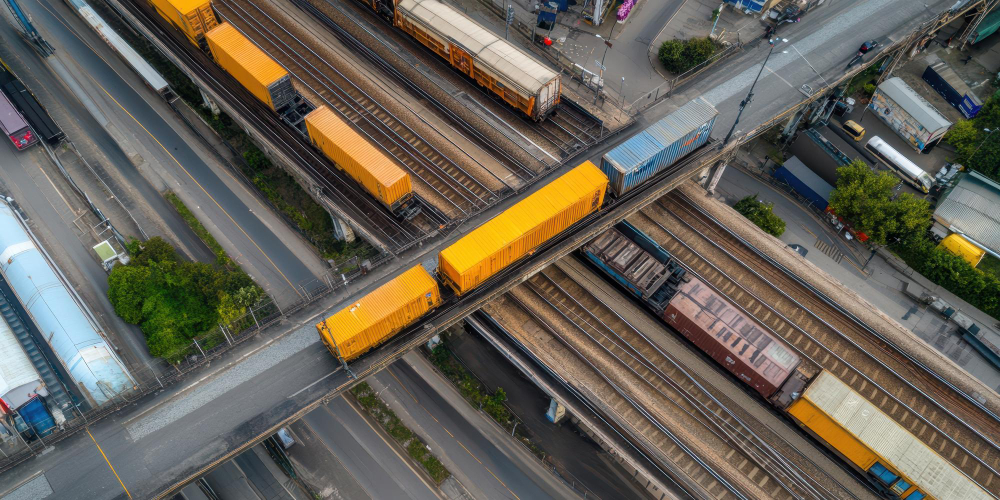
The rail freight vs road freight decision matters more as transport costs place pressure on Australian supply chains. The Bureau of Infrastructure and Transport Research Economics (BITRE) reports that road freight carries about 75% of Australia’s non-bulk domestic freight task, which shows how strongly freight pricing affects businesses shipping goods interstate.
Australian manufacturers, distributors, and retailers increasingly review transport options to reduce logistics costs. Rail and road freight operate under different conditions, and the cheaper option depends on variables that many businesses have not clearly mapped.
This article explains how to determine which mode costs less based on distance, shipment size, delivery timing, and access to rail terminals.
Compare carrier options across both modes and book interstate freight based on your route, volume, and delivery timeframe.
Get a Quote NowCompare both transport modes through Couriers & Freight to review rail and road freight services across multiple carriers and choose the best option based on price, speed, and freight type.
Australian freight analysts measure transport efficiency using cost per tonne-kilometre. According to BITRE, interstate road freight averages around 9 cents per net tonne-kilometre; rail averages about 4 cents. Carriers set commercial rates based on corridor demand, equipment type, and volume, so these are benchmarks rather than quoted prices.
A lower linehaul rate does not make rail freight automatically cheaper. Rail shipments require intermodal terminal handling plus road legs for pickup and final delivery, costs that can outweigh the rate advantage on shorter routes.
On long corridors like Melbourne to Perth, the distance spreads those terminal costs over enough kilometres that rail retains a consistent cost advantage.
Road freight becomes more cost-effective in specific situations where flexibility and direct delivery reduce handling costs. In many rail freight vs road freight comparisons, trucks offer lower total freight cost when shipments travel shorter distances or require direct access to warehouses and retail sites.
Road transport avoids intermodal terminal transfers and allows freight to ship from origin to destination in one journey.
Road freight typically costs less when:
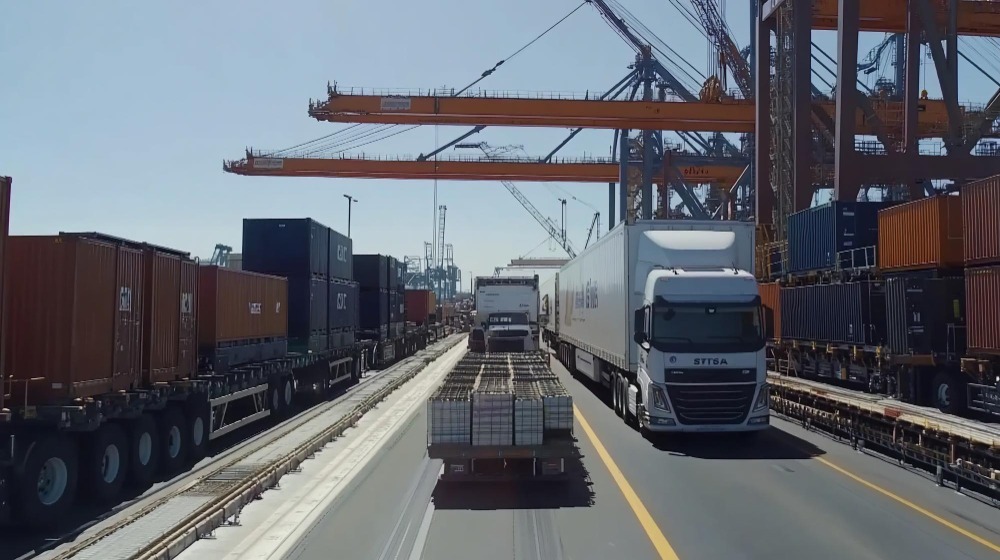
BITRE reports continue to show road freight dominating short and medium interstate routes because the road network provides direct access to industrial estates, ports, farms, and retail distribution centres.
Rail freight becomes more economical for long-distance, high-volume shipments between key intermodal terminals.
In most rail freight vs road freight comparisons, rail becomes more economical once shipments exceed roughly 1,000 kilometres because the cost per tonne spreads across the full distance travelled.
Rail freight typically costs less when:
Rail also uses less fuel per tonne of freight than trucks because trains move larger loads with a single locomotive.
Cost advantages in a rail freight vs road freight decision change by corridor because distance, infrastructure access, and freight density differ across Australia’s interstate routes.
In practice, comparing rail and road freight costs requires quotes from multiple carriers, since most Australian providers specialise in only one mode. Businesses often need to request separate quotes, compare transit structures, and calculate pickup, delivery, and handling costs before they can see the real price difference.
Couriers & Freight allows businesses to compare rail and road freight services from multiple carriers in one booking interface, including Toll Group and Team Global Express. This allows operations teams to quickly assess freight options by route, volume, and rate without managing multiple carrier accounts.
Book rail or road freight through Couriers & Freight by comparing carrier options, routes, and rates in one dashboard.
Compare carrier options across both modes and book interstate freight based on your route, volume, and delivery timeframe.
Get a Quote Now


MHP

No Surcharge*

$16.50
$14
$15.50
$0
$15.50
$14.75
$0
$0
$0
$0
MHP Large Item
No Surcharge*
$16.50
$75
$62
$62
$60.10
$14.75
$0
$0
$0
$0
Residential Pickup
No Surcharge*
$6
$0
$9
--
$9
$10.60
$0
$0
$0
$38.50
Reidential pick up 30-99kgs
No Surcharge*
$63
$0
$9
$0
$9
$74.15
$20
Won't carry
Won't carry
$38.50
Residential pick up 100kgs+
No Surcharge*
$198
$0
$9
$0
$9
$158.87
$50
Won't carry
Won't carry
$38.50
Residential Delivery up to 29kgs
No Surcharge*
$6
$0
$9
--
$9.00
$10.60
$0
$0
$0
$38.50
Residential Delivery up 30-99kgs
No Surcharge*
$63
$0
$9
$0
$9
$74.15
$20
Won't carry
Won't carry
$38.50
Residential Delivery 100kgs+
No Surcharge*
$198
$0
$9
--
$9
$158.57
$50
Won't carry
Won't carry
$38.50
Tail Lift Pick up 50-99kgs Sydney / Melbourne
No Surcharge*
$45
$50-$250
$88
$88
$88
$44.07
$120
Won't carry
Won't carry
$61.50
Tail Lift Pick up 100-299kgs Sydney / Melbourne
No Surcharge*
$85
$50-$250
$88
$88
$88
$44.07
$120
Won't carry
Won't carry
$61.50
Tail Lift Pick up 300-499kgs Sydney / Melbourne
No Surcharge*
$120
$50-$250
$88
$88
$88
$44.07
$120
Won't carry
Won't carry
$61.50
Tail Lift Pick up 500kgs + Sydney / Melbourne
No Surcharge*
$250
$50-$250
$88
$88
$88
$44.07
$120
Won't carry
Won't carry
$61.50
Tail Lift Delivery 50-99kgs Sydney / Melbourne
No Surcharge*
$45
$50-$250
$88
$88
$88
$44.07
$120
Won't carry
Won't carry
$61.50
Tail Lift Delivery 100-299kgs Sydney / Melbourne
No Surcharge*
$85
$50-$250
$88
$88
$88
$44.07
$120
Won't carry
Won't carry
$61.50
Tail Lift Delivery300-499kgs Sydney / Melbourne
No Surcharge*
$120
$50-$250
$88
$88
$88
$44.07
$120
Won't carry
Won't carry
$61.50
Tail Lift Delivery 500kgs + Sydney / Melbourne
No Surcharge*
$250
$50-$250
$88
$88
$88
$44.07
$120
Won't carry
Won't carry
$61.50
Dead weight over 32KGS carton freight
No Surcharge*
$16.50
$75
$70
$70
$70
$14.75
$0
Won't carry
Won't carry
$0
Oversize Surcharge 1.20 - 1.54
No Surcharge*
--
$0
$0
$0
$0
$5.40
$10
$15
Won't carry
$0
Oversize Surcharge 1.55 - 1.85
No Surcharge*
$17
$20
$0
$0
$0
$11.93
$10
$15
Won't carry
$0
Oversize Surcharge 1.86 - 2.20
No Surcharge*
$37
$40
$0
$0
$0
$11.93
$10
Won't carry
Won't carry
$0
Pallet Surcharge
No Surcharge*
--
$0
$0
$0
$0
$0
$0
Won't carry
Won't carry
$0
Hand Unload Fee Carton
No Surcharge*
--
$0
$70
$70
$70
$47
$0
Won't carry
Won't carry
$61.50
Western Australia Regional Surcharge
No Surcharge*
%10
$0
$0
$0
$0
$0
$0
$0
$0
$0
*Surcharges may apply to areas/deimensions not listed
**Prices correct of 16th September 2024

Click to start shipping in less than 60 seconds