
🎄 Festive Rush - Deliveries might take a bit longer. We appreciate your patience.
Festive Period 2025
Cut-Off Times

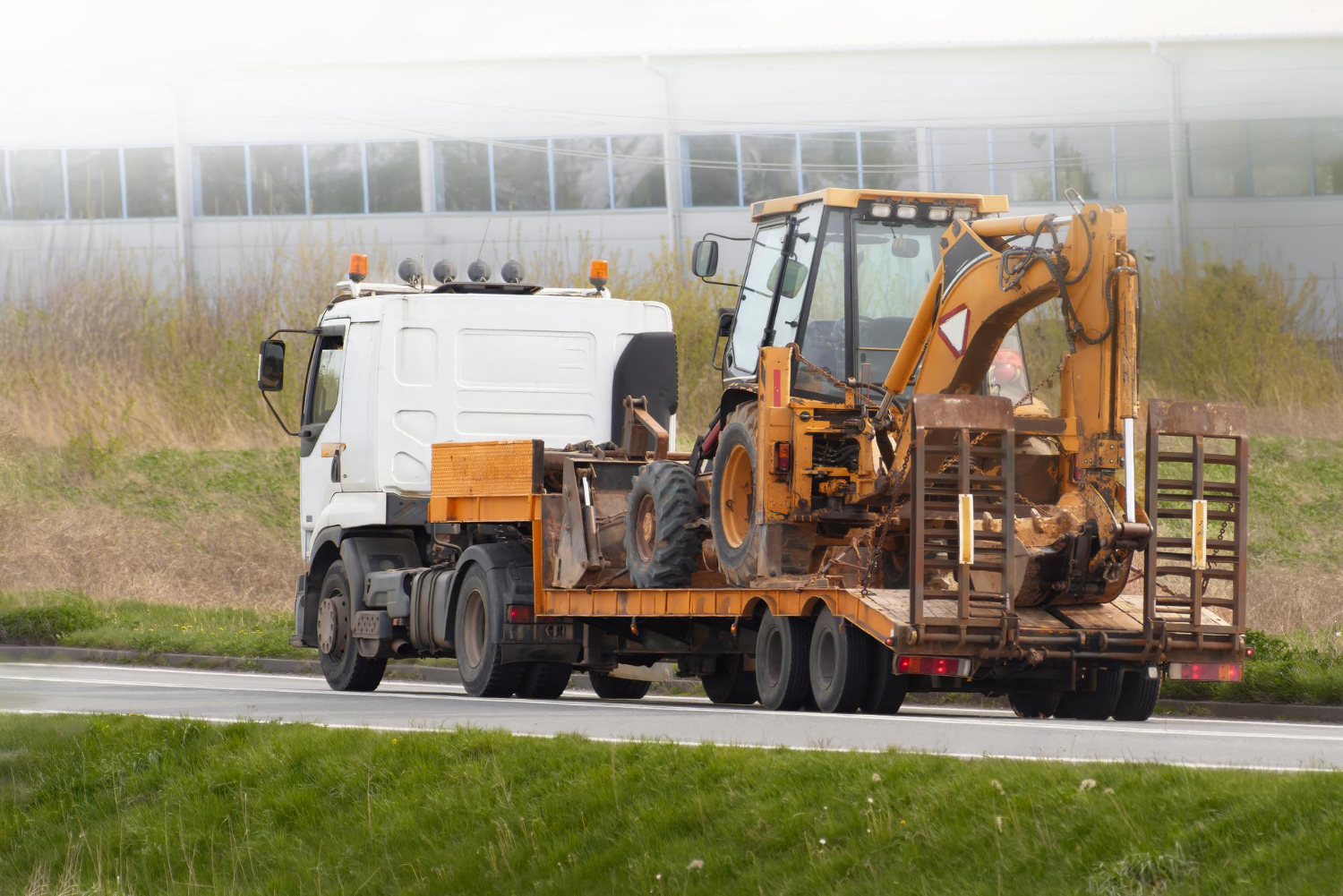
Australia imported $2.78 billion worth of machinery and industrial equipment in December 2024 alone, underlining how much heavy equipment crosses the country's ports and highways.
Shipping heavy machinery requires more planning than standard freight, as interstate road transport and international sea freight use different trailers, containers and loading methods.
This guide walks through both transport methods, what to prepare beforehand, and what to budget for before requesting a quote.
Compare Full Truck Load rates and book interstate transport for your heavy machinery through Couriers & Freight.
Get a Quote NowOnce you have identified the appropriate transport method, compare Full Truck Load (FTL) carrier options through Couriers & Freight before booking your interstate heavy equipment shipment.
Selecting the correct trailer depends on the machinery's dimensions, weight and loading requirements.
Heavy machinery that exceeds general access limits requires an Oversize Overmass (OSOM) permit issued by the National Heavy Vehicle Regulator or the relevant state road authority. Under Australia's Heavy Vehicle National Law, vehicles can travel without special permits if they stay within a maximum width of 2.5 metres and a height of 4.3 metres. Length limits vary by approved vehicle combination.
Oversized loads may also require pilot or escort vehicles depending on the approved route and jurisdiction. Interstate movements often involve multiple road authorities, so permit requirements and approved travel conditions should be confirmed before transport is scheduled.
Source: Australian heavy equipment transport market estimates compiled from industry pricing published by AUSFF Heavy Haulage.
Oversized machinery usually requires a custom transport quote because permit fees, pilot vehicles, loading equipment and approved routes vary between shipments.
Preparing heavy machinery correctly reduces the risk of transport delays, equipment damage and biosecurity issues. Complete the following steps before the machinery is collected.
These four steps apply whether the equipment ships interstate by road or overseas by sea.
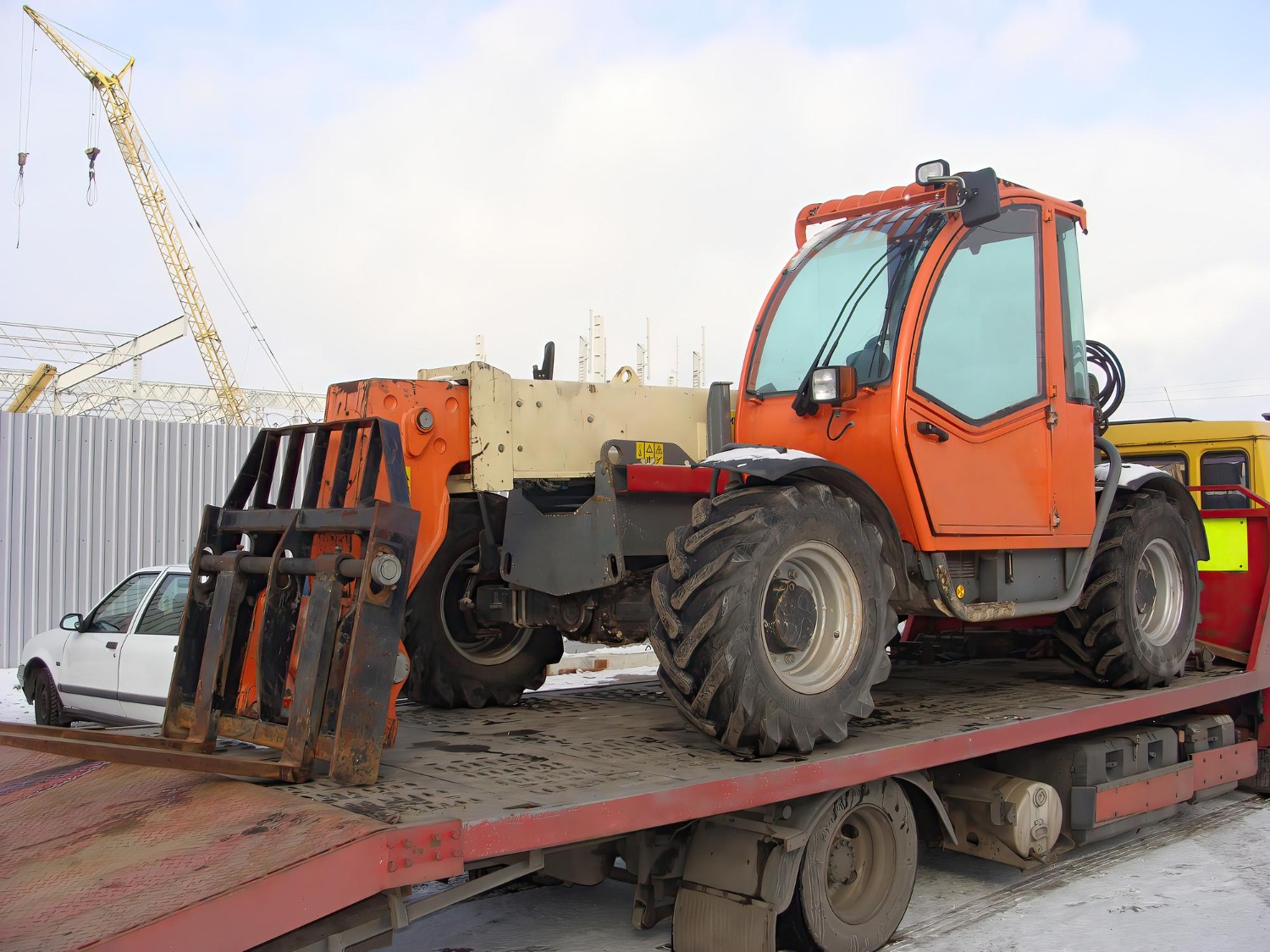
Roll-on/Roll-off is designed for wheeled or tracked machinery, including loaders, excavators and agricultural equipment that can be driven or winched directly onto the vessel. It is often the most efficient option when machinery is self-propelled and does not require containerisation.
Flat Rack containers work for out-of-gauge machinery (equipment that exceeds standard container dimensions). Equipment is loaded from the top or sides using a crane and secured for ocean transport. This option is commonly selected for oversized machinery that can still be safely lifted and secured on an open platform.
Open-Top containers are the right option for tall industrial equipment that cannot be loaded through standard container doors and requires overhead crane access. They are commonly used when equipment fits within container width limits but exceeds standard loading height.
Break Bulk shipping is used for machinery or components that exceed container dimensions or cannot be loaded into conventional equipment. Individual items are lifted directly into the vessel's cargo hold. Although typically more expensive, Break Bulk is often the only practical solution for exceptionally large or irregularly shaped equipment.
Businesses shipping heavy machinery internationally can book Full Container Load (FCL) sea freight through Couriers & Freight once the appropriate shipping method has been selected. Businesses should also factor in vessel schedules, port handling times and customs clearance when planning delivery dates, as international shipments generally require longer lead times than interstate road freight.
Imported machinery attracts a 5% customs duty. However, many goods qualify for reduced or duty-free entry under Australia's Free Trade Agreements if they satisfy the applicable Rules of Origin.
A freight forwarder coordinates shipping documentation, port handling, customs clearance and biosecurity requirements, helping reduce delays that can increase overall freight costs. Machinery that arrives without the cleaning and certification outlined in Step 2: Decontaminate the Unit may be directed for inspection, treatment or further cleaning under Australia's biosecurity framework.
A mining contractor in Western Australia needs to transport an excavator to a construction project in South Australia. After confirming the trailer configuration and permit requirements, the logistics coordinator uses Couriers & Freight to compare carrier rates for the required route before selecting a service.
The platform allows the business to compare multiple carrier quotations, complete the booking within the Couriers & Freight platform and track the shipment from collection to delivery. This approach reduces the time spent contacting individual carriers while allowing the business to track the shipment from collection through to delivery.
Compare Full Truck Load carrier rates and book heavy machinery transport across Australia through Couriers & Freight.
Compare Full Truck Load rates and book interstate transport for your heavy machinery through Couriers & Freight.
Get a Quote Now


MHP

No Surcharge*

$16.50
$14
$15.50
$0
$15.50
$14.75
$0
$0
$0
$0
MHP Large Item
No Surcharge*
$16.50
$75
$62
$62
$60.10
$14.75
$0
$0
$0
$0
Residential Pickup
No Surcharge*
$6
$0
$9
--
$9
$10.60
$0
$0
$0
$38.50
Reidential pick up 30-99kgs
No Surcharge*
$63
$0
$9
$0
$9
$74.15
$20
Won't carry
Won't carry
$38.50
Residential pick up 100kgs+
No Surcharge*
$198
$0
$9
$0
$9
$158.87
$50
Won't carry
Won't carry
$38.50
Residential Delivery up to 29kgs
No Surcharge*
$6
$0
$9
--
$9.00
$10.60
$0
$0
$0
$38.50
Residential Delivery up 30-99kgs
No Surcharge*
$63
$0
$9
$0
$9
$74.15
$20
Won't carry
Won't carry
$38.50
Residential Delivery 100kgs+
No Surcharge*
$198
$0
$9
--
$9
$158.57
$50
Won't carry
Won't carry
$38.50
Tail Lift Pick up 50-99kgs Sydney / Melbourne
No Surcharge*
$45
$50-$250
$88
$88
$88
$44.07
$120
Won't carry
Won't carry
$61.50
Tail Lift Pick up 100-299kgs Sydney / Melbourne
No Surcharge*
$85
$50-$250
$88
$88
$88
$44.07
$120
Won't carry
Won't carry
$61.50
Tail Lift Pick up 300-499kgs Sydney / Melbourne
No Surcharge*
$120
$50-$250
$88
$88
$88
$44.07
$120
Won't carry
Won't carry
$61.50
Tail Lift Pick up 500kgs + Sydney / Melbourne
No Surcharge*
$250
$50-$250
$88
$88
$88
$44.07
$120
Won't carry
Won't carry
$61.50
Tail Lift Delivery 50-99kgs Sydney / Melbourne
No Surcharge*
$45
$50-$250
$88
$88
$88
$44.07
$120
Won't carry
Won't carry
$61.50
Tail Lift Delivery 100-299kgs Sydney / Melbourne
No Surcharge*
$85
$50-$250
$88
$88
$88
$44.07
$120
Won't carry
Won't carry
$61.50
Tail Lift Delivery300-499kgs Sydney / Melbourne
No Surcharge*
$120
$50-$250
$88
$88
$88
$44.07
$120
Won't carry
Won't carry
$61.50
Tail Lift Delivery 500kgs + Sydney / Melbourne
No Surcharge*
$250
$50-$250
$88
$88
$88
$44.07
$120
Won't carry
Won't carry
$61.50
Dead weight over 32KGS carton freight
No Surcharge*
$16.50
$75
$70
$70
$70
$14.75
$0
Won't carry
Won't carry
$0
Oversize Surcharge 1.20 - 1.54
No Surcharge*
--
$0
$0
$0
$0
$5.40
$10
$15
Won't carry
$0
Oversize Surcharge 1.55 - 1.85
No Surcharge*
$17
$20
$0
$0
$0
$11.93
$10
$15
Won't carry
$0
Oversize Surcharge 1.86 - 2.20
No Surcharge*
$37
$40
$0
$0
$0
$11.93
$10
Won't carry
Won't carry
$0
Pallet Surcharge
No Surcharge*
--
$0
$0
$0
$0
$0
$0
Won't carry
Won't carry
$0
Hand Unload Fee Carton
No Surcharge*
--
$0
$70
$70
$70
$47
$0
Won't carry
Won't carry
$61.50
Western Australia Regional Surcharge
No Surcharge*
%10
$0
$0
$0
$0
$0
$0
$0
$0
$0
*Surcharges may apply to areas/deimensions not listed
**Prices correct of 16th September 2024

Click to start shipping in less than 60 seconds