
🎄 Festive Rush - Deliveries might take a bit longer. We appreciate your patience.
Festive Period 2025
Cut-Off Times


Australian wholesale trade turnover rose 7.0% in 2025, according to the Australian Bureau of Statistics. As more B2B businesses supply retailers at that growing volume, more of them are also exposed to routing guide penalties and chargebacks if their 3PL can't meet retailer requirements.
A 3PL for B2B must manage pallet freight, Electronic Data Interchange (EDI) and retailer compliance instead of individual parcel deliveries, the standard for B2C. This guide explains what a 3PL for B2B must provide and how to evaluate one.
Request a quote to confirm your account fits our B2B warehousing, pick and pack, and pallet dispatch model.
Get a Quote NowA 3PL for B2B companies manages wholesale fulfilment, pallet freight and retailer compliance requirements that differ significantly from parcel-based B2C fulfilment. Before comparing providers, confirm they can support the following operational requirements:
Businesses comparing providers can review how Couriers & Freight addresses these operational requirements before selecting a provider.
A 3PL for B2B companies manages freight, warehousing, and retail compliance processes that differ significantly from those for consumer fulfilment. Business orders often involve pallet freight, scheduled delivery appointments and retailer-specific documentation. Before selecting a provider, confirm they can support these operational requirements consistently across your supply chain.
B2B fulfilment focuses on delivering larger shipments to retailers, distributors and commercial customers under strict receiving requirements.
Unlike B2C deliveries, many Australian retailers require suppliers to follow published routing guides that cover booking procedures, pallet presentation, and electronic documentation. Failure to meet these requirements can result in rejected deliveries or financial penalties.
A compliant 3PL for B2B brands should support the following capabilities.
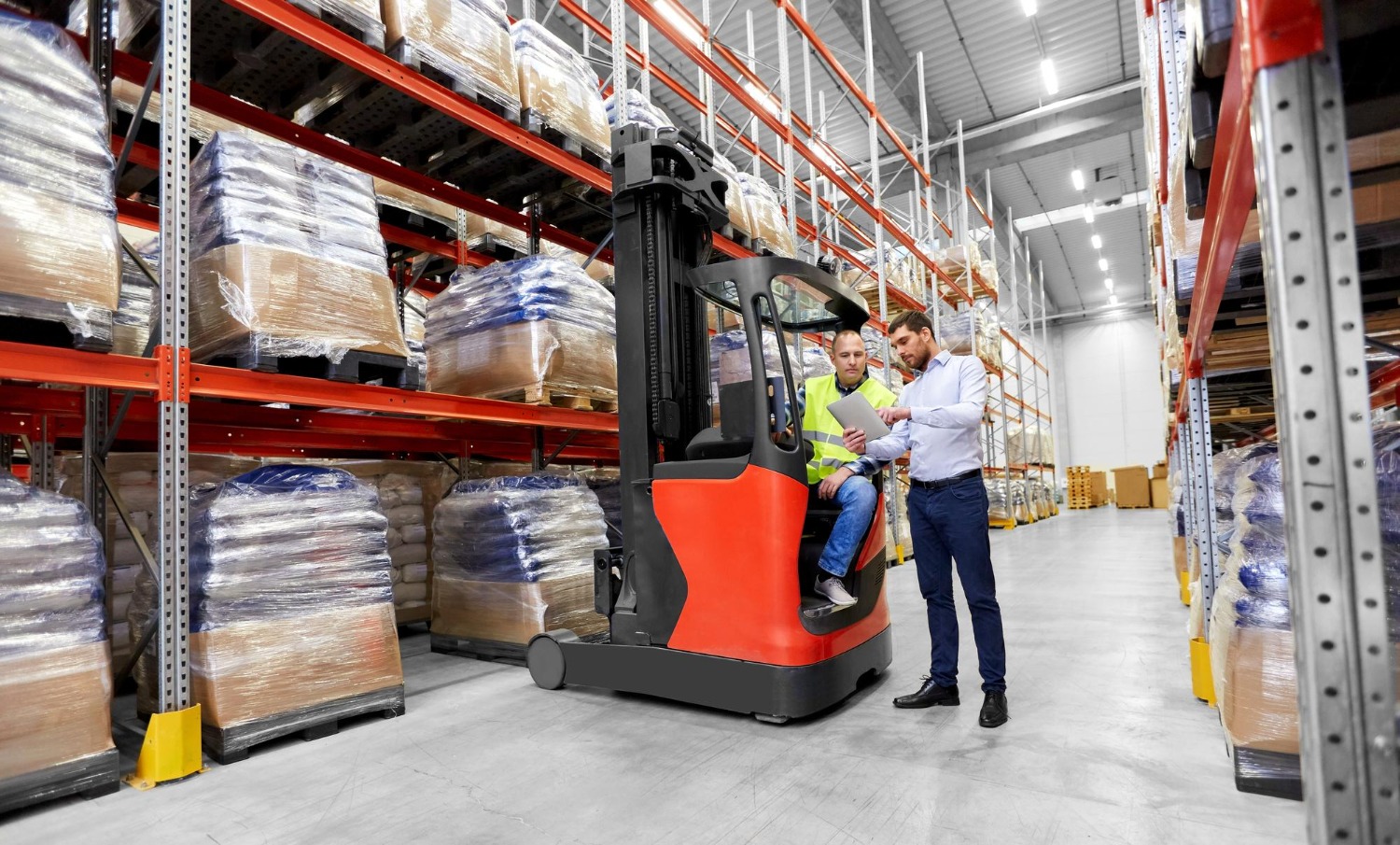
Many providers assess new customers using minimum monthly order volumes. This approach is not always the right fit for businesses supplying retailers through fewer, higher-volume shipments.
A business dispatching ten pallet orders each month may require more warehouse space, inventory control and compliance management than another shipping hundreds of small parcels.
Provider suitability depends on operational complexity rather than order count alone. SKU numbers, pallet dispatch frequency, storage requirements and retailer compliance obligations all influence warehouse workload and freight planning.
Businesses supplying hardware, industrial products and wholesale goods frequently report difficulty finding providers willing to support lower order volumes despite moving significant pallet quantities. While minimum onboarding requirements vary between providers and there is no recognised Australian industry benchmark, businesses should assess providers against operational capability rather than published order thresholds.
Before signing with a 3PL for B2B companies, use the following checklist to assess whether a provider can meet your operational and compliance requirements.
For more information, compare the Couriers & Freight guide to 3PL costs, review the B2B shipping rates guide, and explore the 3PL service information before selecting a provider. Businesses ready to discuss pricing can also request a 3PL quote.
Couriers & Freight handles 3PL warehousing, inventory management, and pick and pack for B2B orders. Inventory is stored, picked against order requirements and packed to retailer specifications, then dispatched as pallet or carton freight. Where required, we support EDI, ASNs and SSCC labelling for retailer compliance.
Businesses with low order volume but higher per-order quantities fit this model well. During onboarding, we review Stock Keeping Unit (SKU) numbers, storage needs, pallet dispatch frequency and compliance obligations to determine the right fulfilment approach for your account. There is no fixed minimum monthly order requirement.
Get a 3PL quote for the warehousing and distribution your B2B account needs.
Request a quote to confirm your account fits our B2B warehousing, pick and pack, and pallet dispatch model.
Get a Quote Now


MHP

No Surcharge*

$16.50
$14
$15.50
$0
$15.50
$14.75
$0
$0
$0
$0
MHP Large Item
No Surcharge*
$16.50
$75
$62
$62
$60.10
$14.75
$0
$0
$0
$0
Residential Pickup
No Surcharge*
$6
$0
$9
--
$9
$10.60
$0
$0
$0
$38.50
Reidential pick up 30-99kgs
No Surcharge*
$63
$0
$9
$0
$9
$74.15
$20
Won't carry
Won't carry
$38.50
Residential pick up 100kgs+
No Surcharge*
$198
$0
$9
$0
$9
$158.87
$50
Won't carry
Won't carry
$38.50
Residential Delivery up to 29kgs
No Surcharge*
$6
$0
$9
--
$9.00
$10.60
$0
$0
$0
$38.50
Residential Delivery up 30-99kgs
No Surcharge*
$63
$0
$9
$0
$9
$74.15
$20
Won't carry
Won't carry
$38.50
Residential Delivery 100kgs+
No Surcharge*
$198
$0
$9
--
$9
$158.57
$50
Won't carry
Won't carry
$38.50
Tail Lift Pick up 50-99kgs Sydney / Melbourne
No Surcharge*
$45
$50-$250
$88
$88
$88
$44.07
$120
Won't carry
Won't carry
$61.50
Tail Lift Pick up 100-299kgs Sydney / Melbourne
No Surcharge*
$85
$50-$250
$88
$88
$88
$44.07
$120
Won't carry
Won't carry
$61.50
Tail Lift Pick up 300-499kgs Sydney / Melbourne
No Surcharge*
$120
$50-$250
$88
$88
$88
$44.07
$120
Won't carry
Won't carry
$61.50
Tail Lift Pick up 500kgs + Sydney / Melbourne
No Surcharge*
$250
$50-$250
$88
$88
$88
$44.07
$120
Won't carry
Won't carry
$61.50
Tail Lift Delivery 50-99kgs Sydney / Melbourne
No Surcharge*
$45
$50-$250
$88
$88
$88
$44.07
$120
Won't carry
Won't carry
$61.50
Tail Lift Delivery 100-299kgs Sydney / Melbourne
No Surcharge*
$85
$50-$250
$88
$88
$88
$44.07
$120
Won't carry
Won't carry
$61.50
Tail Lift Delivery300-499kgs Sydney / Melbourne
No Surcharge*
$120
$50-$250
$88
$88
$88
$44.07
$120
Won't carry
Won't carry
$61.50
Tail Lift Delivery 500kgs + Sydney / Melbourne
No Surcharge*
$250
$50-$250
$88
$88
$88
$44.07
$120
Won't carry
Won't carry
$61.50
Dead weight over 32KGS carton freight
No Surcharge*
$16.50
$75
$70
$70
$70
$14.75
$0
Won't carry
Won't carry
$0
Oversize Surcharge 1.20 - 1.54
No Surcharge*
--
$0
$0
$0
$0
$5.40
$10
$15
Won't carry
$0
Oversize Surcharge 1.55 - 1.85
No Surcharge*
$17
$20
$0
$0
$0
$11.93
$10
$15
Won't carry
$0
Oversize Surcharge 1.86 - 2.20
No Surcharge*
$37
$40
$0
$0
$0
$11.93
$10
Won't carry
Won't carry
$0
Pallet Surcharge
No Surcharge*
--
$0
$0
$0
$0
$0
$0
Won't carry
Won't carry
$0
Hand Unload Fee Carton
No Surcharge*
--
$0
$70
$70
$70
$47
$0
Won't carry
Won't carry
$61.50
Western Australia Regional Surcharge
No Surcharge*
%10
$0
$0
$0
$0
$0
$0
$0
$0
$0
*Surcharges may apply to areas/deimensions not listed
**Prices correct of 16th September 2024

Click to start shipping in less than 60 seconds