
🎄 Festive Rush - Deliveries might take a bit longer. We appreciate your patience.
Festive Period 2025
Cut-Off Times


Amazon Australia's customer base grew by 1.1 million in the 12 months to June 2024, taking shoppers on the platform to 7.9 million Australians aged 14+, according to Roy Morgan Research. This growth means more multichannel sellers are weighing Amazon Multi-Channel Fulfilment (MCF) or 3PL to work out which fulfilment model can keep pace as order volume climbs.
This guide compares Amazon MCF against a traditional third-party logistics (3PL) provider. It weighs cost and branding control against account risk, so you can decide which model works for your sales channels and holds up as your business scales.
Book Australian warehousing, pick and pack, and outbound freight through Couriers & Freight.
Get a Quote NowFor sellers comparing Amazon MCF vs 3PL, the main differences relate to inventory management, fulfilment flexibility, pricing, and operational independence.
Amazon MCF allows businesses to fulfil orders from other sales channels using inventory already stored in Amazon FBA warehouses. While a traditional 3PL offers better handling for businesses managing across marketplaces, wholesale orders, or customised customer experiences.
Couriers & Freight offers Australian 3PL warehousing, pick and pack, and multi-carrier freight for sellers ready to move beyond Amazon MCF.
Amazon charges MCF fulfilment fees according to product size, shipping weight, and delivery speed. Based on Amazon Australia's 2025 Multi-Channel Fulfilment fee schedule:
The higher fourth-quarter storage rate adds cost to carrying slow-moving stock through the peak retail period.
For example, a Shopify retailer already using Amazon FBA may choose MCF to fulfil website orders without moving inventory into another warehouse. This reduces setup work during the early stages of multichannel selling, although fulfilment costs and limited branding options may become more noticeable as order volumes increase.
A traditional third-party logistics (3PL) provider stores inventory in its own warehouse and fulfils orders from a single stockholding. This allows businesses to fulfil orders from Shopify, eBay, and wholesale customers, and their own websites without relying on one platform's fulfilment network.
Unlike Amazon MCF, a traditional 3PL typically charges separate fees for storage, order fulfilment, and freight:
Minimum order volumes or minimum spend requirements may apply, more common among providers focused on medium and high-volume merchants
Pricing differs between providers and generally becomes more competitive as order volumes increase. Smaller businesses should confirm whether minimum charges apply before comparing costs, since low monthly order volumes can push up the effective cost per order.
Australia's general warehousing and cold storage industry generated an estimated $9.3 billion in revenue in 2025, reflecting continued demand for outsourced warehousing and fulfilment services.
A traditional 3PL gives businesses more control over packaging, inventory, wholesale fulfilment and carrier selection. Businesses can use custom packaging, branded inserts, and retailer-specific labelling requirements.
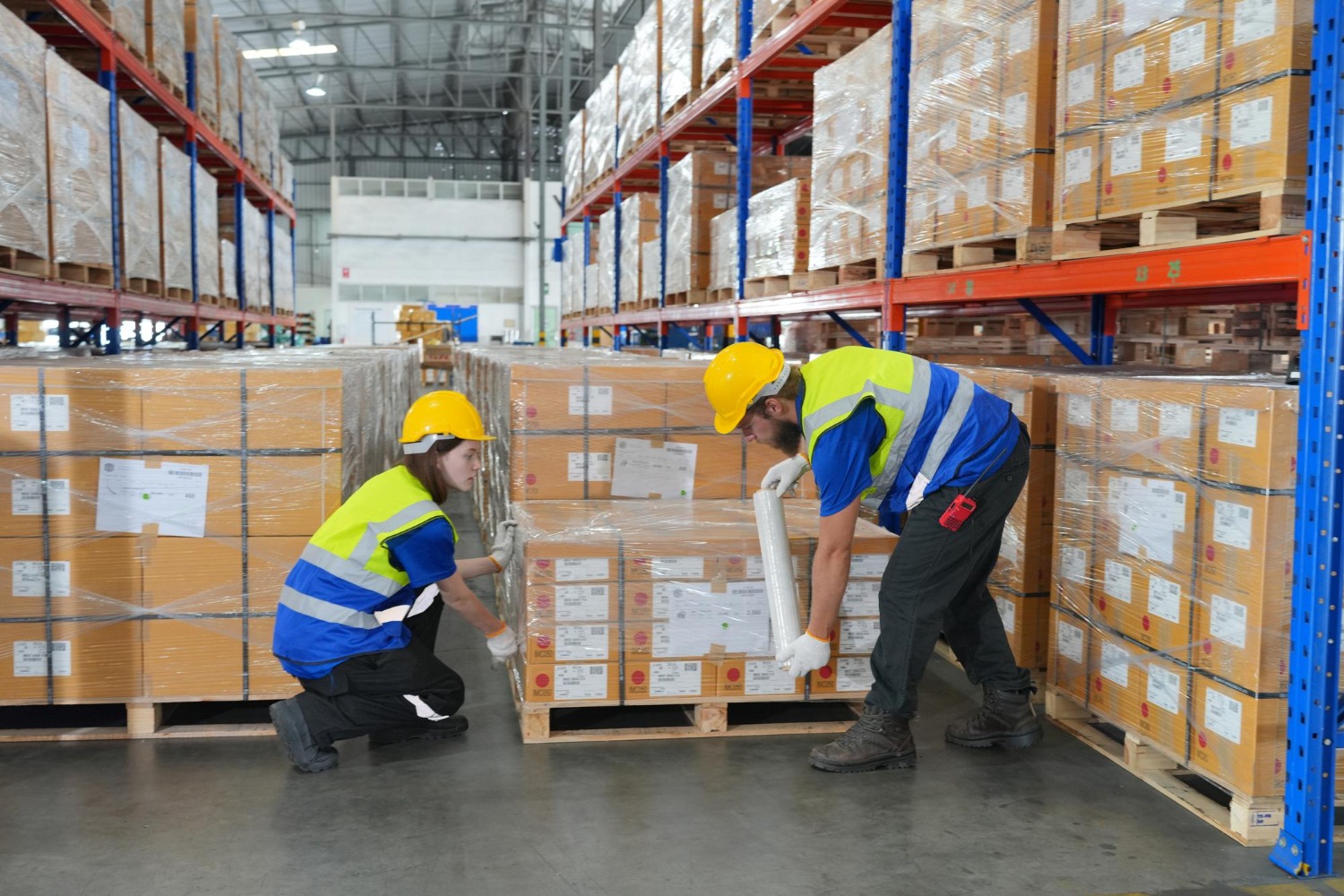
Many providers support both direct-to-consumer and wholesale fulfilment from the same inventory, allowing businesses to manage consumer parcels, carton orders, and pallet shipments through one warehouse.
This flexibility makes a 3PL the right option for businesses selling across multiple channels while maintaining consistent fulfilment processes and brand presentation.
For example, a business selling through Shopify, retail partners, and wholesale customers can run all three from the same stock, keeping labelling and packaging consistent regardless of the channel.
Rather than separating stock between different fulfilment networks, a 3PL provides a single operational workflow that becomes easier to scale as the business grows.
Amazon MCF works well for businesses that want to keep operations simple while sales are still concentrated on Amazon.
As fulfilment volumes increase, the ability to consolidate inventory, customise packaging, and manage multiple channels from one warehouse often outweighs the convenience of staying solely within Amazon's fulfilment network.
Choosing between Amazon MCF and a 3PL comes down to how much control you need over packaging, wholesale orders, and independence from Amazon's account risk. Amazon MCF works when off-Amazon orders stay occasional and unbranded packaging isn't a problem.
A 3PL earns its cost once branding, B2B orders, or marketplace risk start to outweigh the convenience of staying inside Amazon's network.
Couriers & Freight arranges Australian warehousing, pick and pack, and outbound freight for sellers who have decided a 3PL is the next step. Storage, order fulfilment, and carrier bookings are coordinated together, so you don't need separate contracts for each part of the process. For a look at what outsourced 3PL warehousing involves day-to-day, the Warehouse & Fulfilment page breaks down the operational scope.
Get a quote for 3PL warehousing and fulfilment through Couriers & Freight.
Book Australian warehousing, pick and pack, and outbound freight through Couriers & Freight.
Get a Quote Now


MHP

No Surcharge*

$16.50
$14
$15.50
$0
$15.50
$14.75
$0
$0
$0
$0
MHP Large Item
No Surcharge*
$16.50
$75
$62
$62
$60.10
$14.75
$0
$0
$0
$0
Residential Pickup
No Surcharge*
$6
$0
$9
--
$9
$10.60
$0
$0
$0
$38.50
Reidential pick up 30-99kgs
No Surcharge*
$63
$0
$9
$0
$9
$74.15
$20
Won't carry
Won't carry
$38.50
Residential pick up 100kgs+
No Surcharge*
$198
$0
$9
$0
$9
$158.87
$50
Won't carry
Won't carry
$38.50
Residential Delivery up to 29kgs
No Surcharge*
$6
$0
$9
--
$9.00
$10.60
$0
$0
$0
$38.50
Residential Delivery up 30-99kgs
No Surcharge*
$63
$0
$9
$0
$9
$74.15
$20
Won't carry
Won't carry
$38.50
Residential Delivery 100kgs+
No Surcharge*
$198
$0
$9
--
$9
$158.57
$50
Won't carry
Won't carry
$38.50
Tail Lift Pick up 50-99kgs Sydney / Melbourne
No Surcharge*
$45
$50-$250
$88
$88
$88
$44.07
$120
Won't carry
Won't carry
$61.50
Tail Lift Pick up 100-299kgs Sydney / Melbourne
No Surcharge*
$85
$50-$250
$88
$88
$88
$44.07
$120
Won't carry
Won't carry
$61.50
Tail Lift Pick up 300-499kgs Sydney / Melbourne
No Surcharge*
$120
$50-$250
$88
$88
$88
$44.07
$120
Won't carry
Won't carry
$61.50
Tail Lift Pick up 500kgs + Sydney / Melbourne
No Surcharge*
$250
$50-$250
$88
$88
$88
$44.07
$120
Won't carry
Won't carry
$61.50
Tail Lift Delivery 50-99kgs Sydney / Melbourne
No Surcharge*
$45
$50-$250
$88
$88
$88
$44.07
$120
Won't carry
Won't carry
$61.50
Tail Lift Delivery 100-299kgs Sydney / Melbourne
No Surcharge*
$85
$50-$250
$88
$88
$88
$44.07
$120
Won't carry
Won't carry
$61.50
Tail Lift Delivery300-499kgs Sydney / Melbourne
No Surcharge*
$120
$50-$250
$88
$88
$88
$44.07
$120
Won't carry
Won't carry
$61.50
Tail Lift Delivery 500kgs + Sydney / Melbourne
No Surcharge*
$250
$50-$250
$88
$88
$88
$44.07
$120
Won't carry
Won't carry
$61.50
Dead weight over 32KGS carton freight
No Surcharge*
$16.50
$75
$70
$70
$70
$14.75
$0
Won't carry
Won't carry
$0
Oversize Surcharge 1.20 - 1.54
No Surcharge*
--
$0
$0
$0
$0
$5.40
$10
$15
Won't carry
$0
Oversize Surcharge 1.55 - 1.85
No Surcharge*
$17
$20
$0
$0
$0
$11.93
$10
$15
Won't carry
$0
Oversize Surcharge 1.86 - 2.20
No Surcharge*
$37
$40
$0
$0
$0
$11.93
$10
Won't carry
Won't carry
$0
Pallet Surcharge
No Surcharge*
--
$0
$0
$0
$0
$0
$0
Won't carry
Won't carry
$0
Hand Unload Fee Carton
No Surcharge*
--
$0
$70
$70
$70
$47
$0
Won't carry
Won't carry
$61.50
Western Australia Regional Surcharge
No Surcharge*
%10
$0
$0
$0
$0
$0
$0
$0
$0
$0
*Surcharges may apply to areas/deimensions not listed
**Prices correct of 16th September 2024

Click to start shipping in less than 60 seconds